
Global Economy, Stock Market, and AML Briefing
The U.S. Federal Reserve unanimously raised its benchmark interest rate for the first time in over three years, signaling the return of a global tightening cycle. This pushed the 10-year U.S. Treasury yield above 5%, while South Korea's Kospi fell for the fourth straight day to the 6,620 range. Domestically, the Financial Services Commission announced stricter regulations, including expanding anti-money laundering obligations to non-financial professionals in response to FATF mutual evaluations.
Global Economy, Stock Market, and AML Briefing — 2026-09-17
Market Status
Major indices declined collectively following the Federal Reserve's rate hike decision and the surge in U.S. Treasury yields.
- S&P 500: 7,585.73 (down 34.25 points, or 0.4%, from the previous day)
- Dow Jones Industrial Average: 52,093.11 (down 328.09 points, or 0.6%, from the previous day)
- Nasdaq Composite: Started trading around 29,365 in the futures market, down about 0.29% from the previous day
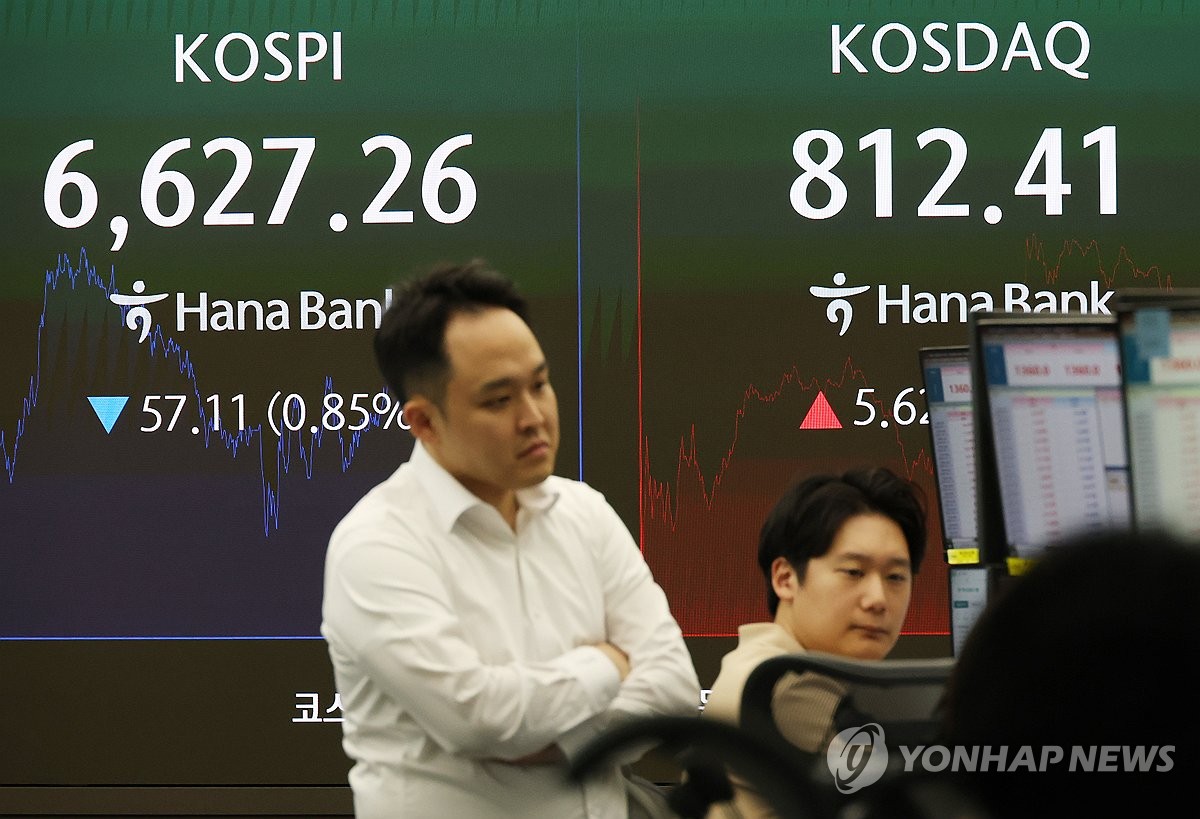
- Kospi: Closed in the 6,620 range (down for the fourth consecutive day)
- Opened as high as 6,659.25 during the session but turned downward due to selling by foreign and institutional investors.
- Kosdaq: Recovered the 810 level (up over 1%)
- Moved in the opposite direction of the Kospi, driven by retail buying and strength in secondary battery stocks.
Domestic Economic News
1. Bank of Korea raises this year's economic growth forecast to 3.3% Reflecting strong exports and domestic consumption trends, the Bank of Korea revised its real GDP growth forecast for the year up by 0.7 percentage points, from 2.6% to 3.3%. The consumer inflation forecast was maintained at 2.7%.
2. BOK warns of continued semiconductor-led growth and inflation pressure In its monetary and credit policy report, the Bank of Korea projected that robust growth will continue driven by semiconductor-led exports. However, it reaffirmed its benchmark interest rate hike stance as inflation pressures exceeding target levels could persist for a considerable period.
3. Bank of Japan (BOJ) rate hike in September looking likely; attention on impact on domestic financial markets IBK Securities analyzed that the Bank of Japan's benchmark rate hike in September is virtually a done deal, with major Japanese banks emerging as the biggest beneficiaries due to improved interest income from wider loan-deposit spreads. This could also impact the domestic stock market in terms of global interest rate correlation effects.
Global Economy & Markets
1. U.S. Fed raises benchmark interest rate by 0.25%p after 3 years and 2 months At the FOMC meeting on the 16th (local time), the U.S. Federal Reserve raised its benchmark interest rate by 0.25 percentage points to 3.75–4.00%. This is the first hike since 2023, decided unanimously amid inflation concerns.

2. U.S. 10-year Treasury yield breaks 5% Despite the Fed's rate hike, expectations of prolonged high interest rates and solid economic indicators pushed the 10-year U.S. Treasury yield above 5%. This has triggered bond sell-offs and added to valuation burdens in the stock market.

3. Korea-U.S. interest rate gap widens to 1%p Following the Fed's hike, the benchmark rate gap between South Korea (2.5%) and the United States (3.75–4.00%) could widen up to 1.5 percentage points, though based on current figures, a gap of over 1 percentage point has formed. This can act as downward pressure on the won and a risk for capital outflows.
Stock Market Trends
1. Kospi falls for fourth day amid waiting for Fed results The Kospi recorded a decline for four straight trading sessions as wait-and-see sentiment deepened ahead of the U.S. Fed's rate decision. In particular, rising U.S. Treasury yields and oil price instability combined to strengthen risk-averse sentiment.
2. Kosdaq succeeds in rebound driven by secondary battery stocks On the other hand, the Kosdaq index rose over 1% and recovered the 810 level, centered around secondary battery-related stocks driven by retail investor buying. Unlike the large-cap-heavy Kospi, a flow of funds into small-to-mid-cap and growth sectors was detected.
3. Volatility expands in AI tech stocks and semiconductor sector Selling pressure emerged across tech stocks generally, including a 1.2% drop in the Nasdaq index due to headwinds from global AI moderation theories and surging oil prices. This had a negative impact on the stock prices of domestic semiconductor and IT-related companies.
AML & Financial Regulations
1. Government establishes '5 AML Strategies' in preparation for FATF mutual evaluation The Financial Services Commission and the Korea Financial Intelligence Unit (FIU) established 5 strategies and 12 implementation tasks to prepare for the Financial Action Task Force's (FATF) 5th mutual evaluation scheduled for 2028. This strategy was prepared reflecting the results of national risk assessments and recent trends in money laundering crimes.
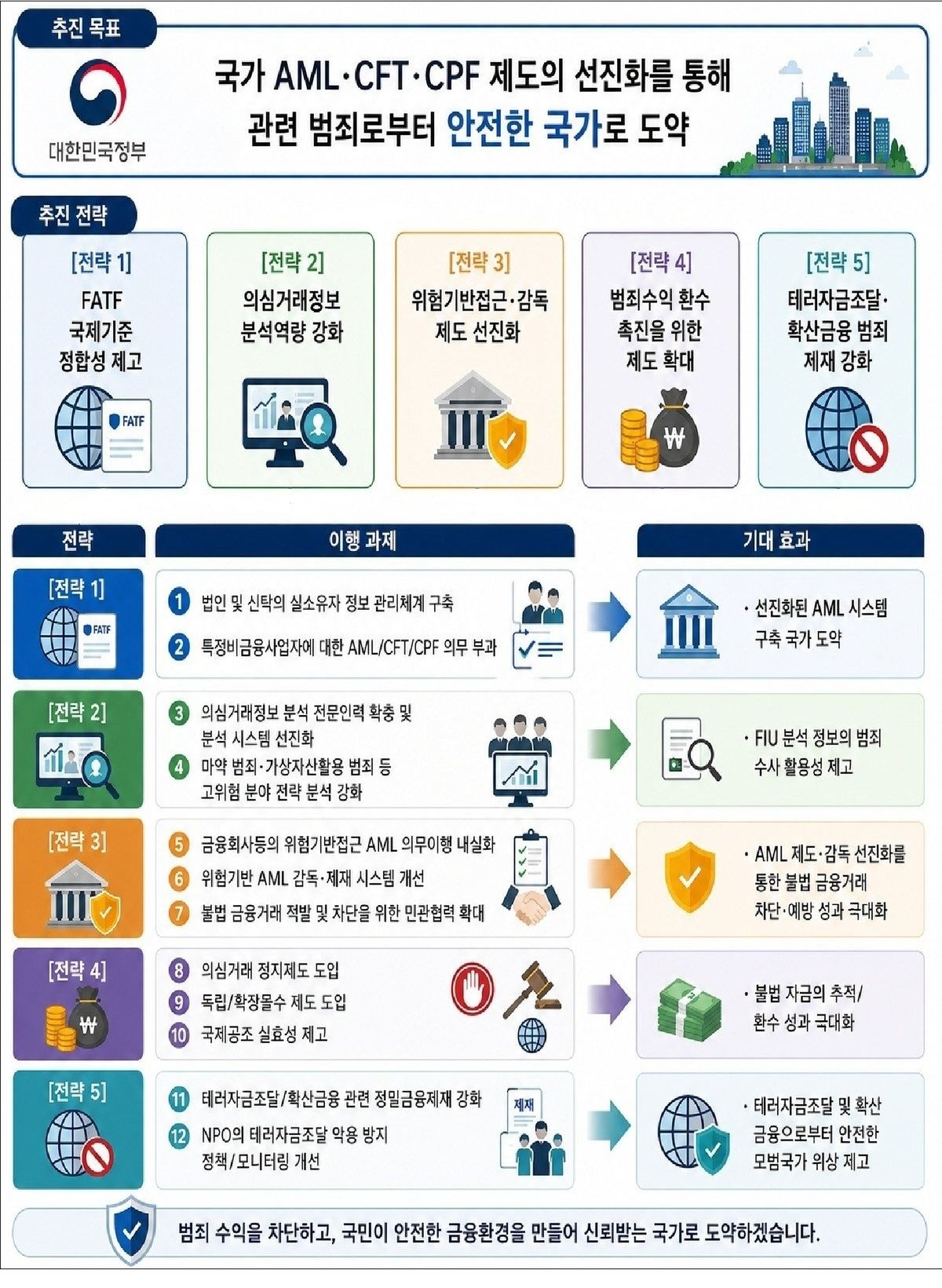
2. Expansion of AML obligations for non-financial professionals such as lawyers and accountants The FSC plans to strengthen the management system for actual owners of corporations and trusts, and impose anti-money laundering obligations on non-financial professionals (VASPs) such as lawyers and accountants. It also plans to strengthen capabilities to track crime proceeds infringing on people's livelihoods, such as drugs and gambling, by utilizing AI technology.
3. FIU introduces virtual asset tracking solutions and strengthens suspicious account suspension systems As the use of virtual assets in illegal financial transactions increases, the FIU is introducing dedicated tracking solutions. It also plans to transition anti-money laundering responses from formal compliance to practical responses by introducing criminal proceeds recovery systems such as suspicious account suspensions, independent confiscation, and extended confiscation.
Key Takeaways
- Possibility of additional U.S. Fed rate hikes: Following this hike, the Fed hinted at the possibility of further increases within the year. Market expectations such as the CME FedWatch should be monitored going forward.
- Bank of Korea reviewing additional rate hikes: With nominal growth exceeding 20% and persistent inflation pressures, forecasts suggest the timing of the Bank of Korea's benchmark rate hike could be brought forward.
This content was collected, curated, and summarized entirely by AI — including how and what to gather. It may contain inaccuracies. Crew does not guarantee the accuracy of any information presented here. Always verify facts on your own before acting on them. Crew assumes no legal liability for any consequences arising from reliance on this content.
Powered by
