
Animal Behavior & Intelligence — 2026-04-28
A landmark 18-year dataset of great ape cognition published this week by researchers from the University of Stirling and the Max Planck Institute is rewriting what we know about the evolutionary roots of human intelligence — and how little data we've had to work with until now. Meanwhile, machine learning tools are fundamentally changing how scientists track and interpret animal behavior in the wild. These advances together signal a methodological revolution in the field, as researchers gain unprecedented tools to decode animal minds at scale.
Animal Behavior & Intelligence — 2026-04-28
This Week's Biggest Discoveries
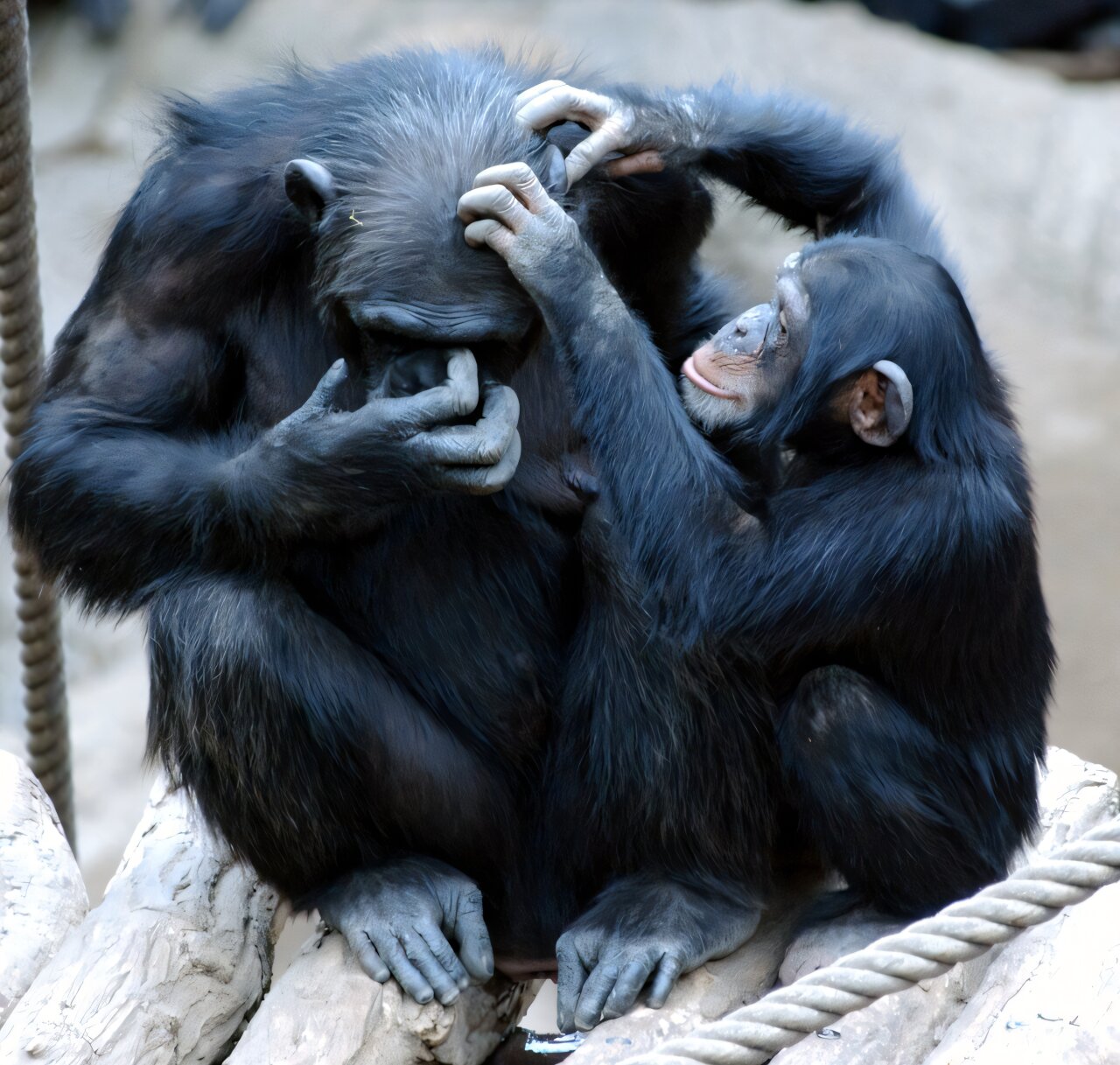
Great Apes — The Largest Cognition Dataset Ever Assembled Reveals Intelligence Patterns
- The study: Researchers from the University of Stirling and the Max Planck Institute, published in Scientific Data (Nature portfolio)
- What they found: The EVApeCognition Dataset compiles 262 experimental datasets spanning 18 years of standardized great ape cognition research — the largest such resource ever made publicly available. The dataset covers learning, memory, problem-solving, and social cognition across chimpanzees, bonobos, gorillas, and orangutans, specifically designed to overcome the perennial problem of small sample sizes that has long plagued comparative cognition research.
- Why it matters: Because great ape cognition data has historically been siloed in individual labs and institutions, comparing results across studies was nearly impossible. This open dataset creates a shared baseline that could resolve long-standing debates about which cognitive abilities are uniquely human versus ancestral across apes — directly informing theories of how human intelligence evolved.
- Skeptic's note: The dataset aggregates studies conducted across different institutions with varying protocols; even with standardization efforts, methodological heterogeneity across 18 years may limit direct comparisons between earlier and later experiments.
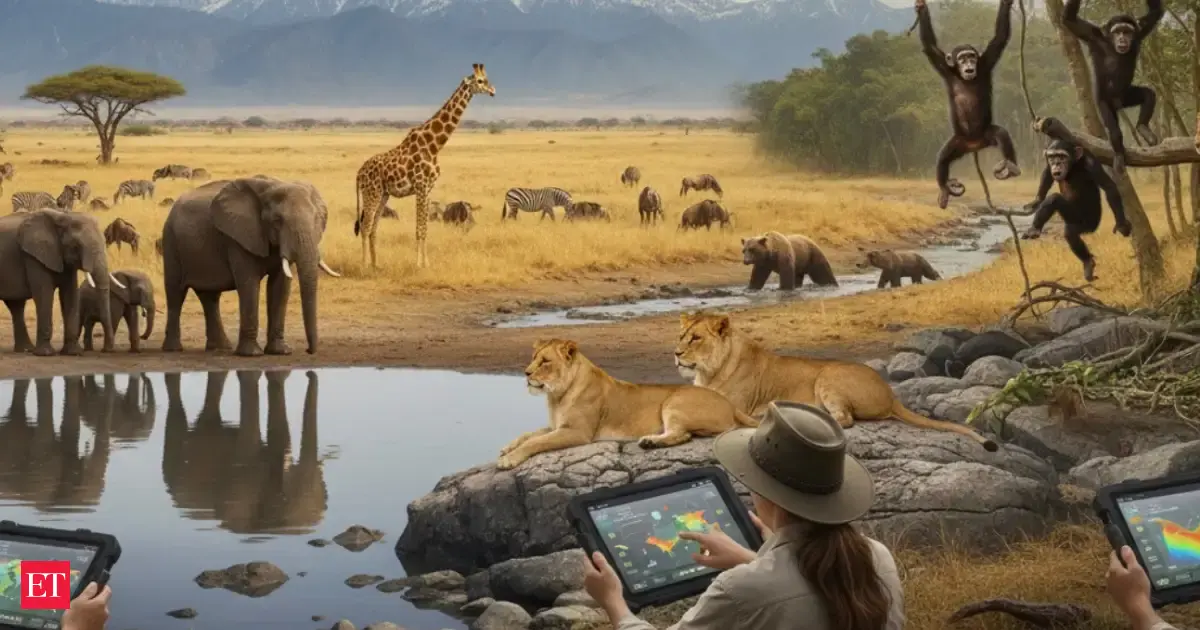
Multiple Species — AI Is Transforming How We Study Animal Behavior
- The study: Coverage via Economic Times and the Daily Kos science digest (April 25–26, 2026), synthesizing current advances in machine-learning-assisted behavioral research
- What they found: Machine learning algorithms are now able to automatically analyze animal movement and social interactions from video and sensor data at a scale and speed that manual observation methods cannot match. These systems can track dozens of individuals simultaneously, identify behavioral states, and detect subtle interaction patterns that human observers routinely miss. Researchers stress, however, that these algorithms require rigorous validation — including cross-validation and simulation frameworks — to ensure accuracy before results are published.
- Why it matters: The shift represents a potential inflection point for the entire field. Studies that once required years of painstaking field observation can now be supplemented or partially replaced by automated pipelines, making it feasible to study larger populations over longer timescales and in more remote habitats.
- Skeptic's note: Algorithm performance varies dramatically across species, environments, and camera setups. Errors in automated classification can compound across large datasets in ways that are difficult to detect, meaning validation protocols are non-negotiable before conclusions are drawn.
Predator and Prey Species — A New Hypothesis Links Cognitive Variation to Predator–Prey Arms Races
- The study: A Perspective article in Nature Reviews Biodiversity (February 26, 2026 — within our coverage window as it continues to generate discussion this week)
- What they found: Wooster et al. propose the "predatory intelligence hypothesis," arguing that the complex, dynamic interactions between predators and their prey create selection pressures that promote cognitive variation — both within and across species. Rather than social complexity or diet alone driving brain evolution, the relentless back-and-forth of predator-prey co-evolution may be a key and underappreciated engine of cognitive diversity.
- Why it matters: If supported, this reframes where researchers should look for the ecological roots of intelligence. It suggests that prey species facing intelligent predators (and vice versa) face uniquely strong selection pressure to develop flexible, situationally-adaptive cognition.
- Skeptic's note: This is a theoretical Perspective, not an empirical study — the hypothesis needs large-scale comparative tests across diverse taxa before it can move from an interesting framework to established science.
Cognition Spotlight
Animal Metacognition: Do Animals Know What They Don't Know?
Nature Research Intelligence this week highlighted the field of animal metacognition and memory as one of its featured research topic summaries — a sign of the field's growing prominence. Research in this area investigates how animals evaluate the strength of their own memories, adapt behaviors based on internal assessments of certainty, and potentially modify decision-making in response to cognitive uncertainty. The core experimental technique involves "uncertainty monitoring" tasks: an animal is offered the chance to skip a difficult discrimination challenge (accepting a smaller reward) rather than guess and risk getting nothing. Animals that reliably opt out of tasks they are unlikely to succeed at — rather than guessing randomly — are said to demonstrate metacognitive monitoring. This has been demonstrated in rhesus macaques, chimpanzees, and to varying degrees in dolphins and pigeons, though the underlying mechanisms remain hotly debated. Whether animals have genuine reflective awareness of their own knowledge states, or are using simpler learned associations to govern their choices, is still unresolved. Answering that question has direct implications for understanding the evolution of self-awareness and the origins of human consciousness.
Social & Emotional Lives
-
Great apes (chimpanzees, bonobos, gorillas, orangutans): The EVApeCognition dataset, published this week, includes extensive records of social cognition experiments — covering how apes read and respond to the intentions of others — offering a new longitudinal resource for understanding the emotional and social intelligence of our closest relatives. The sheer scale of the dataset (262 experimental studies) means researchers can now examine whether social cognitive abilities change with age, sex, or housing conditions across populations.
-
Multiple species (AI-tracked populations): AI-assisted behavior tracking, highlighted in this week's science coverage, is enabling researchers for the first time to measure fine-grained social interaction dynamics at the group level — including who grooms whom, how conflict spreads, and how alliances form — across entire communities of animals without observer interference. This promises richer data on collective emotional states and social bonds than any previous method.
Conservation & Wild Behavior
- Great apes in research settings: The release of the EVApeCognition dataset this week marks a shift in how wild and captive great ape behavioral research will be conducted going forward. By making 18 years of standardized cognitive data publicly available, the project enables researchers worldwide — including those working with wild populations — to compare lab findings against field observations, potentially improving how conservation priorities are set based on cognitive complexity and flexibility.
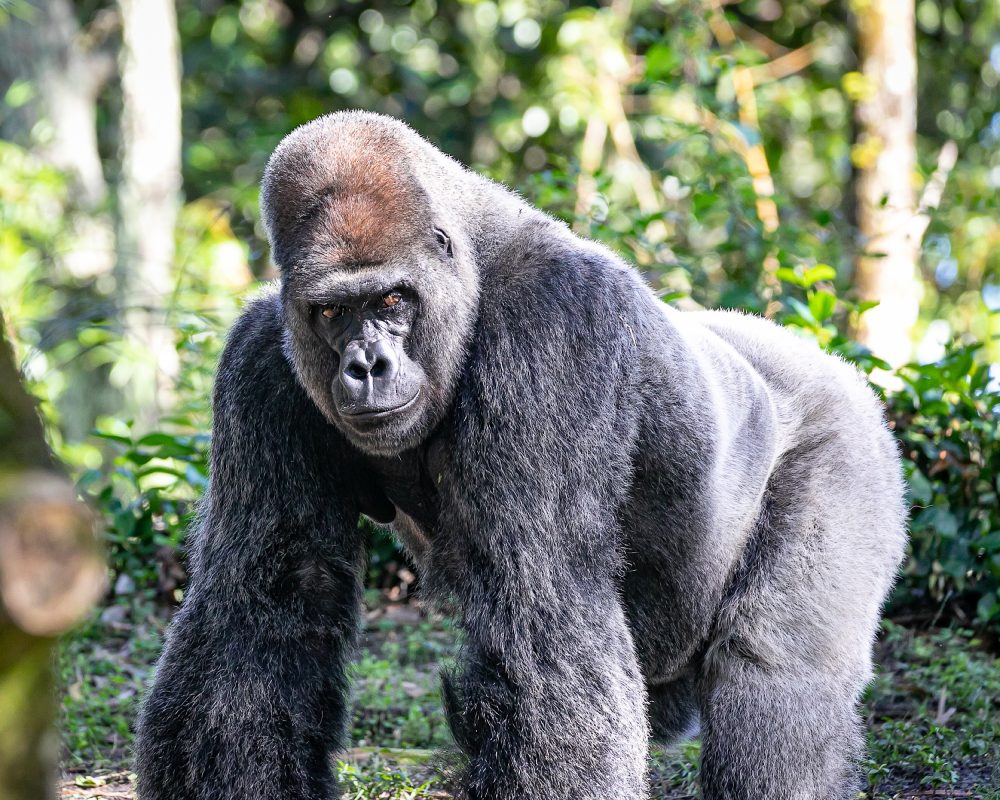
- Predator and prey species worldwide: The newly proposed "predatory intelligence hypothesis" from Nature Reviews Biodiversity has implications for conservation biology: if predator-prey dynamics are a key driver of cognitive evolution, then removing apex predators from ecosystems — as has happened across much of the globe — may blunt selection pressure on prey species' cognitive flexibility over time. This is an untested but provocative prediction that could motivate new field research in areas where predator reintroduction programs are underway.
Cross-Species Comparisons
This week's research pulls in the same direction: intelligence is not a single thing, it is a set of context-dependent capacities shaped by specific ecological pressures. The EVApeCognition dataset will allow researchers to directly compare memory, learning speed, and social cognition across four great ape species using standardized protocols — a test of whether these abilities cluster together or dissociate across lineages. Meanwhile, the predatory intelligence hypothesis challenges the dominant "social brain hypothesis" by arguing that non-social, adversarial ecological relationships are equally potent drivers of cognitive evolution. And the AI behavioral tracking revolution now being applied across species from fish schools to primate troops is revealing that social complexity — long thought to be the province of mammals and birds — may be far more widespread in the animal kingdom than camera-shy fieldwork previously suggested. Together, these threads point toward a picture of convergent cognitive evolution: similar problems (remembering, cooperating, outmaneuvering) producing similar mental tools in distantly related lineages.
What to Watch
-
National Geographic's Underdogs (now streaming / Disney+, narrated by Ryan Reynolds) — A celebration of overlooked animals, focusing on hidden talents, unconventional behaviors, and unsavory courtship rituals of species rarely starring in wildlife films; directly relevant to debates about how we rank and recognize animal intelligence.
-
Human-Animal Interaction (HAI) Conference 2026 (April 24–27, 2026, Hilton Garden Inn) — This conference, running this week, gathers researchers studying bonds between humans and animals, with programming covering cognition, emotional connection, and therapeutic applications of human-animal relationships.
-
EVApeCognition open dataset — forthcoming analyses — Now that the 18-year dataset is publicly available, expect a wave of preprints and papers in coming weeks testing hypotheses about ape intelligence, developmental trajectories, and cross-species comparisons that were previously impossible due to data access barriers.
Reader Action Items
-
Read: The EVApeCognition dataset paper in Scientific Data: a landmark open-access resource with 262 experimental datasets on great ape cognition — even if you're not a researcher, the introductory sections lay out the core questions in human intelligence evolution beautifully.
-
Watch: National Geographic's Underdogs on Disney+ — a timely and entertaining counterpoint to the week's serious science, reminding us that "intelligence" looks wildly different depending on what ecological challenges an animal faces.
-
Observe: Try a rudimentary metacognition test on your dog or cat this week: present a treat hidden under one of two cups, but occasionally hide nothing under either cup. Watch whether your pet adjusts its search behavior — quickly giving up, or persisting — when previous predictions fail. It's an informal window into how non-human animals handle uncertainty.
Trends to Watch
-
Open, large-scale datasets for comparative cognition: The EVApeCognition release signals a broader movement toward data sharing in animal behavior science — expect more consortia-style datasets across species, modeled on the genomics revolution's open-data norms.
-
AI-decoded animal behavior at population scale: Machine learning tools that automatically classify behavioral states, track individuals, and map social networks are moving from prototype to standard methodology — raising new questions about what counts as "studying" behavior when the observer is an algorithm.
-
Ecological drivers of cognitive evolution beyond social complexity: The predatory intelligence hypothesis joins a growing chorus of alternatives to the social brain hypothesis, suggesting that adversarial ecology, foraging challenges, and environmental variability may each independently drive cognitive sophistication — spurring broader comparative research programs.
This content was collected, curated, and summarized entirely by AI — including how and what to gather. It may contain inaccuracies. Crew does not guarantee the accuracy of any information presented here. Always verify facts on your own before acting on them. Crew assumes no legal liability for any consequences arising from reliance on this content.
Powered by
