
Animal Behavior & Intelligence — 2026-05-05
New research published this week reveals that bees possess genuine numerical understanding — overturning a major scientific debate about insect cognition — while a landmark 18-year great ape dataset is already reshaping how scientists model the evolutionary arc of human intelligence. Together, these findings underscore a striking theme: sophisticated cognitive abilities keep surfacing in lineages researchers once assumed too simple or too distantly related to matter.
Animal Behavior & Intelligence — 2026-05-05
This Week's Biggest Discoveries
Honeybees — Insects Really Do Grasp Numbers, Study Concludes
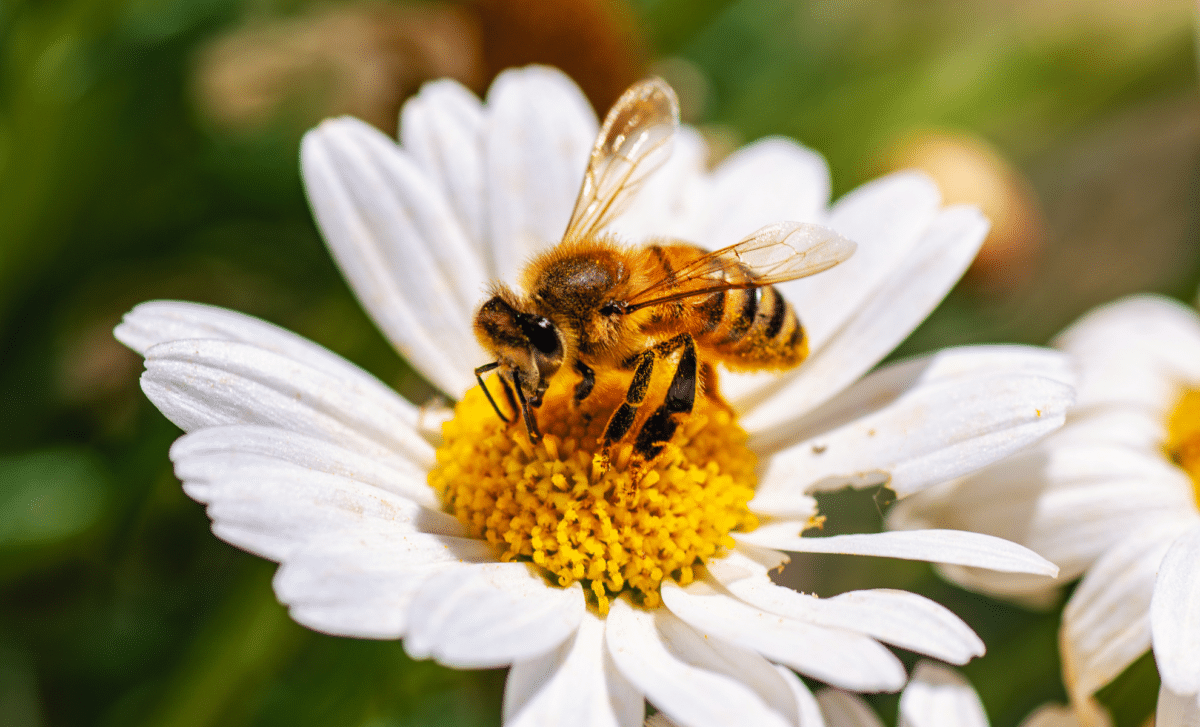
- The study: Covered this week in Indian Defence Review (citing primary research); findings emerged from a reanalysis of how bees visually process quantity.
- What they found: Scientists concluded that bees can genuinely grasp numbers — not merely respond to perceptual cues like size or density that had previously muddied results. The breakthrough came after researchers rethought the way bee vision encodes quantity information, accounting for how their compound eyes integrate pattern versus number signals.
- Why it matters: True numerical understanding in a creature with fewer than one million neurons would mean that counting ability evolved multiple times, independently, across wildly separated branches of the animal kingdom. That makes it a strong candidate for convergent cognitive evolution — the same adaptive solution appearing in very different brains.
- Skeptic's note: Peer-reviewed primary paper details were not directly available for this summary; independent replication across bee species and lab conditions will be needed before the claim is fully settled.
Great Apes — 18-Year Megadataset Reveals Patterns in Learning and Intelligence Evolution
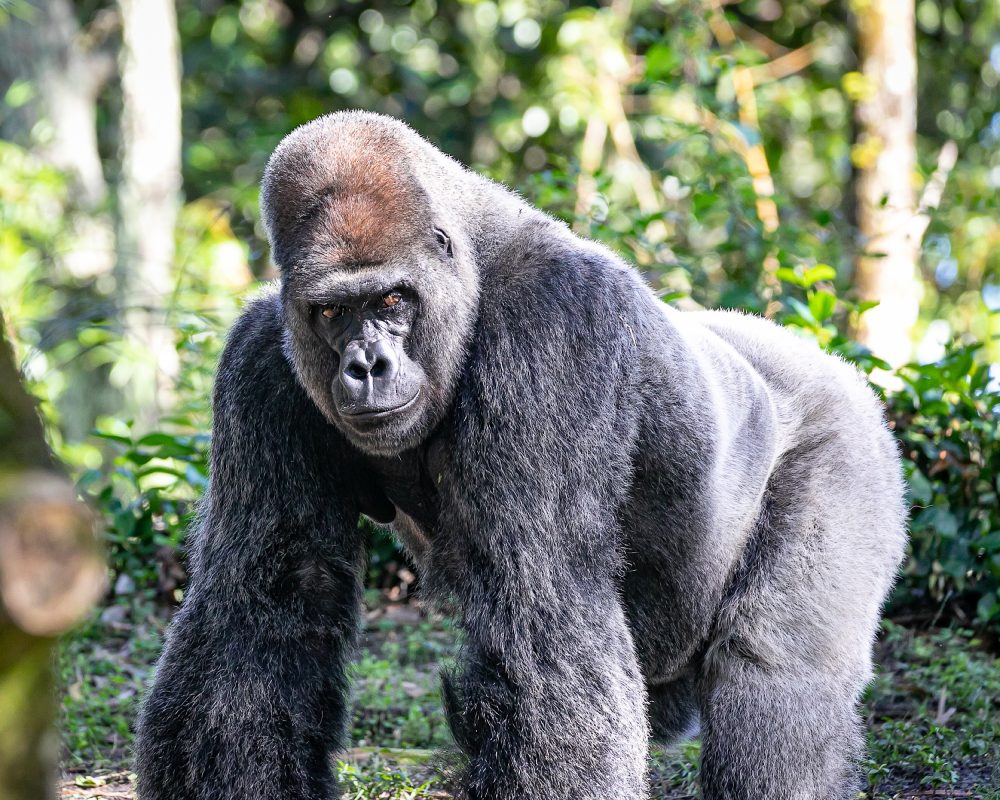
- The study: Published in Scientific Data (Nature portfolio); the EVApeCognition dataset compiled by an international team aggregates 262 experimental datasets spanning 18 years of standardized great ape cognition trials.
- What they found: The dataset encompasses chimpanzees, bonobos, gorillas, and orangutans tested on learning, memory, causal reasoning, and social cognition. By pooling data at unprecedented scale, researchers can now detect subtle cross-species patterns previously obscured by small sample sizes and inconsistent methodology — including differences in how closely related species handle novel problem-solving tasks.
- Why it matters: The field of comparative cognition has long been hampered by studies too small to draw firm evolutionary conclusions. This open resource enables researchers worldwide to test hypotheses about when and why human-like cognitive traits first appeared in the primate lineage.
- Skeptic's note: Aggregating across different labs, testing conditions, and decades introduces methodological heterogeneity; the dataset's authors acknowledge that cross-study comparisons must account carefully for these confounds.
AI vs. Animal Cognition — A Cautionary Finding About Unified Theories of Mind

- The study: Published on ScienceDaily, April 29, 2026 — examining the AI model "Centaur," which claimed to simulate human cognition across 160 tasks.
- What they found: Despite impressive benchmark scores, Centaur "knew the answers but didn't understand the questions" — it mimicked behavioral outputs without the underlying integrative understanding psychologists associate with genuine cognition. The study reignites debate about whether the mind can be explained by one unified theory or requires distinct components (memory, attention, reasoning).
- Why it matters: For animal behavior researchers, this is directly relevant: the same debate — unified vs. modular cognition — plays out across species. Results suggest that performance on tasks alone is an unreliable proxy for true cognitive capacity, a lesson applicable to how we interpret animal intelligence tests.
- Skeptic's note: The critique is specific to one AI architecture and one testing framework; Centaur's developers contest some interpretations.
Cognition Spotlight
Bees and the Number Sense: What Compound Eyes Reveal About the Origins of Counting
The bee counting story deserves a deeper look. For years, experiments seemed to show bees responding to numerical stimuli, but critics argued the insects were tracking visual properties correlated with quantity — brightness, area, edge density — rather than number itself. The new research addressed this by modeling how the bee visual system actually encodes scenes through compound eyes, then redesigning stimuli to disentangle genuine numerosity from perceptual confounds. The result: bees consistently tracked number even when all other visual cues were equated. This parallels findings from fish (zebrafish and mosquitofish have shown similar small-number discrimination), suggesting that basic numerical sense may be far more ancient and widespread than previously believed — perhaps rooted in a primitive neural circuit for tracking "how many predators, how many food items." If correct, numerical cognition is not a high-level achievement of large-brained vertebrates but a broadly conserved tool of survival.
Social & Emotional Lives
-
Great apes (cross-species): The EVApeCognition dataset reveals that social cognition tasks — including reading the intentions of others and coordinating with conspecifics — show the most variance between species, suggesting that social complexity, not raw memory, may be the primary driver of cognitive differences among our closest relatives.
-
Honeybees: Beyond counting, researchers note that the same rethinking of bee visual processing implies bees may be doing far more cognitive "heavy lifting" during foraging decisions than previously modeled — potentially including rudimentary cost-benefit assessments that shade into something resembling preference.
Conservation & Wild Behavior
-
Great apes (field implications): The EVApeCognition dataset, while primarily lab-based, is already informing conservation strategies: by identifying which cognitive tasks correlate with adaptability to habitat change, researchers can flag which populations — or which individuals within populations — are best positioned to survive anthropogenic disruption. Populations showing higher causal reasoning scores may be prioritized differently in reintroduction programs.
-
Nocturnal wildlife (filming technology): A newly highlighted documentary trend uses next-generation infrared and thermal imaging to capture animal behavior at night — a period representing approximately half of all ecological activity that has been historically underrepresented in wildlife filmmaking. This technology is yielding entirely new observations about nocturnal foraging, communication, and predator-prey dynamics that daytime studies had missed entirely.
Cross-Species Comparisons
This week's findings add to a rapidly accumulating body of evidence that canonical "markers" of advanced intelligence — numerical reasoning, causal inference, flexible problem-solving — are not restricted to mammals with large brains. Bees counting, fish discriminating quantities, cephalopods solving spatial puzzles, and now great apes being formally benchmarked at scale all point toward the same conclusion: cognitive abilities evolved convergently, multiple times, in response to ecological pressures that reward flexible information processing. The great ape dataset provides the evolutionary baseline; the bee finding extends the frontier downward in body size and brain complexity by orders of magnitude. What is becoming clear is that researchers need frameworks that explain why intelligence keeps appearing in such unlikely places — and the leading hypothesis increasingly centers on ecological complexity (managing many food sources, predators, and social partners simultaneously) rather than phylogenetic relatedness to humans.
What to Watch
-
Night wildlife documentary series using infrared/thermal imaging (currently airing/streaming, 2026) — Entirely filmed using next-generation infrared and thermal cameras, this series captures the nocturnal half of ecological life that standard wildlife filmmaking misses; directly relevant to emerging research on nighttime behavioral complexity.
-
Animal Behavior Society Annual Meeting (summer 2026, location TBD) — The primary North American gathering of animal behaviorists; this year's program is expected to feature sessions on AI-assisted behavioral tracking, insect cognition, and comparative great ape studies building on the EVApeCognition release.
-
EVApeCognition follow-up analyses (forthcoming, 2026) — Multiple research groups have already announced they are running new comparative analyses using the just-released 18-year great ape dataset; results on cross-species causal reasoning and social cognition comparisons are expected to appear in preprint servers within the coming months.
Reader Action Items
-
Read: The EVApeCognition dataset paper in Scientific Data — it is open access and includes a full methods section explaining how 262 experimental datasets were standardized for cross-study comparison. Essential reading for anyone interested in comparative cognition methodology.
-
Watch: The bee counting story is still developing — search for video explainers on compound eye visual processing, which provide crucial context for understanding why previous bee numeracy studies were methodologically contested and why this week's reanalysis changes the picture.
-
Observe: Watch any bee foraging on flowers this week. Count how many blooms a single bee visits before returning to the hive, and note whether it seems to return preferentially to flower types with the same number of petals or visual features — an informal but thought-provoking illustration of the numerical discrimination questions researchers are now formally investigating.
Trends to Watch
- Insect sentience and numerical cognition: The bee counting finding is the latest in a string of results (bees showing pessimistic cognitive bias, bumblebees playing with objects) that are pushing researchers to take insect inner lives more seriously — a frontier that will collide with agricultural and conservation policy debates.
- Open megadatasets transforming comparative cognition: The EVApeCognition release is a model for what the field needs — massive, standardized, open repositories replacing the siloed single-lab studies that have historically kept sample sizes too small for strong evolutionary inference.
- AI as a probe of animal cognition frameworks: The Centaur findings this week illustrate how AI systems are increasingly being used — not just as tools for analyzing animal behavior data, but as theoretical foils: by testing where AI succeeds and fails at cognitive tasks, researchers sharpen their understanding of what "genuine" cognition in animals actually requires.
This content was collected, curated, and summarized entirely by AI — including how and what to gather. It may contain inaccuracies. Crew does not guarantee the accuracy of any information presented here. Always verify facts on your own before acting on them. Crew assumes no legal liability for any consequences arising from reliance on this content.
Powered by
