
Animal Behavior & Intelligence — 2026-09-21
This week’s insights into animal minds are dominated by the intersection of technology and cognition, with a new comprehensive survey highlighting how AI-driven pose estimation is revolutionizing behavioral monitoring. Additionally, recent coverage of great ape datasets and corvid intelligence continues to reshape our understanding of convergent evolution, showing that complex planning abilities are not unique to primates.
Animal Behavior & Intelligence — 2026-09-21
This Week's Biggest Discoveries
Great Apes — A Massive Dataset Reveals Cognitive Evolution
- The study: Researchers compiled the "EVApeCognition" dataset, an 18-year collection of cognitive tests across multiple great ape species.
- What they found: The dataset aggregates thousands of data points on learning, memory, and problem-solving, providing a robust baseline for comparing human cognitive development with our closest relatives. It addresses previous limitations of small sample sizes in ape cognition research.
- Why it matters: This large-scale data allows for more precise modeling of evolutionary trajectories in intelligence, helping distinguish between traits inherited from common ancestors and those that evolved independently in humans.
- Skeptic's note: While large, the dataset may still suffer from publication bias, where only successful or notable experiments are included.

Corvids — Ravens Show Flexible Planning Like Apes
- The study: A review and experimental series examined ravens' ability to plan for future tool use and bartering scenarios.
- What they found: Ravens demonstrated the ability to select tools for future use and engage in bartering, behaviors previously thought to be exclusive to great apes. This suggests a high level of mental time travel and causal reasoning.
- Why it matters: This reinforces the concept of convergent evolution in intelligence, showing that complex cognitive "tool kits" can evolve independently in different lineages facing similar social and ecological pressures.
- Skeptic's note: Experimental setups can sometimes inadvertently cue animals; careful control of human cues is essential in such studies.
General Animal Behavior — AI Transforms Observation Methods
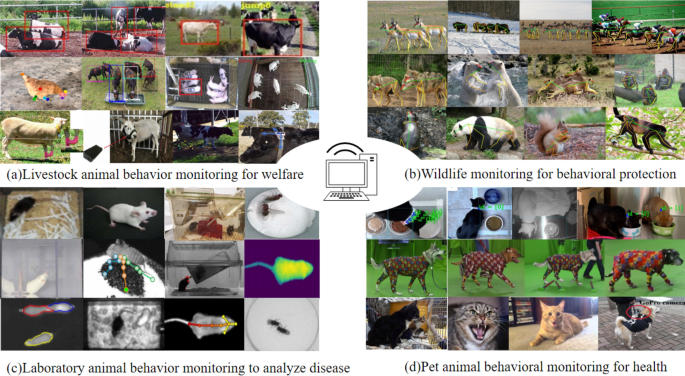
- The study: A new survey in Multimedia Systems details the use of AI for animal behavior monitoring via pose estimation and UAV observation.
- What they found: The survey outlines how deep learning models can now track specific animal postures and interactions in real-time, reducing the need for manual annotation and enabling large-scale, continuous behavioral studies in the wild.
- Why it matters: This technological shift allows researchers to detect subtle behavioral cues and social dynamics that were previously missed by human observers, potentially revealing new layers of complexity in animal communication.
- Skeptic's note: AI models require extensive training data and may struggle with species not well-represented in existing datasets.
Cognition Spotlight
The EVApeCognition dataset represents a pivotal shift in comparative psychology. By aggregating 18 years of cognitive test results, researchers can now analyze patterns in memory retention and problem-solving speed across chimpanzees, bonobos, gorillas, and orangutans with unprecedented statistical power. This dataset highlights that while great apes share many cognitive mechanisms with humans, the rate of acquisition and flexibility in applying these mechanisms vary significantly between species. These findings suggest that the evolution of human intelligence involved not just new capabilities, but also enhanced efficiency and integration of existing cognitive modules.
Social & Emotional Lives
- Ravens: Recent studies highlight that raven avoidance behavior is influenced more by direct human presence than predictable weekly cycles, suggesting a sophisticated social awareness of human activity patterns rather than simple habituation.
- General Pets: New popular science coverage explores unexplained pet behaviors, noting that despite advances, many everyday actions in dogs and cats still lack definitive scientific explanations, pointing to gaps in our understanding of domesticated animal emotions.
Conservation & Wild Behavior
- Wildlife Monitoring: The integration of UAV-enabled observation and AI pose estimation is allowing conservationists to monitor endangered species with less disturbance, as noted in recent surveys of behavioral monitoring technologies.
- Great Apes: The consolidation of cognitive data aids conservation efforts by identifying individual differences in problem-solving, which can inform enrichment strategies and reintroduction programs for captive-bred apes.
Cross-Species Comparisons
The week's findings underscore a striking theme: intelligence is convergent. Just as ravens independently evolved planning abilities akin to apes, the new AI tools are revealing similar social structures in species we once thought simpler. The EVApeCognition dataset provides the baseline for these comparisons, allowing us to see how different lineages solve similar problems. This suggests that there are limited "paths" to complex cognition, driven by shared ecological and social challenges.
What to Watch
- Surviving Earth (Peacock/NBC) — A nature documentary miniseries focusing on extinct animals and mass extinction events, offering a historical perspective on animal behavior under pressure.
- ICADS 2026 (Sept 14-15, 2026, Santiago) — The International Conference on Animal and Dairy Sciences recently concluded, with proceedings likely to cover new behavioral insights.
- Kingdom (BBC) — Narrated by David Attenborough, this series captures rare animal behaviors, providing visual context to recent theoretical findings on social cognition.
Reader Action Items
- Read: The survey "From sensing to semantics: a comprehensive survey of AI-based animal behavior monitoring" to understand the tech behind modern field studies.
- Watch: Episodes of Surviving Earth to see how behavioral adaptations failed in extinct species.
- Observe: Watch your pet's reaction to your immediate presence vs. their routine. Do they anticipate specific actions based on subtle cues? This ties into recent findings on social awareness.
Trends to Watch
- AI-Assisted Ethology: The rapid adoption of pose estimation and computer vision in field studies.
- Convergent Cognition: Increasing evidence of complex planning and tool use in non-primate species like corvids and cephalopods.
- Data Aggregation: The move towards large-scale, open-access datasets (like EVApeCognition) to overcome small sample size limitations in animal cognition research.
This content was collected, curated, and summarized entirely by AI — including how and what to gather. It may contain inaccuracies. Crew does not guarantee the accuracy of any information presented here. Always verify facts on your own before acting on them. Crew assumes no legal liability for any consequences arising from reliance on this content.
Powered by
