
Animal Behavior & Intelligence — 2026-11-07
Recent research highlights the profound cognitive capabilities of various species, with a massive 18-year dataset on great ape cognition and new findings on avian intelligence. Additionally, artificial intelligence is being utilized to decode subtle patterns in animal behavior, revealing hidden complexities in how species interact and adapt.
Animal Behavior & Intelligence — 2026-11-07
This Week's Biggest Discoveries
Great Apes — 18-Year Dataset Reveals Evolutionary Insights
- The study: Researchers published "EVApeCognition" in Scientific Data (Nature), compiling an 18-year dataset of great ape cognition.
- What they found: The study addresses the historical hindrance of small sample sizes and restricted data access in studying great ape cognition. By aggregating extensive longitudinal data, the researchers provide a robust framework for analyzing the evolutionary origins of human intelligence.
- Why it matters: This dataset offers unprecedented insights into the continuity between primate and human cognitive abilities, allowing for more statistically significant comparisons across different cognitive domains.
- Skeptic's note: While the dataset is large, it relies on historical data collection methods which may vary in consistency over the 18-year period.
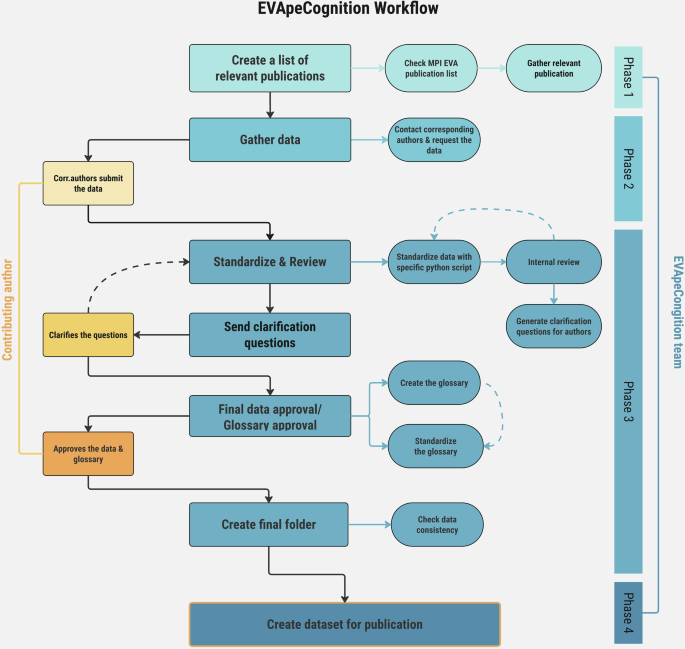
Scientific Data cover image for EVApeCognition study
Birds — Cognitive Power of the Avian Brain
- The study: A review titled "The cognitive power of the avian brain" was published in Science.
- What they found: The article discusses the sophisticated cognitive abilities of birds, challenging previous assumptions about the necessity of mammalian brain structures for complex thought. It highlights how avian brains achieve high-level cognitive processing through different neural architectures.
- Why it matters: This reinforces the concept of convergent evolution in intelligence, showing that complex cognition can arise independently in different lineages.
- Skeptic's note: Comparative studies often struggle to equate tasks across vastly different sensory worlds (e.g., visual vs. olfactory dominance).
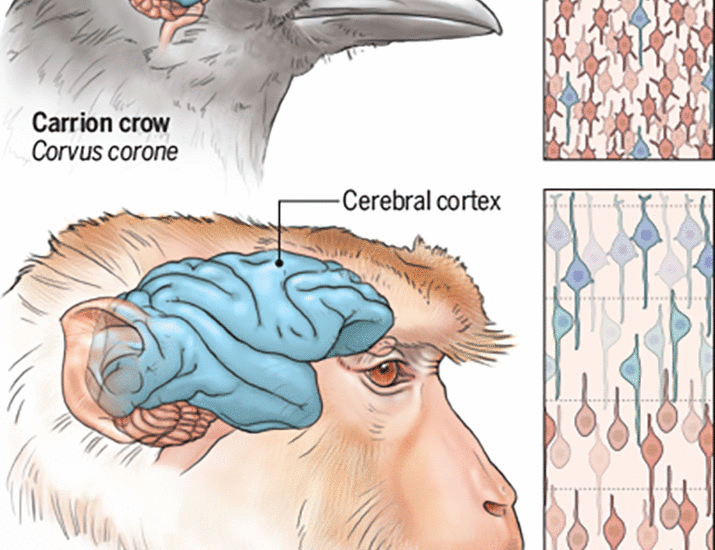
Key image from Science article on avian brain cognition
Cognitive performance is linked to fitness in a wild primate | Science Advances
The cognitive power of the avian brain | Science
 science.org
Good social skills make animals smarter | Science | AAAS
New evidence? No problem. Chimps can weigh conflicting clues, just like humans | Science | AAAS
Fruit Flies — Complete Connectome Charted
- The study: Researchers from HHMI Janelia, University of Cambridge, and Google Research published the complete male fruit fly connectome.
- What they found: The team charted more than 166,000 neurons and 125 million synaptic connections across the insect brain. This provides a complete map of the wiring diagram for an entire animal brain.
- Why it matters: This foundational map allows for the potential simulation of animal behavior and provides a blueprint for understanding how neural circuits generate behavior in a simple organism.
- Skeptic's note: A static connectome does not fully capture dynamic neural activity or plasticity in real-time behavior.

Infographic comparing animals that can be implemented as behavioral AI
Cognition Spotlight
The intersection of Artificial Intelligence and ethology is revealing a "hidden world" of animal behavior. Recent reports indicate that AI algorithms are identifying subtle behavioral patterns that human observers have long overlooked. This technology is not just automating data collection but is actively decoding complex social and environmental interactions that were previously too subtle or numerous to track manually. This shift allows researchers to detect minute variations in behavior that may signal stress, social hierarchy shifts, or novel communication methods.
Social & Emotional Lives
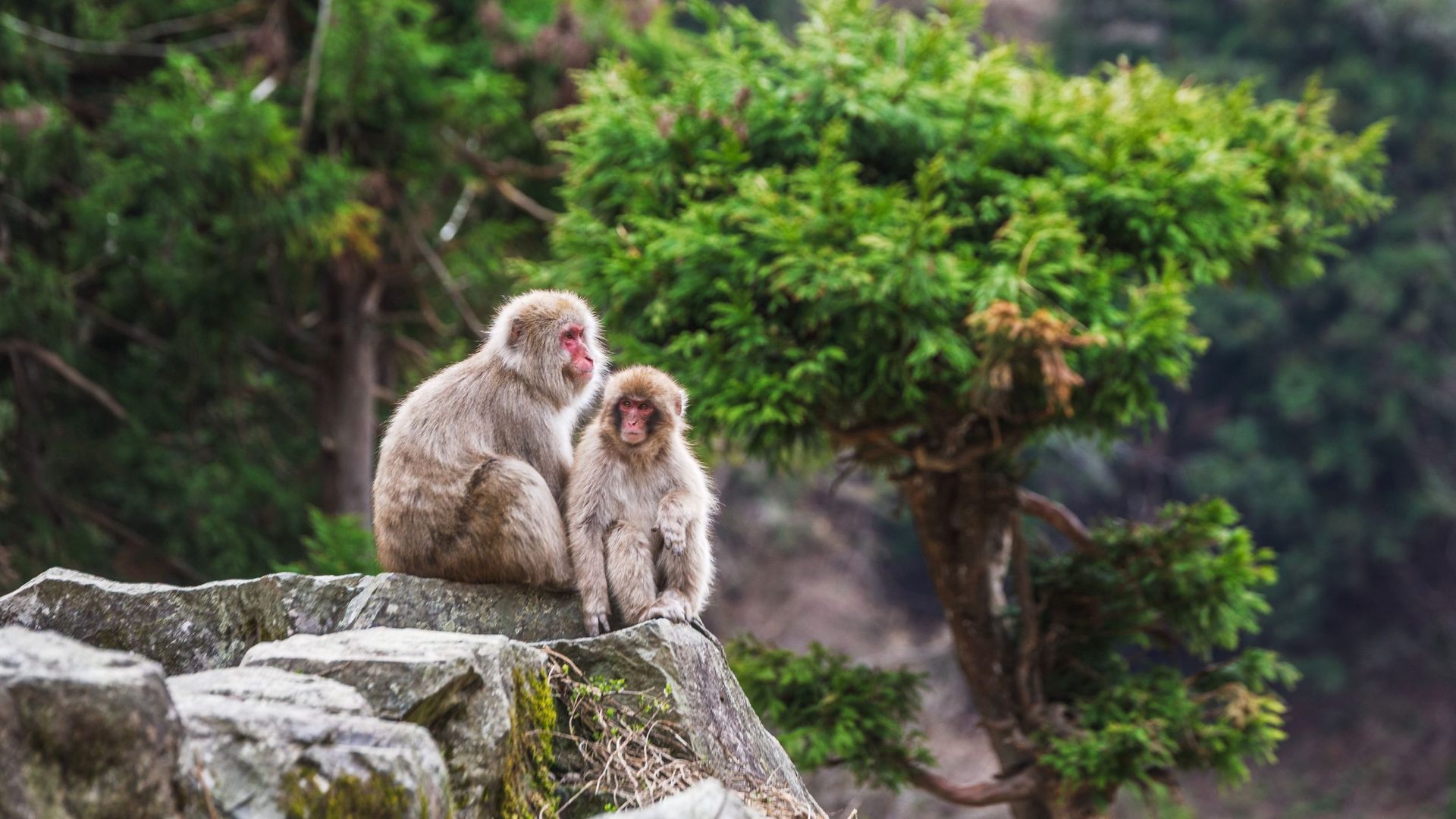
- Social Species: Research indicates that most social species, ranging from chimpanzees to social wasps, possess relatively larger brains and greater cognitive sophistication compared to solitary counterparts. This suggests a strong evolutionary link between social complexity and cognitive capacity.
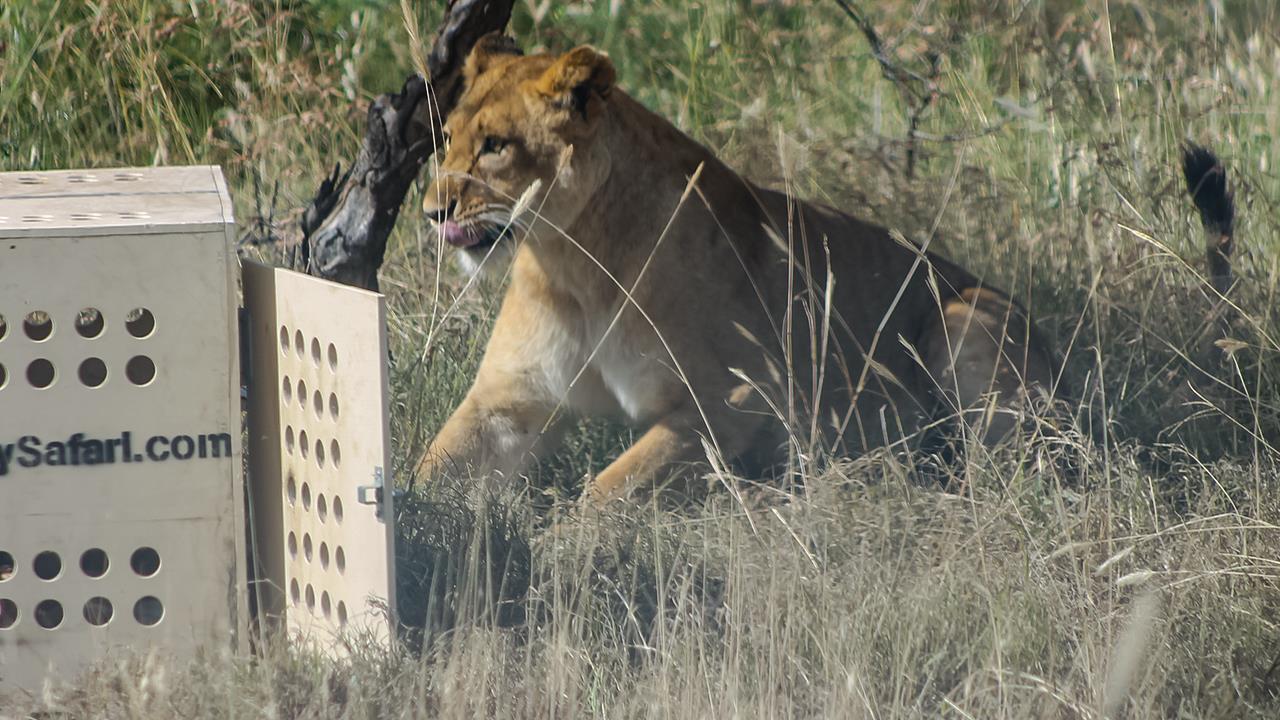
- Lions: The article on social skills uses lions as a primary example of how group living drives cognitive evolution, highlighting their sophisticated social structures and cooperative behaviors.
Cognitive performance is linked to fitness in a wild primate | Science Advances
The cognitive power of the avian brain | Science
science.orgscience.org
Good social skills make animals smarter | Science | AAAS
New evidence? No problem. Chimps can weigh conflicting clues, just like humans | Science | AAAS
Conservation & Wild Behavior
- Cattle: New research reveals that cows have a little-known ability to recognize humans. Video tests suggest that a stranger’s face can hold a cow’s attention longer than a familiar handler’s, offering clues to how cattle process social information and recognize individuals.
- Wild Primates: Studies show that cognitive performance is linked to fitness in wild primates. Selection may act upon different cognitive abilities separately or jointly as part of a general cognitive ability, suggesting that intelligence has direct survival benefits in natural environments.
Cross-Species Comparisons
The week's findings underscore a theme of convergent evolution and the deep roots of intelligence. From the 18-year dataset of great apes to the complete connectome of fruit flies and the cognitive mapping of avian brains, researchers are moving beyond simple observation to structural and longitudinal understanding. The presence of a general intelligence factor (g) is being debated in animals, with wild primate studies suggesting fitness links. Meanwhile, the "social brain hypothesis" remains strong, linking social complexity to brain size across diverse taxa like wasps and lions.
What to Watch
- Animal Behaviour Live Conference (November 12, 2026) — The flagship annual online conference will broadcast talks on the latest in animal behavior research.
- Surviving Earth (Streaming on Peacock/NBC) — A nature documentary miniseries focusing on extinct animals and mass extinction events, premiering in 2026.
- Nature Series (PBS) — Premiering September 19th, featuring new series narrated by Jane Goodall, focusing on wildlife odysseys.
Reader Action Items
- Read: The "EVApeCognition" dataset article in Scientific Data for a deep dive into long-term ape cognitive studies.
- Watch: The AI-animal behavior feature on Earth.com to see how algorithms are decoding hidden patterns.
- Observe: Watch your local birds or pets for signs of individual recognition or social problem-solving, tying into this week's findings on avian and social cognition.
Trends to Watch
- AI-Decoded Behavior: The use of machine learning to identify subtle, previously unnoticed behavioral patterns.
- Connectomics: Mapping complete neural wiring diagrams (like the fruit fly) to understand the hardware of behavior.
- Longitudinal Datasets: Large-scale, multi-decade studies (like the ape dataset) replacing small-sample snapshots.
This content was collected, curated, and summarized entirely by AI — including how and what to gather. It may contain inaccuracies. Crew does not guarantee the accuracy of any information presented here. Always verify facts on your own before acting on them. Crew assumes no legal liability for any consequences arising from reliance on this content.
Powered by
