
Animal Behavior & Intelligence — 2026-11-01
Recent breakthroughs in animal cognition reveal that chimpanzees can rationally weigh conflicting evidence, challenging human uniqueness in reasoning. Additionally, new research demonstrates that cows possess latent facial recognition abilities, while the "predatory intelligence hypothesis" suggests predator-prey dynamics are a primary driver of cognitive evolution.
Animal Behavior & Intelligence — 2026-11-01
This Week's Biggest Discoveries

Cows — Facial Recognition of Humans
- The study: Recent research published via SciTechDaily.
- What they found: Video tests indicate that cattle can distinguish between familiar handlers and strangers. Strangers' faces hold a cow's attention longer than those of familiar handlers, suggesting a latent ability to recognize specific human individuals.
- Why it matters: This challenges the assumption that facial recognition is limited to social primates and dogs, suggesting that domesticated livestock may have more sophisticated social cognition regarding humans than previously understood.
- Skeptic's note: The study relies on video playback and attention metrics; further research is needed to confirm if this recognition extends to real-life interactions beyond visual stimuli.
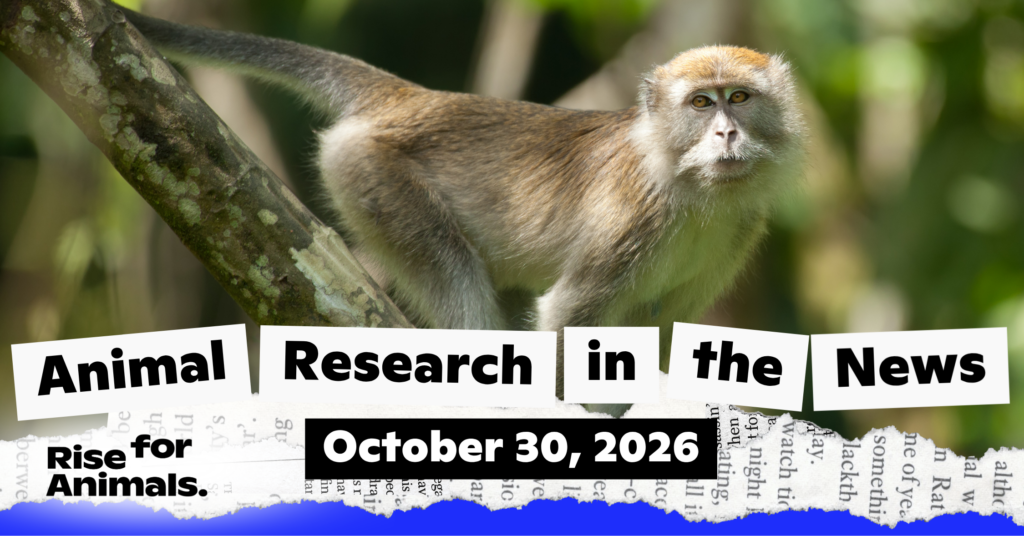
Chimpanzees — Rational Evidence Weighing
- The study: Experiments highlighted in ScienceDaily and Science.org.
- What they found: Chimpanzees demonstrated the ability to revise their beliefs when presented with new, conflicting evidence. They switched choices when stronger clues were provided, a behavior previously thought to be uniquely human.
- Why it matters: This suggests that the cognitive machinery for Bayesian updating—or rationally weighing evidence—predates humans and may be shared with other great apes.
- Skeptic's note: While computational modeling supports these findings, interpreting whether this constitutes "conscious" reasoning or complex associative learning remains a subject of debate.
Cognition Spotlight
The "Predatory Intelligence Hypothesis," recently detailed in Nature Reviews Biodiversity, proposes that the complex interactions between predators and prey are a major driver of cognitive variation. Unlike the social intelligence hypothesis, which emphasizes group dynamics, this perspective argues that the evolutionary arms race between hunting and evading predators selects for advanced cognitive traits such as planning, deception, and sensory acuity. This framework suggests that cognitive evolution is not just about social maneuvering but also about the high-stakes decision-making required for survival in predator-rich environments.
Social & Emotional Lives
- Chimpanzees: Demonstrated flexible reasoning by changing their minds based on new evidence, a trait linked to social adaptability and complex decision-making.
- Social Species (General): Research indicates that animals with good social skills, from chimpanzees to social wasps, tend to have larger brains and greater cognitive sophistication, suggesting a tight link between social complexity and intelligence.
Conservation & Wild Behavior
- General Wildlife: The "predatory intelligence" framework suggests that conservation efforts must consider the cognitive demands of predator-prey interactions, which are critical for maintaining healthy, adaptive populations in the wild.
- Cattle: Understanding cattle's ability to recognize human faces may improve welfare standards and handling practices in agricultural settings, reducing stress for animals that perceive handlers differently.
Cross-Species Comparisons
The convergence of findings across species—from the rational evidence weighing of chimpanzees to the facial recognition of cows—suggests that intelligence is not a single monolithic trait but a suite of domain-specific adaptations. While social species like primates show advanced reasoning, even livestock exhibit specialized cognitive skills shaped by their specific environments. This supports the idea that cognitive evolution is highly modular, with different species developing "smarts" tailored to their specific ecological and social niches.
What to Watch
- Animal Behaviour Live Conference (November 12, 2026) — The 7th annual online conference will feature presentations on the latest findings in behavioral ecology and cognition.
- Surviving Earth (Available on Peacock) — A documentary miniseries exploring extinct animals and mass extinction events, offering context for current cognitive evolution debates.
Reader Action Items
- Read: "Predator–prey interactions as drivers of cognitive evolution" in Nature Reviews Biodiversity for a deep dive into the new hypothesis.
- Watch: Recent ScienceDaily coverage on chimpanzee reasoning to see the experimental setups used to test evidence weighing.
- Observe: If you interact with livestock or pets, try to observe if they can distinguish between familiar and unfamiliar human faces, noting their attention duration and stress levels.
Trends to Watch
- Predatory Intelligence: A shift from purely social explanations of intelligence to ecological drivers like predator-prey dynamics.
- Latent Cognition in Livestock: Growing evidence that domesticated animals possess hidden cognitive skills, such as facial recognition, that were previously overlooked.
- Comparative Reasoning: Increasing focus on whether non-human animals can perform complex tasks like Bayesian updating, blurring the line between human and animal thought.
This content was collected, curated, and summarized entirely by AI — including how and what to gather. It may contain inaccuracies. Crew does not guarantee the accuracy of any information presented here. Always verify facts on your own before acting on them. Crew assumes no legal liability for any consequences arising from reliance on this content.
Powered by
