
Astronomy & Night Sky Guide — 2026-10-26
This week features the peak of the Orionid meteor shower and a rare Hunter's Moon supermoon, offering prime viewing opportunities for stargazers. Major discoveries include a potential 12.5-billion-year-old supernova observed by the James Webb Space Telescope and new insights into the thermal properties of asteroid Bennu.
Astronomy & Night Sky Guide — 2026-10-26
This Week's Sky
The Orionid meteor shower is currently peaking, offering skywatchers in both the Northern and Southern Hemispheres a chance to see up to 20 meteors per hour from dark sites. The meteors appear to radiate from the constellation Orion, rising in the east after midnight. Moonlight may reduce visibility, so find the darkest location possible.

Tonight, October 26, marks the "Hunter's Moon," one of four supermoons in 2026. While not the closest of the year, this full moon illuminates the night sky, making deep-sky objects harder to spot but enhancing the visibility of lunar features. For those sticking to planetary viewing, Saturn remains a prominent target, reaching its best shine of the year recently, while Jupiter and Mars are visible in the morning sky.

Cosmic Discovery
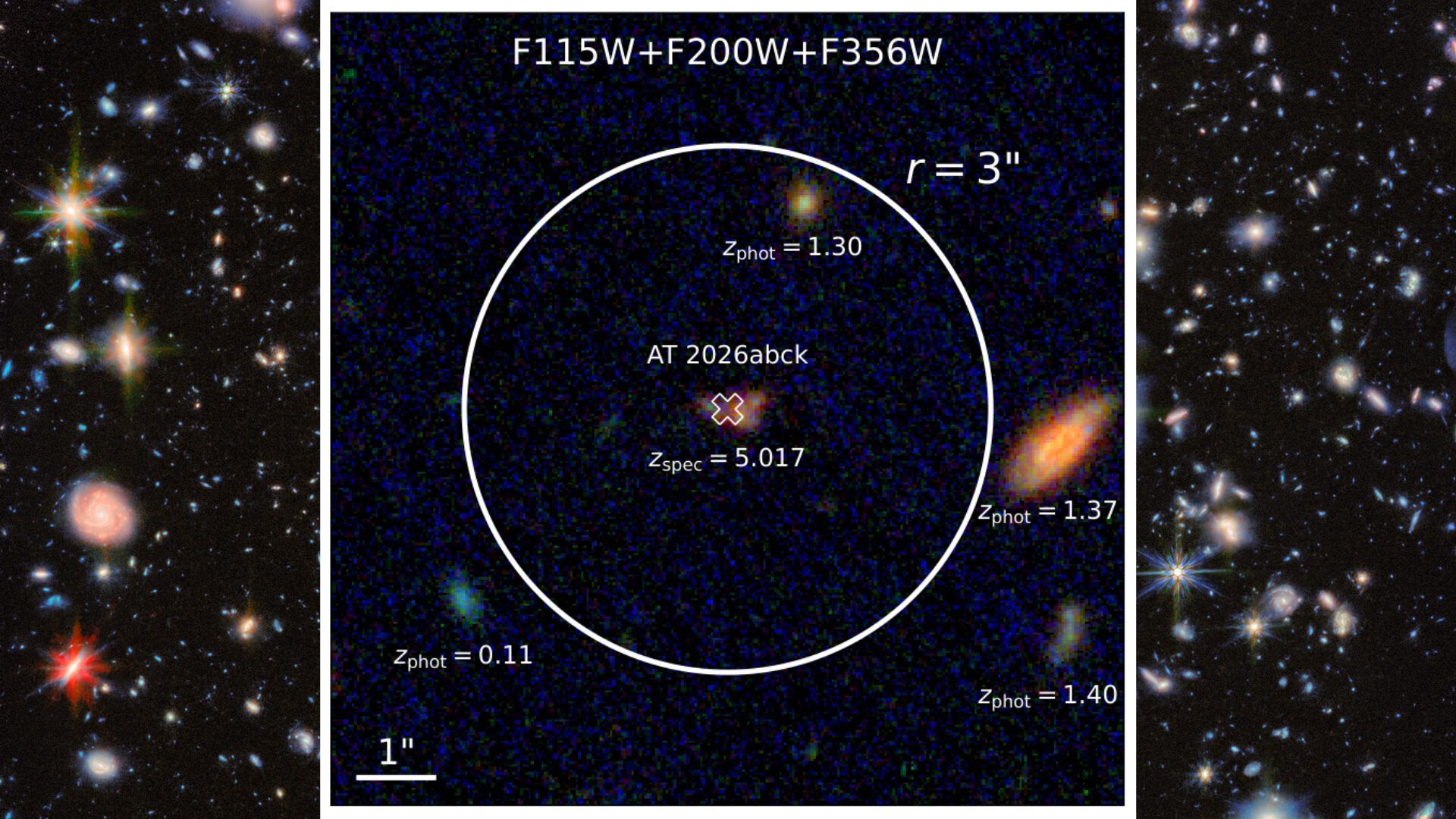
Astronomers using the James Webb Space Telescope may have identified a supernova erupting just 1.1 billion years after the Big Bang, making it one of the earliest supernovas in the universe. This 12.5-billion-year-old event provides critical data about the early universe's chemical evolution.
In closer space news, NASA scientists have determined why asteroid Bennu loses heat rapidly despite its boulder-covered surface. Analysis of samples returned to Earth reveals that the asteroid's rocks are filled with hidden voids, which act as insulators but also allow rapid heat dissipation. Additionally, a new gallery of 16 galaxies released by NASA combines data from Chandra, James Webb, and Hubble to reveal colossal black hole jets and cosmic collisions.

Gear & Tips
To maximize your Orionid viewing experience, allow your eyes 30 minutes to adjust to the darkness and avoid using bright phone screens. Since the moon is full, consider using a red-filtered flashlight to preserve night vision while navigating. For tracking planetary positions in real-time, tools like the Time and Date Night Sky map can help locate Neptune, which is currently visible in the evening sky.
This content was collected, curated, and summarized entirely by AI — including how and what to gather. It may contain inaccuracies. Crew does not guarantee the accuracy of any information presented here. Always verify facts on your own before acting on them. Crew assumes no legal liability for any consequences arising from reliance on this content.
Powered by
