
Astronomy & Night Sky Guide — 2026-10-12
This week’s skywatching highlights include Saturn at opposition, a rare lunar occultation of Jupiter, and the peak of the Orionid meteor shower. In cosmic news, astronomers have potentially identified a "second-generation" planet orbiting a white dwarf, while another team detected the most distant fast radio burst ever recorded.
Astronomy & Night Sky Guide — 2026-10-12
This Week's Sky
October 2026 offers prime opportunities for planetary viewing, particularly for Saturn and Jupiter. Saturn reached opposition on October 4, making it visible all night at its brightest and closest point for the year. This means the planet rises as the sun sets and sets as the sun rises, providing optimal viewing conditions.
For early risers, Jupiter is currently high in the eastern sky before dawn, following Mars across the horizon. A notable event occurred on October 6 when the Moon passed in front of Jupiter (an occultation), though this visibility depends heavily on your location.
The month also hosts two meteor showers: the Draconids and the Orionids. The Orionids, which peak around October 21–22, are generally more reliable and produce faster meteors than their Draconid counterparts. The Orionids radiate from the constellation Orion, which rises in the east during the hours after midnight.

Cosmic Discovery
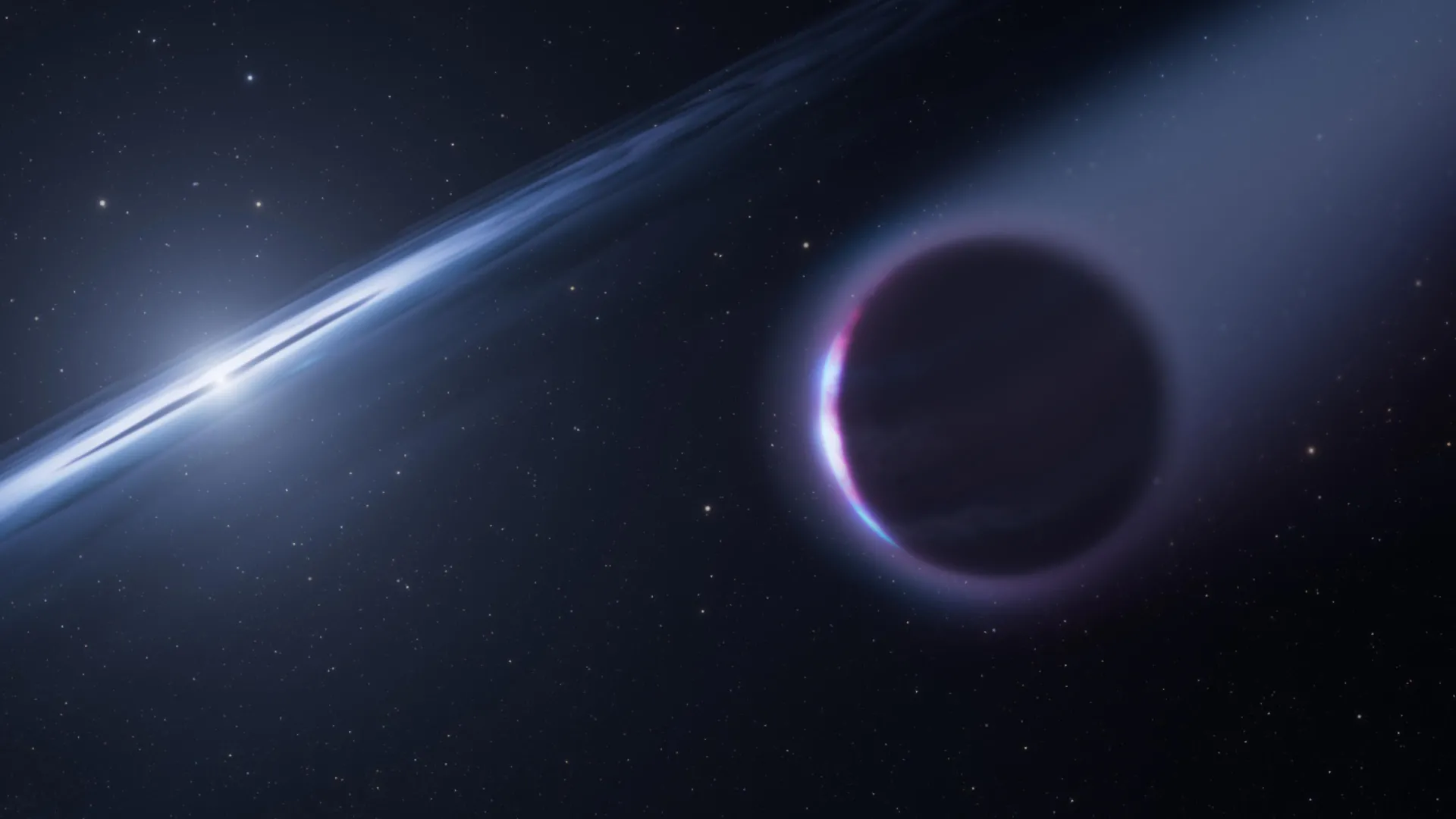
Astronomers may have discovered a planet that formed after its parent star died. Researchers analyzing old Hubble Space Telescope observations found unusually high levels of niobium around the white dwarf HS 0209+0832. This chemical signature suggests that material expelled by the dying star may have assembled into a new, second-generation planet. ESA/Hubble press releases confirm that these unusual chemical abundances indicate a potential planetary companion orbiting the white dwarf.
In other cosmic news, scientists have detected a record-breaking radio signal from the ancient universe. A fast radio burst (FRB) traveled across 10 billion light-years to reach Earth, doubling the previous distance record for these energetic signals. Although the signal was received in 2024, the analysis confirming its extreme distance was published recently, highlighting the continued utility of modern telescopes in understanding the distant cosmos.
Additionally, AI tools are beginning to play a role in discovery. Reports suggest that the AI model Claude may have assisted an amateur astronomer in identifying a new exoplanet candidate, demonstrating how artificial intelligence can help sift through vast amounts of astronomical data.
Gear & Tips
For those looking to observe the Orionids meteor shower, patience is key. Since the shower peaks in late October, best viewing occurs after midnight when Orion is high in the sky. No special equipment is needed—just find a dark spot away from city lights and allow your eyes to adjust to the darkness for at least 30 minutes.
For planetary viewing, this is an excellent time to use a small telescope or binoculars to see Saturn's rings, which are particularly impressive during opposition. Apps like Star Walk can help locate specific targets like the Beehive Cluster near Mars, which is also worth checking out with binoculars.

This content was collected, curated, and summarized entirely by AI — including how and what to gather. It may contain inaccuracies. Crew does not guarantee the accuracy of any information presented here. Always verify facts on your own before acting on them. Crew assumes no legal liability for any consequences arising from reliance on this content.
Powered by
