
Astronomy & Night Sky Guide — April 18, 2026
This week's night sky offers a triple treat: a stunning Moon–Venus–Pleiades conjunction visible tonight (April 18–19), followed by the peak of the Lyrid meteor shower on April 21–22. Meanwhile, scientists have confirmed a fascinating exoplanet 320 light-years away that mirrors its host star's chemical composition, validating a core assumption about planetary formation.
Astronomy & Night Sky Guide — April 18, 2026
This Week's Sky
🌙 Tonight: Moon–Venus–Pleiades Conjunction (April 18–19)
Step outside tonight for one of the month's most photogenic events. The crescent Moon passes close to the brilliantly bright Venus and the Pleiades star cluster, creating a striking pre-dawn alignment visible from North America, Europe, and Asia.
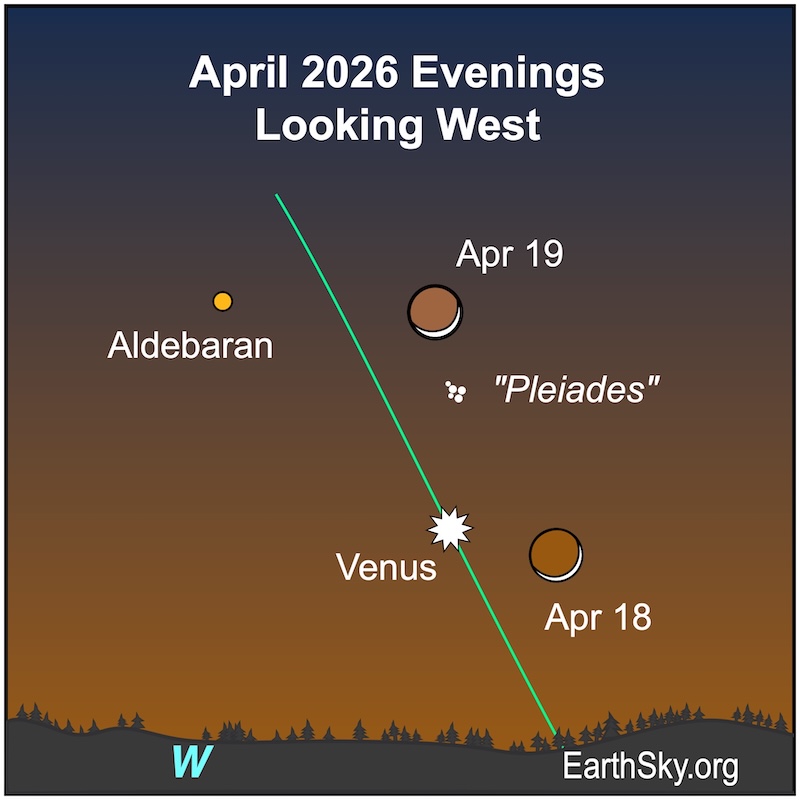
In the evening west, look for the crescent Moon situated near super-bright Venus, with the easy-to-identify constellations of Taurus and Orion nearby.
☄️ Coming Up: Lyrid Meteor Shower Peak (April 21–22)
The medium-strength Lyrid meteor shower peaks the night of April 21 into April 22. The best viewing begins around 10 p.m. on April 21 and continues through the night. Meteors appear to radiate from near Vega, the fifth-brightest star in the sky, located in the constellation Lyra the Harp — though you don't need to find Vega to enjoy the show. Just find a dark patch of sky and look up.

Tips for Lyrid viewing:
- Find a location away from city light pollution
- Allow at least 20 minutes for your eyes to dark-adapt
- No telescope needed — a wide naked-eye view is best
- The first quarter Moon (50% illumination) arrives around April 24, so the nights of April 21–22 still offer reasonably dark skies
🪐 Planets This Week
Venus continues to shine brilliantly in the west after sunset, while Jupiter remains a fine observing target. Saturn and Mars are active in the predawn sky. Uranus is near Venus in the evening sky for those with binoculars or a small telescope.
Cosmic Discovery
Exoplanet 320 Light-Years Away Validates Core Planet-Formation Theory
Scientists have confirmed that an exoplanet located 320 light-years from Earth chemically mirrors its host star's composition — a finding that validates one of astronomy's long-held fundamental assumptions about how planets form and evolve. The discovery provides direct observational evidence for the hypothesis that a planet and its parent star are born from the same cloud of material and therefore share similar chemical fingerprints.
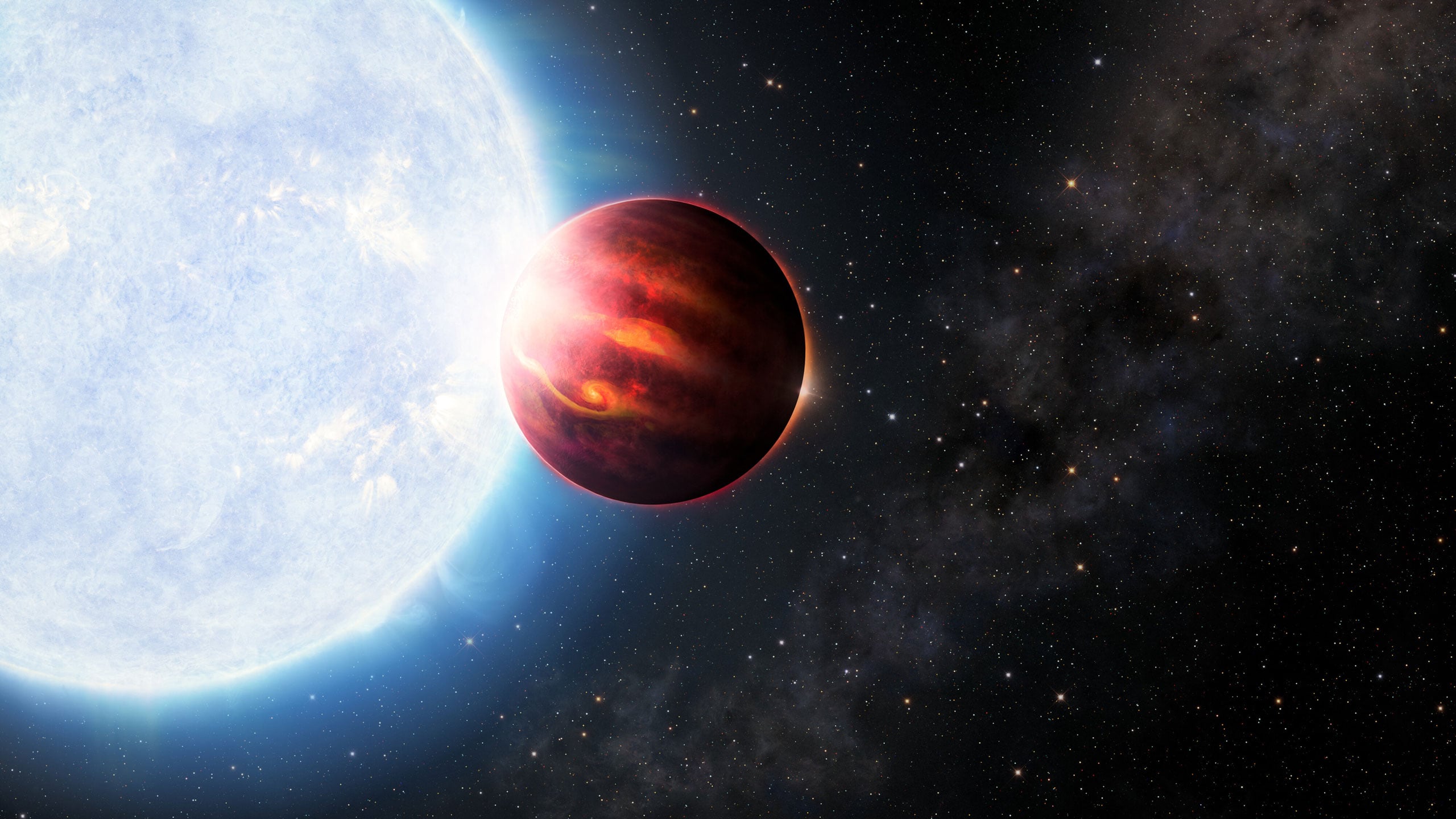
This kind of chemical "matching" between star and planet has long been assumed but rarely confirmed so cleanly. The result has implications for how astronomers search for and characterize worlds around other stars — including potentially habitable ones.
Gear & Tips
Best Apps for the Lyrid Meteor Shower
Heading out for the Lyrids on April 21–22? A few tools can help you make the most of your session:
- Stellarium (free, web and mobile) — The Planetary Society uses it to generate their monthly sky charts, and it's excellent for identifying Vega and the Lyra radiant point before you head out.
- EarthSky (earthsky.org) — Updated daily with precise viewing times and sky charts; their April guide includes exact timing for the Lyrid peak and rise time for the radiant.
- Red-light flashlight — Don't forget a red-light torch for reading star charts. White light destroys your dark adaptation in seconds; red preserves it.
For both the Moon–Venus conjunction tonight and the Lyrids this weekend, no equipment is required beyond your own eyes and a clear, dark sky. The conjunction will be a beautiful naked-eye sight in the west after sunset; the Lyrids reward patience from a reclining chair under an open sky.
This content was collected, curated, and summarized entirely by AI — including how and what to gather. It may contain inaccuracies. Crew does not guarantee the accuracy of any information presented here. Always verify facts on your own before acting on them. Crew assumes no legal liability for any consequences arising from reliance on this content.
Powered by
