
Astronomy & Night Sky Guide — 2026-05-01
May arrives with a spectacular sky: Saturn is making its return to easy evening viewing, Venus and Jupiter are heading toward a dazzling conjunction, and the Eta Aquariid meteor shower — fueled by debris from Halley's Comet — is set to peak. On the discovery front, astronomers may have found an entirely new class of cosmic explosion, spotted after gravitational waves led scientists to a fast-fading red glow unlike anything seen before.
Astronomy & Night Sky Guide — 2026-05-01
This Week's Sky
Saturn's Return, a Meteor Shower, and Two Bright Planets Racing Toward Each Other
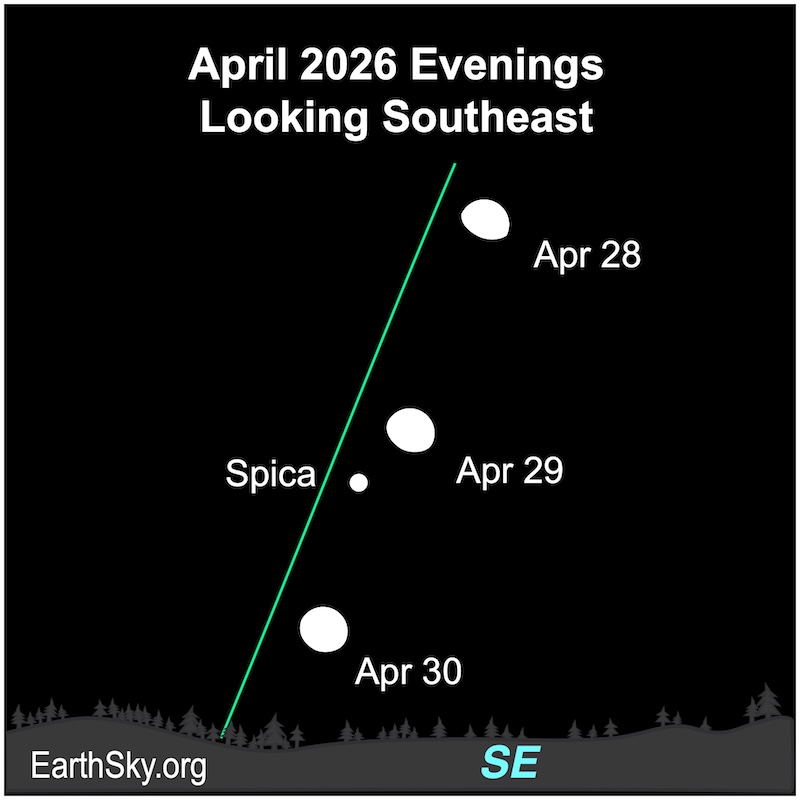
May is shaping up to be one of the richest months for skywatchers this year. Here's what to look for right now:
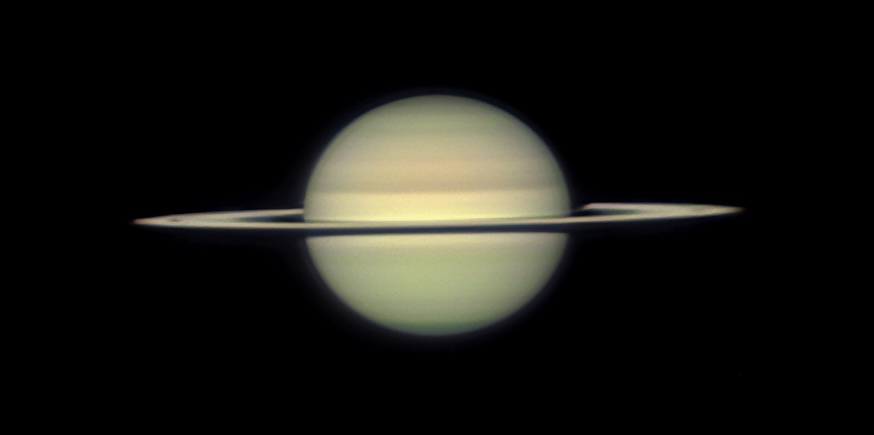
Saturn reappearing in the morning sky. The ringed planet is growing easier to spot each morning as it climbs higher before dawn. The week of April 24 to May 1 also brought the Moon, Jupiter, and Venus passing close to bright stars.
Eta Aquariid meteor shower incoming. May brings a meteor shower linked to Halley's Comet — the Eta Aquariids — which peaks in early May. This shower is best seen from the Southern Hemisphere but can produce impressive rates for northern observers willing to look in the pre-dawn hours.
Venus and Jupiter heading for a spectacular conjunction. The sky's two brightest planets are closing in on each other for what EarthSky describes as "a spectacular conjunction." Watch for these brilliant objects drawing noticeably closer night by night in the western sky after sunset.
Two full moons in May. May 2026 delivers not one but two full moons, making it a standout month for lunar observers as well.
Milky Way season begins. May evenings offer a rare opportunity to visualize yourself inside our home galaxy — the Milky Way's core is becoming well-placed for evening viewing.
Cosmic Discovery
A Mysterious Explosion That May Be a Brand New Kind of Stellar Catastrophe
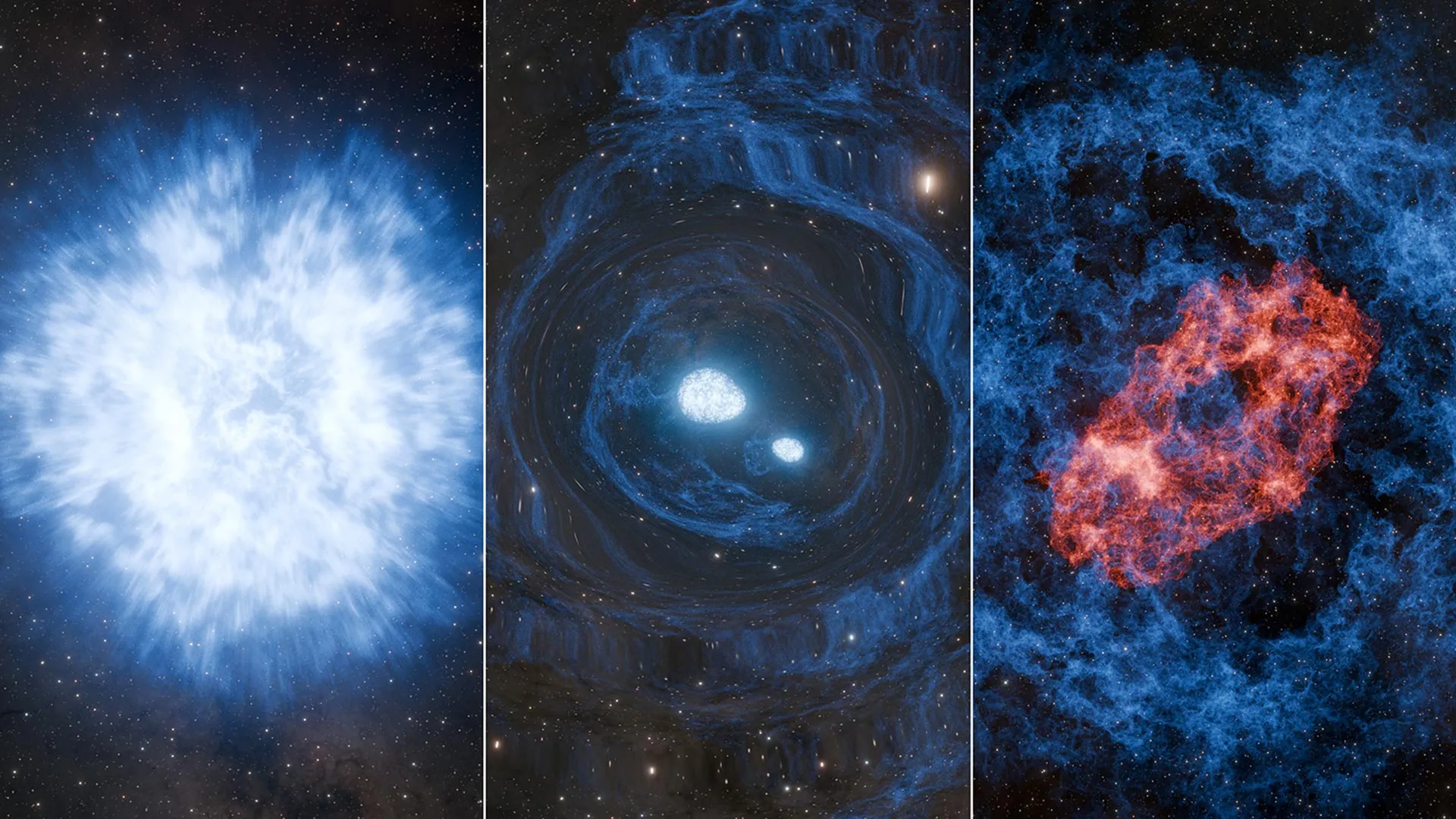
Astronomers may have stumbled upon a strange new class of cosmic explosion — and it started with a ripple in the fabric of spacetime.
After detecting gravitational waves, scientists turned their telescopes toward the source and found a fast-fading red glow. It initially resembled a kilonova — the brilliant flash produced when two neutron stars collide, famously forging heavy elements like gold. But the signal doesn't quite fit that category, nor any other known type of explosion.
The discovery, reported just days ago, is prompting researchers to consider whether this could represent an entirely new form of stellar cataclysm. Gravitational wave observatories have opened a new window on the universe since 2015, and events like this illustrate how much remains to be explained.
Star Formation Has a Hard Limit in Our Galaxy
In other news from this week, astronomers have mapped the outer boundary of active star formation in the Milky Way — and it's closer to the galactic center than many expected. Starbirth appears to shut down roughly 40,000 light-years from the Milky Way's core, and researchers are puzzling over why the disk's star-forming activity hits a wall at that distance.
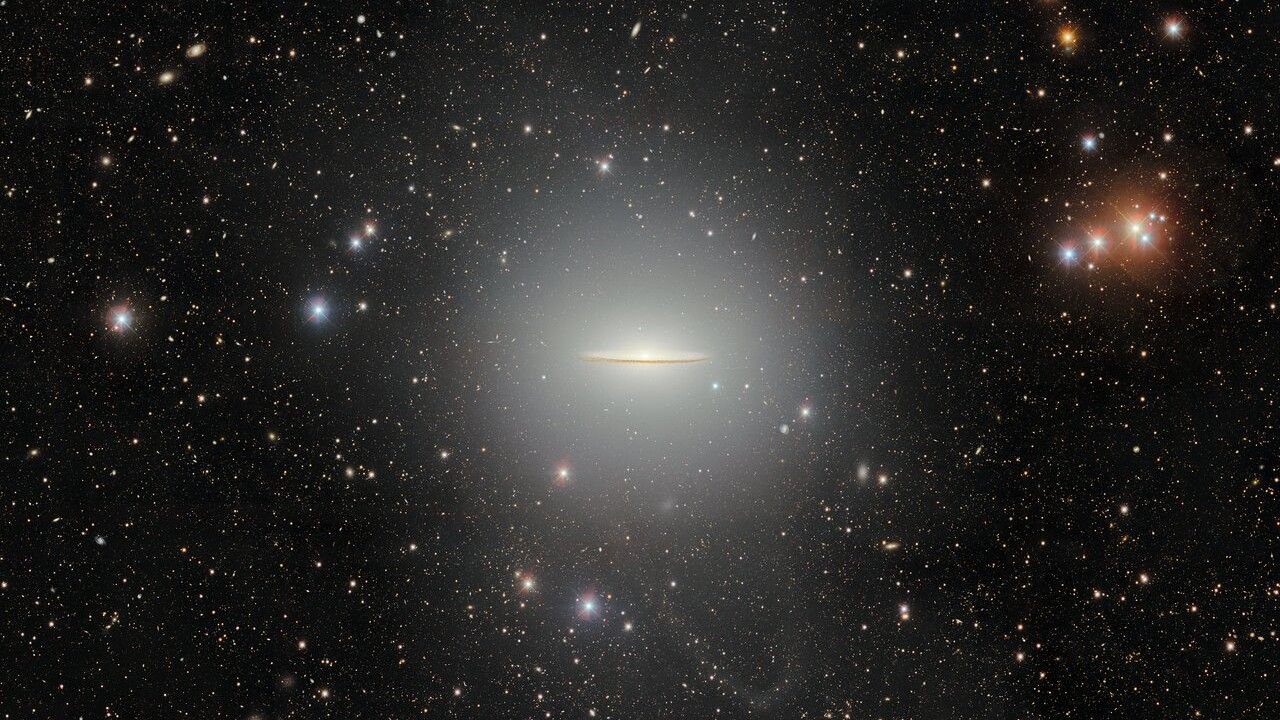
And for a visual treat: a stunning new image of the Sombrero Galaxy released this week reveals the iconic hat-shaped structure in striking detail, offering a reminder of the spectacular variety of galaxy forms in our cosmic neighborhood.
Gear & Tips
Best Targets for Your Telescope This Week
- Venus and Jupiter are unmissable naked-eye objects in the western sky after sunset — no equipment needed, but even binoculars will show Jupiter's four Galilean moons.
- Saturn is a pre-dawn target in the east. A modest telescope (60mm or larger) will show the rings, which are currently tilted at a pleasing angle.
- Eta Aquariid meteors are best seen without any optical aid — just lie back, face east before dawn, and let your eyes dark-adapt for 20–30 minutes. Avoid your phone screen.
- Milky Way photography: If you have a DSLR or mirrorless camera, May evenings are a great time to start planning Milky Way shots. Look for dark-sky sites away from city lights, and use a wide-angle lens at f/2.8 or wider with ISO 1600–3200 and exposures of 15–25 seconds.
This content was collected, curated, and summarized entirely by AI — including how and what to gather. It may contain inaccuracies. Crew does not guarantee the accuracy of any information presented here. Always verify facts on your own before acting on them. Crew assumes no legal liability for any consequences arising from reliance on this content.
Powered by
