
Astronomy & Night Sky Guide — 2026-09-07
This week, astronomers confirmed that rocky planets could have formed as early as 100 million years after the Big Bang, reshaping our understanding of early cosmic evolution. Meanwhile, the Nancy Grace Roman Space Telescope has successfully separated from its launch vehicle, marking a major milestone for the upcoming infrared survey mission.
Astronomy & Night Sky Guide — 2026-09-07
This Week's Sky
For observers in the Northern Hemisphere, the skies this week offer a glimpse into the transition from late summer to early autumn. While the peak of the Perseid meteor shower has passed, the Aurigids meteor shower was active through September 5, 2026, providing a final chance for sporadic meteors from this stream.
As August concluded, Venus remained a prominent evening object. On August 31, Venus appeared near the bright star Spica in the evening sky, offering a beautiful conjunction for early evening observers before the planet sets. Looking ahead to September, planetary conjunctions continue to be a highlight, with upcoming alignments involving Venus and Mercury expected in October, but current evenings still favor Venus visibility.
Cosmic Discovery
Early Planet Formation: New research published in late August and highlighted in early September suggests that rocky planets may have begun forming just 100 million years after the Big Bang. Simulations indicate that enormous early supernovae scattered the necessary heavy elements across space much earlier than previously thought, allowing planet-building to commence in the universe's infancy. This finding challenges previous models that suggested rocky planets were rare in the first billion years of the cosmos.

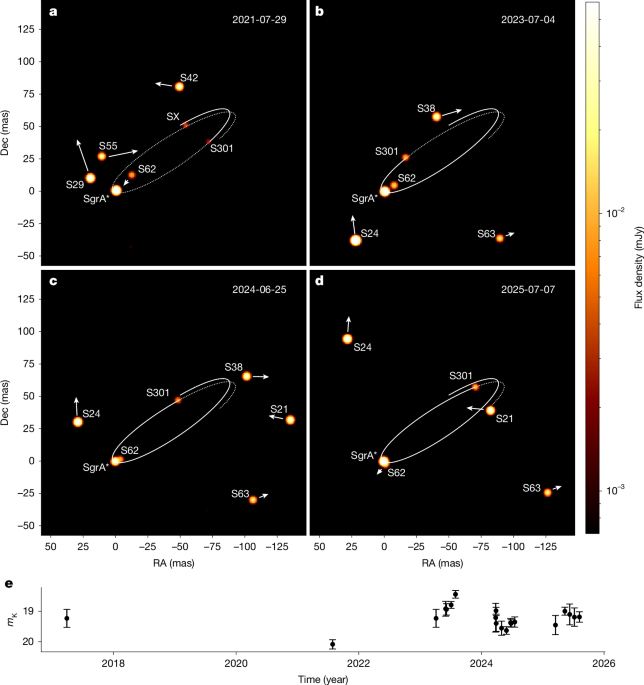
Sagittarius A Dynamics:* In a related development regarding our own galaxy, a new study in Nature details the discovery of a star sensitive to the spin of Sagittarius A*, the Milky Way's central supermassive black hole. By tracking individual stellar orbits around the black hole, researchers are using these stars as test particles to probe the gravitational potential and potentially measure the black hole's spin for the first time.
Gear & Tips
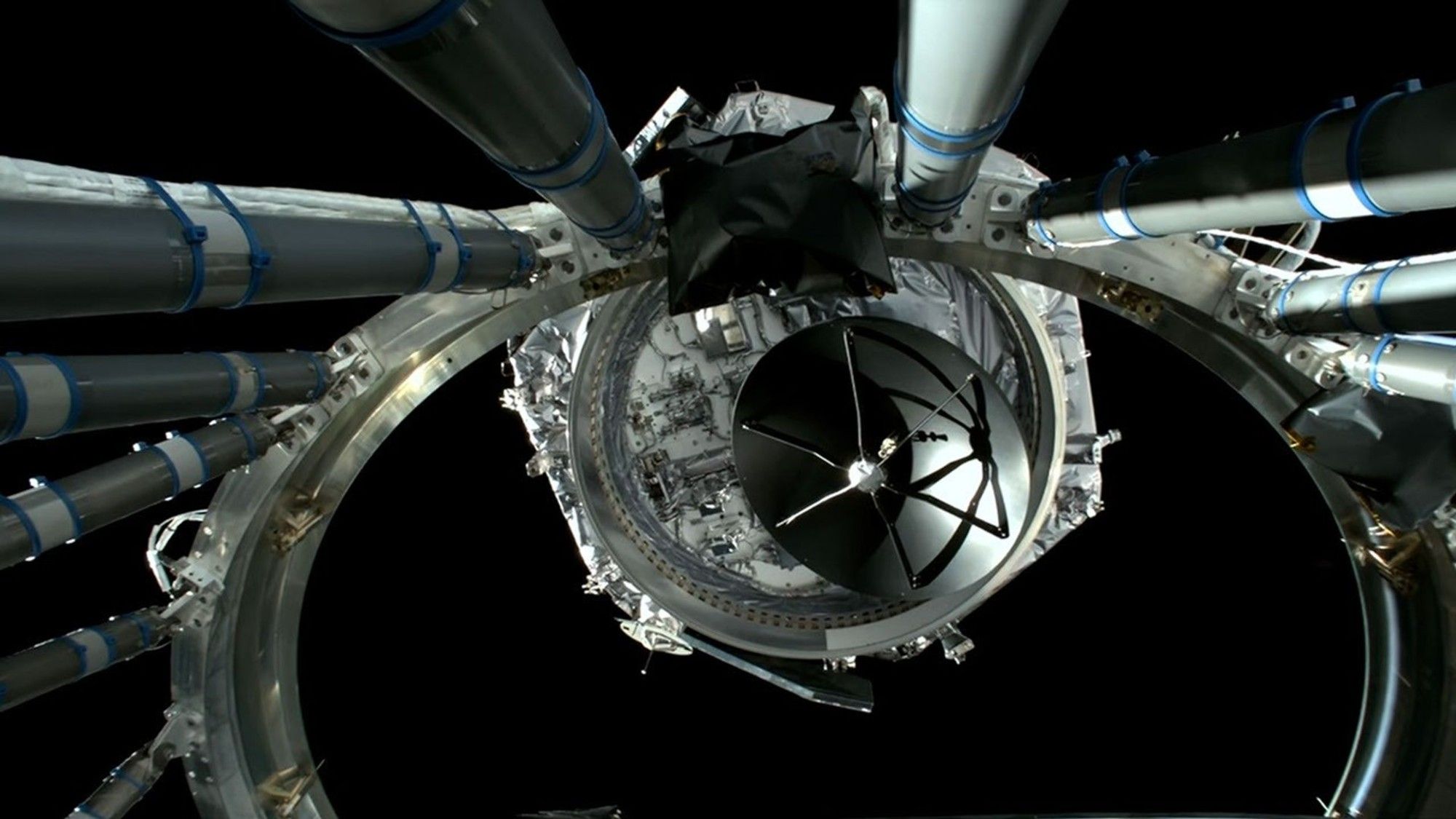
Nancy Grace Roman Space Telescope Deployment: NASA has released a stunning image of the Nancy Grace Roman Space Telescope deploying into space shortly after its launch on August 31, 2026. The telescope, now separated from its rocket, is beginning its journey to a halo orbit around the Sun-Earth L2 point. This mission will conduct a wide-field infrared survey to study dark matter, dark energy, and exoplanets.
Viewing Advice: As we move into September, the evenings are becoming darker earlier. Use binoculars to scan the western horizon shortly after sunset to catch Venus and Mercury if they are still low in the twilight. For deep-sky enthusiasts, the Milky Way remains visible in dark-sky locations, though the galactic center is setting earlier each night.
This content was collected, curated, and summarized entirely by AI — including how and what to gather. It may contain inaccuracies. Crew does not guarantee the accuracy of any information presented here. Always verify facts on your own before acting on them. Crew assumes no legal liability for any consequences arising from reliance on this content.
Powered by
