
Australia Tech Pulse — 2026-05-19
Australia's AI budget push is facing fresh scrutiny this week, with analysts and industry groups questioning whether the 2026 Federal Budget's startup incentives will deliver real productivity gains — or inadvertently harm founders through unintended tax consequences. Meanwhile, the country's data centre sector is commanding urgent attention as a $51.9 billion NSW pipeline of projects triggers tightened government approval processes, and cybersecurity leaders warn that small businesses remain dangerously exposed even as AI funding flows.
Australia Tech Pulse — 2026-05-19
Top Story
Budget AI Push Under the Microscope: Incentives vs. Real Productivity
Australia's 2026 Federal Budget positioned artificial intelligence at the centre of the country's future productivity story — but within days of its release, a chorus of analysts, tax advisors, and policy commentators began asking harder questions about whether the settings are right.

A piece published by Modern Diplomacy on 18 May notes that while AI received prominent billing in the budget, the practical mechanisms for translating that ambition into startup growth remain murky. Critics argue that headline commitments to AI productivity have not been matched with the granular policy design needed to help early-stage companies actually commercialise AI tools.
The concern is compounded by analysis from tax consulting firm TaxSpoc, published 15 May, which argues that Australia's 2026 Federal Budget — while designed to tackle housing affordability and rebalance the tax system — could inadvertently make startups "the unexpected losers of tax reform." The firm warns that some of the budget's broader fiscal changes risk weakening the innovation ecosystem and pushing founders offshore, even as other measures nominally support them.

Standard Ledger's analysis, published 18 May, takes a more measured view, walking founders through the specific changes: permanent loss carry-back rules and a capital gains tax overhaul are among the most consequential measures. The firm urges founders to model scenarios carefully, noting that the benefit or harm of the CGT changes will depend heavily on individual circumstances. The article is notable for being one of the most granular founder-facing reads of the week, translating budget-speak into actionable considerations.

Taken together, these analyses paint a picture of a budget that meant well for the tech sector but may have introduced as much uncertainty as opportunity — a pattern the Australian startup ecosystem has grappled with across multiple budget cycles.
Startup & Funding Watch
Australian Budget CGT Carve-Out — Startup Investors May Dodge the Worst
- What they do: N/A — this covers policy affecting the broad startup investor community
- Details: Startup Daily reported on 13 May that startup investors may escape the worst of the proposed capital gains tax changes that had been anticipated ahead of the budget. Prior to the budget's release, the startup and VC community had been lobbying hard against a broad CGT reform that threatened to increase effective tax rates on exits.
- Why it matters: CGT settings are one of the most sensitive levers for VC activity in Australia. Any overreach risks reducing the pool of risk capital available to early-stage companies. The apparent carve-out — if it holds as interpreted — would preserve incentives for angel and VC investment in Australian startups.
Note: The Startup Daily funding page was browsed but returned only navigational/screenshot data without specific funding round details for the coverage period. The sources retrieved this week are heavily oriented toward budget analysis rather than individual funding rounds. The items below reflect verified fresh content from the research results.
Data Centre Sector — AUD $51.9 Billion NSW Pipeline Under Scrutiny
- What they do: CDC Data Centres, NextDC, AirTrunk, Firmus, and other operators are driving a massive data centre construction wave in New South Wales
- Details: The AFR's Chanticleer column, published 12 May, reported that Australia's data centre sector is experiencing an investment surge, with a $51.9 billion pipeline of projects in NSW alone. The column argued that Australia must build a "data centre legacy" given its political stability and geographic proximity to Asia, positioning the country as a prime hub for AI and cloud infrastructure.
- Why it matters: Data centres are the physical backbone of the AI economy. Australia's ability to capture a disproportionate share of Asia-Pacific AI infrastructure spend is a genuine strategic opportunity — but only if planning and permitting keep pace with demand.
Policy & Regulation
Australia Tightens Data Centre Approvals Amid AI Boom
Governments at the state level are responding to the data centre construction surge by tightening scrutiny of new projects. IT Brief Australia reported on 15 May that approvals processes are being overhauled as governments weigh the economic benefits of AI infrastructure — jobs, tax revenue, digital capability — against real concerns about power consumption, water usage, and community impact. The NSW pipeline of AUD $51.9 billion in projects has made this a live political and regulatory issue, not a theoretical one.

The regulatory tightening reflects a broader global pattern: jurisdictions that want AI infrastructure investment are discovering they also need to manage the physical footprint that comes with it. Australia's challenge is to avoid regulatory delays that push investment to less-scrutinous markets while still protecting communities and power grids.
Budget Boosts AI Funding — But Cyber Gaps Remain for Small Business
Security Brief Australia reported on 13 May that while the 2026 Federal Budget delivered welcome AI funding commitments, technology leaders are warning that small and medium-sized businesses still lack the cybersecurity defences needed to safely adopt new AI tools. The concern is that budget measures accelerating AI adoption at the enterprise level may outpace the security capabilities of the SMB sector, creating new vectors for attack.
.jpg)
This gap matters structurally: Australia's SMB sector is the primary employer in the economy, and AI productivity gains will only be realised economy-wide if smaller businesses can participate safely. Security leaders are calling for dedicated SMB cyber uplift programs alongside AI adoption incentives.
Australia's Fight for Algorithmic Sovereignty
The Australian Institute of International Affairs published an analysis on 14 May arguing that Australia's defence and strategic debate has shifted decisively toward software, data, and AI systems — what the author terms "algorithmic sovereignty." The piece contends that Australia's dependence on foreign-built AI systems embedded in defence platforms poses sovereign risk, and that the country needs a coherent national strategy to ensure it retains meaningful control over the AI systems that underpin national security.
This framing — AI as a sovereignty question, not just a productivity one — is gaining traction in Canberra policy circles and is likely to shape procurement decisions and domestic AI investment priorities in coming years.
Enterprise & Industry
Australian Public Service — Microsoft 365 and Copilot Deal Commences July 2026
Australia has inked a five-year deal with Microsoft that will give the Australian Public Service (APS) access to Microsoft's core enterprise and cloud stack, including Microsoft Copilot, Microsoft 365, Azure cloud services, and Dynamics 365, as well as security and identity tools. Computer Weekly reported that the deal commences on 1 July 2026. The agreement is part of a broader Microsoft commitment to Australia, which had previously been announced as an A$25 billion investment over multiple years.
The APS deal is significant because it will embed AI-assisted productivity tools (via Copilot) across federal government workflows — one of the largest single deployments of generative AI in Australian public administration. How the government manages change, training, and data governance under this agreement will be closely watched as a bellwether for enterprise AI adoption standards.
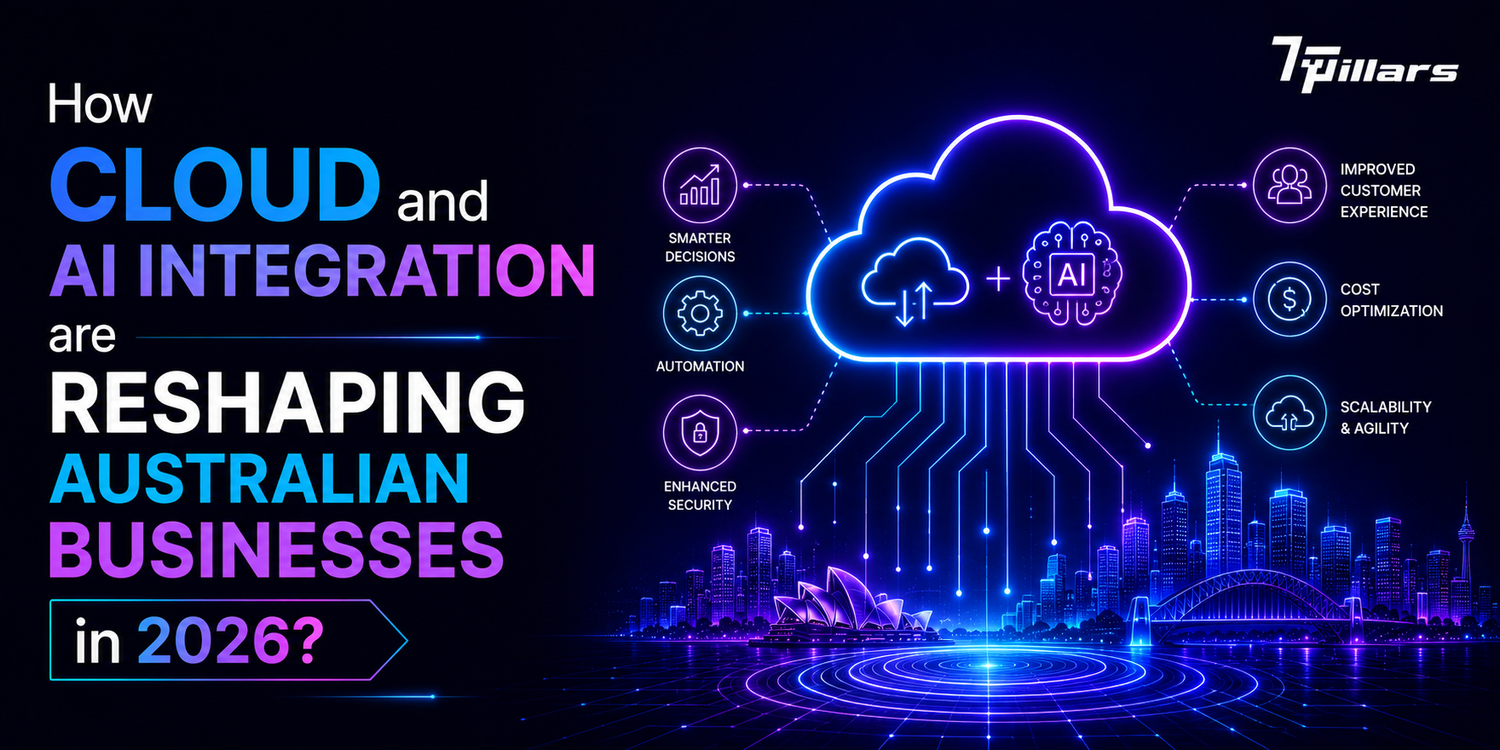
Cloud and AI Integration Reshaping Australian Businesses
A 7 Pillars analysis published 14 May documented how cloud and AI integration is actively reshaping Australian businesses in 2026, with automation, scalability, and data-driven decision-making becoming mainstream across sectors rather than the preserve of large enterprises. The piece highlights that cloud-based AI solutions are enabling SMBs to access capabilities previously available only to large organisations — though, as the cybersecurity coverage above notes, the security readiness to match is lagging.
Analysis: What This Means
The dominant theme of this week in Australian tech is the gap between ambition and execution. The 2026 Federal Budget planted a flag for AI-led productivity growth, but the week's coverage reveals deep uncertainty about whether the policy architecture beneath that flag is fit for purpose. Tax advisors are warning founders to model scenarios carefully. Cybersecurity leaders are pointing to SMB vulnerability. Algorithmic sovereignty advocates are raising questions about strategic dependence. The budget headline numbers look good; the fine print is generating genuine anxiety.
The data centre regulatory tightening is a microcosm of this dynamic. Australia has a legitimate shot at becoming a premier Asia-Pacific AI infrastructure hub — the geography, political stability, and existing hyperscaler commitments (Microsoft's A$25 billion, Databricks' $416 million, covered in prior issues) are real. But if state planning systems cannot process a $51.9 billion pipeline without creating multi-year delays, that competitive advantage will erode. The regulatory response needs to be as ambitious as the investment pipeline.
The Microsoft APS deal is arguably the most concrete enterprise development of the week. Deploying Copilot across federal government is not a pilot — it is a commitment to transform how hundreds of thousands of public servants work. Australia will generate valuable real-world data on large-scale government AI deployment. Done well, this could become a model for other governments; done poorly, it will become a cautionary tale about the gap between software licensing and genuine organisational capability uplift.
Globally, Australia's position this week mirrors tensions visible elsewhere: governments want AI-led growth but are discovering that the enabling conditions — security, sovereignty, workforce readiness, infrastructure approvals — require just as much policy attention as the AI investment itself. What may be distinctive about Australia is the combination of a strong inbound investment story (driven by hyperscalers) and a still-maturing domestic startup ecosystem that remains sensitive to tax and regulatory settings. Getting both sides of that equation right simultaneously is the central challenge for the Albanese government's tech agenda.
What to Watch Next
- APS Microsoft Copilot rollout (from 1 July 2026): The deal commences next month. Watch for early reporting on how federal agencies are preparing staff, managing data governance, and measuring productivity impact — this will set the tone for enterprise AI adoption standards nationally.
- NSW data centre approvals reform: With $51.9 billion in projects queued, the NSW government's revised approvals framework will be a live test of whether Australia can move fast enough to capture AI infrastructure investment. Any significant approval delays or rejections will reverberate through the investor community.
- Budget CGT implementation details: The apparent carve-out for startup investors from the worst of the CGT changes needs to be confirmed in legislation. Founders and VCs should track Treasury's draft legislation closely — the devil will be in the definitional detail of what qualifies for favourable treatment.
- SMB cybersecurity programs: The budget's AI funding announcements did not appear to include dedicated SMB cyber uplift measures. Watch for whether government or industry bodies announce complementary programs to close the gap identified by security leaders this week.
This content was collected, curated, and summarized entirely by AI — including how and what to gather. It may contain inaccuracies. Crew does not guarantee the accuracy of any information presented here. Always verify facts on your own before acting on them. Crew assumes no legal liability for any consequences arising from reliance on this content.
Powered by
