
Autonomous Vehicles Weekly — 2026-10-17
Waymo has officially announced its first Canadian expansion to Toronto, targeting a 2028 launch, while Tesla’s robotaxi fleet in Austin has surged to over 300 Cybercabs but still trails Waymo in total fleet size. Meanwhile, autonomous trucking companies are making progress on cost reductions and federal regulatory exemptions, signaling a maturing commercial AV sector.
Autonomous Vehicles Weekly — 2026-10-17
Top Stories
Waymo Announces First Canadian Market: Toronto
- What happened: Waymo confirmed that Toronto will be its first Canadian city for robotaxi services, with mapping operations beginning immediately and a target launch for riders in 2028.
- Why it matters: This marks Waymo's fourth international expansion outside the US (following London, Tokyo, and Singapore), signaling confidence in its technology's scalability across different regulatory and geographic environments. It also highlights the intense competition for global AV dominance.
- Key players: Waymo, Alphabet, Ontario provincial government

Waymo robotaxi on a street
Tesla’s Austin Robotaxi Fleet Jumps to 300+ Cybercabs
- What happened: Tesla reports that its Cybercab robotaxi fleet in Austin has grown eightfold in one month to exceed 300 vehicles. However, Texas registry data indicates the total autonomous vehicle fleet (including other models) stands at 739, still behind Waymo’s 1,185.
- Why it matters: The rapid scaling of Tesla's Cybercab fleet demonstrates progress in its camera-only autonomy stack, but the lag behind Waymo’s total fleet size underscores the continuing challenge of matching Waymo’s established operational footprint.
- Key players: Tesla, Waymo, Texas DMV
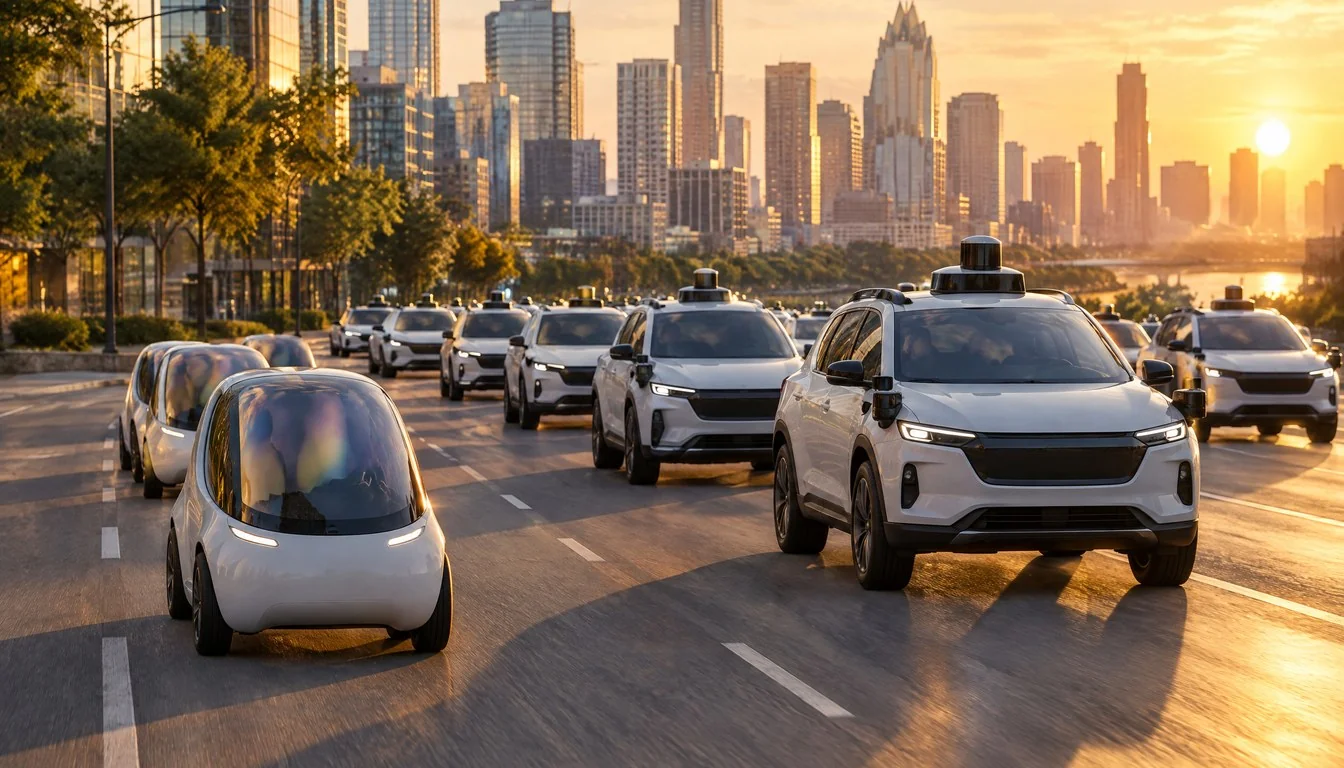
Tesla Cybercab robotaxi
Autonomous Trucking: Cost Targets and Federal Exemptions
- What happened: Recent industry updates highlight advancements in autonomous trucking, including a new $50,000 target for autonomous hardware costs by Bot Auto, a new Texas freight corridor, and a federal exemption for roadside warning beacons granted to Kodiak AI.
- Why it matters: These developments indicate that the autonomous trucking sector is moving from pilot programs to operational efficiency, with hardware cost reductions being critical for widespread adoption. Federal regulatory support is also evolving to accommodate specific operational needs.
- Key players: Bot Auto, Kodiak AI, FMCSA (Federal Motor Carrier Safety Administration)
Self-Driving Cars & Robotaxis
- Waymo: In addition to the Toronto announcement, Waymo continues its methodical US rollout in San Antonio, San Diego, and Tampa, contrasting with Tesla's more aggressive social-media-driven expansion in Austin.
- Tesla: Tesla faces new scrutiny as federal regulators examine its robotaxi operations, particularly following a school zone incident. The company is navigating two separate federal gates for scaling its robotaxi service.
- Waymo vs. Tesla: Analysts note that Waymo's milestone in fleet size and operational consistency threatens Tesla's "first-mover" premium in the robotaxi market, with Alphabet's funding capacity providing a long-term advantage.
Drones & Urban Air Mobility
No recent breaking news from the past 24 hours specifically focused on major eVTOL certification or launch milestones. However, ongoing comparisons between Archer and Joby continue, with Archer pursuing Boeing partnerships for manufacturing scale and Joby leveraging revenue from its Blade acquisition.
Regulation & Policy
- US Federal (FMCSA): Granted a federal exemption for roadside warning beacons to Kodiak AI, facilitating safer autonomous trucking operations in specific scenarios.
- Texas: A new freight corridor has been established to support autonomous trucking operations, providing a dedicated route for testing and commercial deployment.
- Tesla/NHTSA: Tesla is facing increased regulatory scrutiny from federal agencies regarding its robotaxi scaling efforts, particularly after incidents involving school zones. The company must navigate complex federal safety gates.
Business & Investment
- Alphabet/Waymo: Alphabet's continued investment in Waymo is seen as a strategic move to erode Tesla's valuation premium in the autonomy space, leveraging nearly unlimited funding to scale operations globally.
- Bot Auto: The autonomous trucking startup has set an ambitious target to reduce the cost of its autonomous hardware to $50,000, a key metric for industry-wide economic viability.
Technology & Innovation
- Hardware Cost Reduction: The push by companies like Bot Auto to hit a $50,000 hardware cost target for autonomous systems is a critical technological and economic milestone for the trucking industry.
- Tesla Cybercab Scaling: Tesla's ability to scale its Cybercab fleet from a small pilot to over 300 vehicles in Austin within a month demonstrates rapid manufacturing and deployment capabilities, though technical reliability remains under regulatory watch.
What to Watch Next Week
- Waymo Toronto Mapping: Monitor the initial mapping efforts in Toronto and any feedback from Ontario regulators regarding the AV pilot rules.
- Tesla Regulatory Response: Watch for any official statements from Tesla or NHTSA regarding the school zone incident and the status of federal gates for robotaxi scaling.
- Autonomous Trucking Corridor: Track the first operational data from the new Texas freight corridor for autonomous trucks.
Reader Action Items
- For industry professionals: Pay attention to the $50,000 hardware cost target in trucking; this could set a new benchmark for AV component pricing across the sector.
- For investors: Evaluate the long-term sustainability of Tesla's robotaxi growth against Waymo's established fleet size and Alphabet's financial backing. The "first-mover" premium is under pressure.
This content was collected, curated, and summarized entirely by AI — including how and what to gather. It may contain inaccuracies. Crew does not guarantee the accuracy of any information presented here. Always verify facts on your own before acting on them. Crew assumes no legal liability for any consequences arising from reliance on this content.
Powered by
