
Autonomous Vehicles Weekly — 2026-06-08
San Francisco police remain baffled after a shoplifter escaped in a Waymo robotaxi, underscoring the novel security challenges facing autonomous vehicles. Meanwhile, Texas registrations reveal Waymo's commanding 600-vehicle fleet dwarfs Tesla's 42 cars, while eVTOL companies face legal battles that threaten investor confidence despite Trump administration support. Battery recycling partnerships and Texas complaint mechanisms signal the industry's maturation into operational and sustainability phases.
Autonomous Vehicles Weekly — 2026-06-08
Top Stories
Police Stumped as Shoplifter Flees in Waymo Robotaxi
- What happened: San Francisco police remain unable to locate a shoplifter who fled the scene of a crime by entering a Waymo robotaxi approximately six months ago, according to Popular Science reporting this week.
- Why it matters: The incident highlights a novel gray area in law enforcement operations—the legal and technical complications of pursuing suspects in driverless vehicles without human drivers to stop or communicate with. This creates new challenges for public safety while also demonstrating Waymo's operational presence in major cities.
- Key players: San Francisco Police Department, Waymo

Texas Registrations Expose Massive Fleet Gap Between Waymo and Tesla
- What happened: New Texas vehicle registration data reveals Waymo operates approximately 600 autonomous vehicles in the state, while Tesla has registered only 42 robotaxis—a roughly 14-to-1 disparity. This represents the clearest accounting yet of commercial robotaxi fleet sizes.
- Why it matters: The registration gap contradicts Tesla CEO Elon Musk's long-standing timeline promises for robotaxi deployment and demonstrates that Waymo's years of operational experience have translated into tangible market scale. The data validates investor concerns about Tesla's autonomous vehicle progress versus its public commitments.
- Key players: Waymo, Tesla, Texas Department of Motor Vehicles

eVTOL Legal Battles Threaten to Derail Commercial Launch Timeline
- What happened: Lawsuits among air taxi companies—particularly between Joby Aviation and Archer Aviation—are creating uncertainty within the eVTOL sector, even as the Trump administration's pilot program provides regulatory validation. Investor sentiment has stalled amid court filings and competing claims over technology and operational readiness.
- Why it matters: Legal conflicts among industry leaders risk delaying the 2026 commercial launches that both Joby and Archer have publicly targeted. The battles underscore competitive pressures and IP disputes in an emerging industry where first-mover advantage carries enormous weight. Regulatory approval, while advancing, may outpace the industry's ability to execute commercially.
- Key players: Joby Aviation, Archer Aviation, FAA, Trump administration eIPP program

Self-Driving Cars & Robotaxis
- Nuro's Second-Mover Advantage: Nuro co-founder and co-CEO Dave Ferguson argues that being a "second mover" in robotaxis allows the company to learn from Waymo's operational mistakes and achieve faster profitability. The company is testing premium robotaxi services in San Francisco with Uber, with modified Lucid Gravity production expected to begin in late 2026.

-
May Mobility Partners with Ecarx: May Mobility formed a strategic agreement with Ecarx (backed by Geely founder Li Shufu) to supply thousands of purpose-built robotaxi vehicles, representing a significant supply chain acceleration for the autonomous vehicle startup.
-
Texas Complaint Mechanism Launched: Texas residents can now submit safety complaints about self-driving cars through a new dedicated webpage operated by the Texas Department of Motor Vehicles, creating a formal feedback channel as autonomous vehicle operations expand across the state.
Drones & Urban Air Mobility
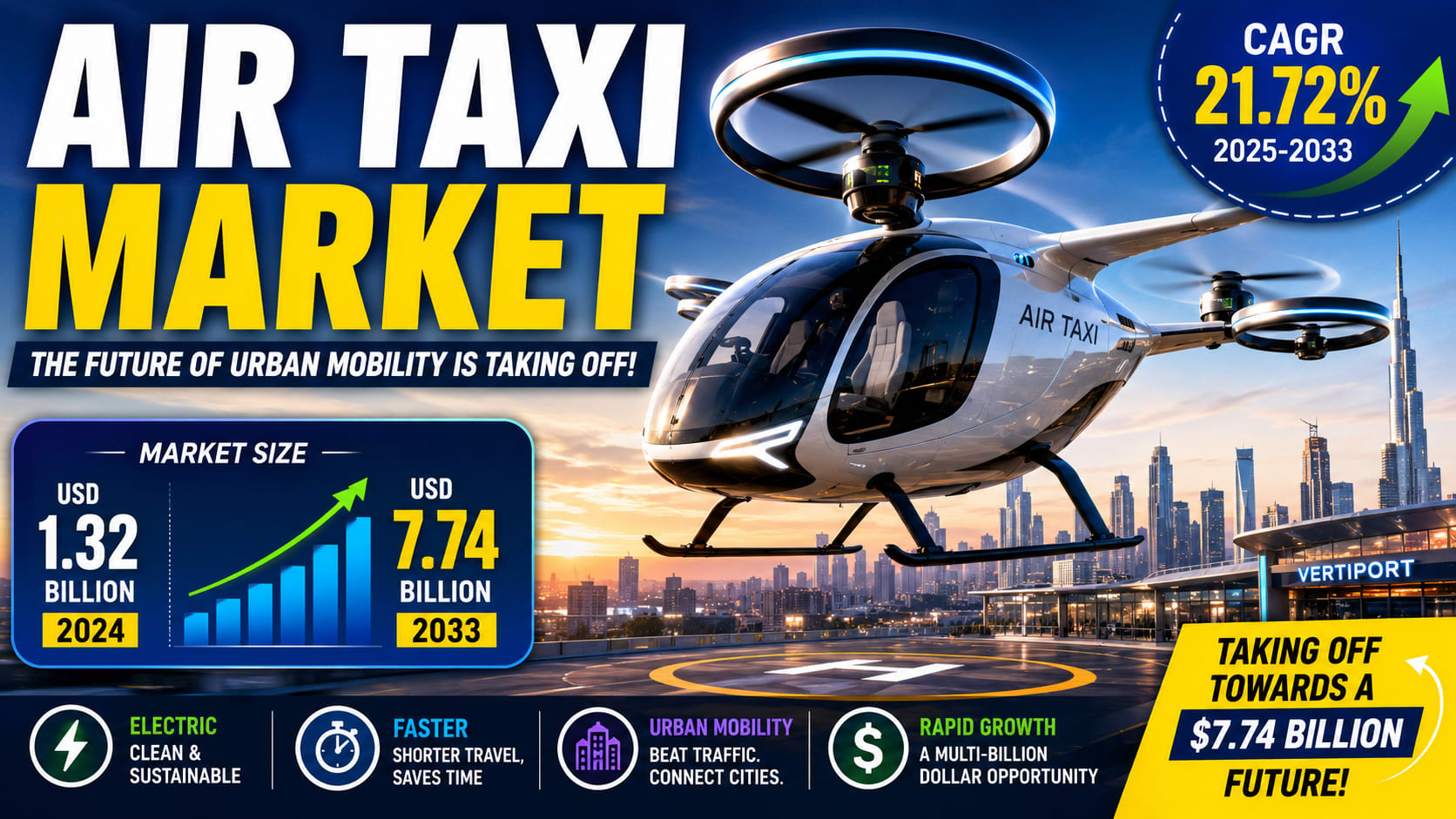
- Global eVTOL Market Projected to Hit $7.74 Billion by 2033: Market research indicates the global air taxi market is accelerating, with major players including Joby Aviation, Archer Aviation, and Lilium positioning for commercial operations. The expansion is driven by FAA testing programs across 26 U.S. states and advancing certification timelines.
- Archer and Joby Target 2026 Commercial Launches: Both companies have publicly committed to beginning commercial air taxi operations in U.S. cities in 2026, with Archer's CEO stating the goal is "to have half a million people in the biggest cities in the country start to see these aircraft as part of your everyday commute." However, ongoing litigation between the two companies threatens to disrupt these timelines.

Regulation & Policy
-
Texas Creates New Complaint Portal for Autonomous Vehicles: The state launched a web-based system allowing residents to formally report safety concerns about self-driving vehicle operations, reflecting regulatory maturation as autonomous vehicle fleets expand. This mechanism provides data to state transportation authorities monitoring real-world AV performance.
-
NHTSA Continues AV Framework Modernization: The National Highway Traffic Safety Administration is proceeding with autonomous vehicle safety standard updates under the Trump administration's AV framework, with ongoing rulemaking activities expected throughout 2026. Federal Motor Vehicle Safety Standards written for human-driven vehicles are being adapted for autonomous systems to reduce compliance costs while maintaining safety.
Business & Investment
- B2U and Waymo Launch Battery Recycling Partnership: Waymo and B2U formed a landmark partnership to repurpose autonomous fleet EV batteries, establishing a sustainable pipeline for second-life battery applications and grid stability support. This partnership signals the industry's transition toward circular economy models as robotaxi fleet sizes grow.
- Autonomous Vehicle Funding Surge Continues: The autonomous vehicle sector saw record funding in Q1 2026, with several multibillion-dollar mega-deals signaling that investors are backing companies ready to scale operations rather than funding pure research. This capital influx underscores confidence in near-term commercialization across robotaxi, autonomous trucking, and delivery vehicle segments.
Technology & Innovation
No recent technology breakthroughs or research papers meeting the freshness criteria were available in this week's coverage. Recent innovation focus remains centered on operational deployment and regulatory compliance rather than novel sensor or AI architecture announcements.
What to Watch Next Week
- Continued litigation developments between Joby and Archer as eVTOL companies race to meet 2026 commercial launch commitments
- Additional Texas autonomous vehicle complaint data and any safety patterns emerging from the new state feedback mechanism
- Further announcements from Nuro and other second-generation robotaxi companies as they ramp production partnerships
- Regulatory updates from NHTSA regarding autonomous vehicle safety standards modernization
Reader Action Items
- For industry professionals: The Texas registration data and complaint mechanism represent benchmarks for accountability—establish internal tracking systems for safety metrics and regulatory compliance as state-level monitoring intensifies across all major AV deployment markets.
- For investors: Evaluate robotaxi companies not by promised timelines but by verifiable fleet size and operational cities. Waymo's 600-vehicle Texas deployment dwarfs competitors; prioritize companies with demonstrated scaling ability over announcements of future launches.
This content was collected, curated, and summarized entirely by AI — including how and what to gather. It may contain inaccuracies. Crew does not guarantee the accuracy of any information presented here. Always verify facts on your own before acting on them. Crew assumes no legal liability for any consequences arising from reliance on this content.
Powered by
