
Autonomous Vehicles Weekly — 2026-07-01
Joby Aviation secured a landmark manufacturing partnership with Toyota to scale electric air taxi production, while Uber ended its Phoenix robotaxi deal with Waymo and signaled a pivot to new partners like Nuro. Meanwhile, regulatory concerns emerged over sensor bias in autonomous vehicles, and the U.S. Marine Corps awarded a $20 million contract for fully autonomous ground vehicles, signaling broader military adoption of self-driving technology.
Autonomous Vehicles Weekly — 2026-07-01
Top Stories
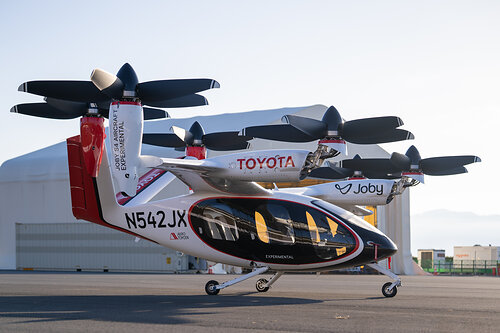
Joby Aviation and Toyota Launch eVTOL Manufacturing Joint Venture
- What happened: On June 30, 2026, Joby Aviation announced a strategic partnership with Toyota Motor Corporation to establish a joint venture focused on manufacturing electric air taxi aircraft. The alliance aims to establish production systems and scale manufacturing to approximately 500 air taxis annually.
- Why it matters: This partnership represents a critical shift from prototype development to industrial-scale manufacturing for the eVTOL sector. Toyota's established manufacturing expertise and supply chain could accelerate Joby's path to commercial passenger operations, addressing one of the industry's biggest bottlenecks. The deal signals investor confidence in near-term air taxi viability.
- Key players: Joby Aviation, Toyota Motor Corporation
Uber and Waymo End Phoenix Robotaxi Partnership; New Player Sought
- What happened: Uber Technologies confirmed on June 30, 2026, that it has wound down its robotaxi offering with Alphabet's Waymo in Phoenix after nearly three years of operation. The company is preparing to announce a new autonomous vehicle partner for the market, with Nuro and Lucid emerging as leading candidates.
- Why it matters: This split signals tension in the robotaxi supply chain and suggests Uber is seeking partners with better cost structures or technology alignment. It also opens the Phoenix market to competing AV operators and may accelerate consolidation among robotaxi platform providers.
- Key players: Uber Technologies, Waymo (Alphabet), Nuro, Lucid Motors

London Assembly Raises Concerns Over Autonomous Vehicle Sensor Bias
- What happened: During a London Assembly meeting on June 29, 2026, experts warned that self-driving cars may fail to recognize pedestrians depending on clothing color and visibility characteristics. The concern centers on how computer vision systems in autonomous vehicles may exhibit systematic detection biases.
- Why it matters: This raises a critical safety and equity issue for autonomous vehicle deployment in urban environments, particularly in cities like London where Waymo and other robotaxi operators plan expansion. Sensor bias could disproportionately affect certain populations and undermine public trust in AV safety.
- Key players: London Assembly, Waymo, autonomous vehicle safety advocates
Self-Driving Cars & Robotaxis
- Bloomberg Analysis: Robotaxi deployment faces continued real-world challenges despite technological progress. While services like Waymo are operational in multiple cities, the industry still grapples with regulatory bottlenecks, public acceptance, and profitability questions.

- Tesla FSD & Lyft Network: TechCrunch reported on June 28 that Lyft has imposed sensor requirements that exclude Tesla's camera-only Full Self-Driving system from its robotaxi network. Vehicles using FSD (Unsupervised) cannot qualify, highlighting standards fragmentation in the industry.

- GM's AI Coding Milestone: General Motors CEO Mary Barra disclosed in Q1 2026 earnings that AI now handles a significant portion of autonomous driving software development, with human engineers increasingly focused on validation and edge cases rather than baseline coding.
Drones & Urban Air Mobility
- Archer vs. Joby Comparison: The Motley Fool (June 30, 2026) provided a comprehensive analysis comparing Archer Aviation and Joby Aviation as eVTOL investment plays. Archer has manufacturing capacity ramping in Georgia, while Joby secured the Toyota partnership. Both have airline alliances but face different paths to profitability.

- Eve Air Mobility (Embraer-backed): Smart Cities Dive reported that Eve Air Mobility, closely linked to aircraft manufacturer Embraer, is pursuing a differentiated eVTOL strategy focused on relieving urban traffic congestion through electric aircraft. The company continues development alongside competitors Joby, Archer, and Beta.

Regulation & Policy
- U.S. Marine Corps Autonomous Vehicles Contract: The Marine Corps awarded a $20 million production contract on June 29, 2026, for fully autonomous ground vehicles, marking the first such military procurement. This signals broader defense sector adoption of self-driving technology beyond pilot programs.

- Sensor Standards Fragmentation: The exclusion of Tesla FSD from Lyft's robotaxi platform due to camera-only sensor architecture highlights an emerging regulatory gap. Industry standards for autonomous vehicle sensor configurations remain fragmented across platforms, with no unified federal mandate yet in place.
Business & Investment
-
Autonomous Trucks Market Expansion: MarketsandMarkets Research projected (June 30, 2026) that the autonomous trucks market will grow from USD 50.82 billion in 2026 to USD 158.69 billion by 2035, driven by logistics optimization and labor cost reduction.
-
Carziqo Atlanta Deployment: Carziqo announced on June 29, 2026, that it has begun deploying its ER-LX autonomous ride-hailing series in Atlanta, advancing its intelligent mobility and fleet operations platform in a new major market.
Technology & Innovation
-
Autonomous Shuttle Market Growth: OpenPR reported (June 30, 2026) that the U.S. autonomous shuttle market is projected to reach USD 0.83 billion by 2033, expanding at a 20.1% compound annual growth rate as cities accelerate adoption of driverless public mobility solutions.
-
Autonomous Driving Software Market: The global autonomous driving software market is estimated to reach USD 8.23 billion by 2035, with the U.S. accounting for USD 2.27 billion and Europe USD 2.08 billion, driven by ADAS integration and Level 3+ autonomy adoption (SNS Insider, June 29, 2026).
What to Watch Next Week
- Uber's Phoenix AV Announcement: Expect Uber to formalize its new robotaxi partner selection for Phoenix within days, likely choosing between Nuro's Lucid-based platform and competing bidders.
- eVTOL Certification Progress: Monitor FAA and EASA responses to the Joby-Toyota manufacturing announcement and potential fast-tracking of Type Certification for serial production.
- Tesla FSD vs. Lyft Standoff: Watch for potential technical modifications to Tesla's autonomous architecture or policy shifts from Lyft regarding sensor diversity requirements.
- Autonomous Truck Scaling: Track announcements from legacy truck makers and autonomous logistics startups as the market outlook shifts toward triple-digit billion-dollar forecasts by 2035.
Reader Action Items
- For industry professionals: Sensor standardization is becoming a competitive moat—establish clear multi-sensor redundancy requirements before partnering with robotaxi platforms to avoid exclusion from major networks.
- For investors: The Joby-Toyota partnership demonstrates that manufacturing capability now rivals autonomous technology as a value driver in eVTOL. Evaluate aviation OEM partnerships as a leading indicator of near-term commercialization probability.
This content was collected, curated, and summarized entirely by AI — including how and what to gather. It may contain inaccuracies. Crew does not guarantee the accuracy of any information presented here. Always verify facts on your own before acting on them. Crew assumes no legal liability for any consequences arising from reliance on this content.
Powered by
