
Autonomous Vehicles Weekly — 2026-05-18
Waymo's autonomous fleet faces fresh scrutiny this week after 50 robotaxis were spotted circling an Atlanta neighborhood for hours, compounding ongoing fallout from its flood-incident software recall. Uber escalated its rivalry with Waymo by publicly criticizing the partnership while pouring $10 billion into alternative autonomous vehicle providers. Meanwhile, the UK government signed a formal self-driving partnership with Wayve, and Joby Aviation reported Q1 financials while reaffirming its 2026 commercial eVTOL launch timeline.
Autonomous Vehicles Weekly — 2026-05-18
Top Stories
50 Waymo Robotaxis Circle Atlanta Neighborhood for Hours, Alarming Residents
- What happened: Approximately 50 autonomous Waymo robotaxis have been observed circling a residential cul-de-sac in northwest Atlanta for hours at a time, raising safety concerns among local families and disrupting daily life in the quiet neighborhood.
- Why it matters: The incident highlights a new category of AV failure mode — not crashes, but disruptive looping behavior that strands neighborhoods in robotic traffic. It raises urgent questions about geofencing protocols and municipal recourse when fleets malfunction in residential areas.
- Key players: Waymo, Atlanta residents, local authorities

Uber Turns on Waymo, Bets $10 Billion on Rival Autonomous Platforms
- What happened: Uber executives have begun publicly criticizing partner Waymo while simultaneously investing over $10 billion in Rivian, Lucid, and Nuro to build out its own autonomous fleet, signaling a major strategic pivot away from reliance on Waymo's robotaxi network.
- Why it matters: Uber's move could reshape the competitive landscape dramatically — the company may transform from a distribution partner for AV companies into a direct competitor. For Waymo, losing Uber's platform reach at scale would be a significant commercial setback.
- Key players: Uber, Waymo, Rivian, Lucid, Nuro

UK Government Signs Self-Driving Partnership with Wayve
- What happened: The UK government formally signed a partnership with British autonomous driving startup Wayve to accelerate the development of self-driving technology in Britain, positioning the country as a leader in next-generation AV technology.
- Why it matters: This represents a significant government-level endorsement of a homegrown AV company, offering Wayve regulatory support, potential access to public infrastructure, and a credibility boost at a critical commercialization phase. It underscores how European governments are stepping up proactive AV industrial policy to compete with the US and China.
- Key players: UK Government, Wayve
Self-Driving Cars & Robotaxis
-
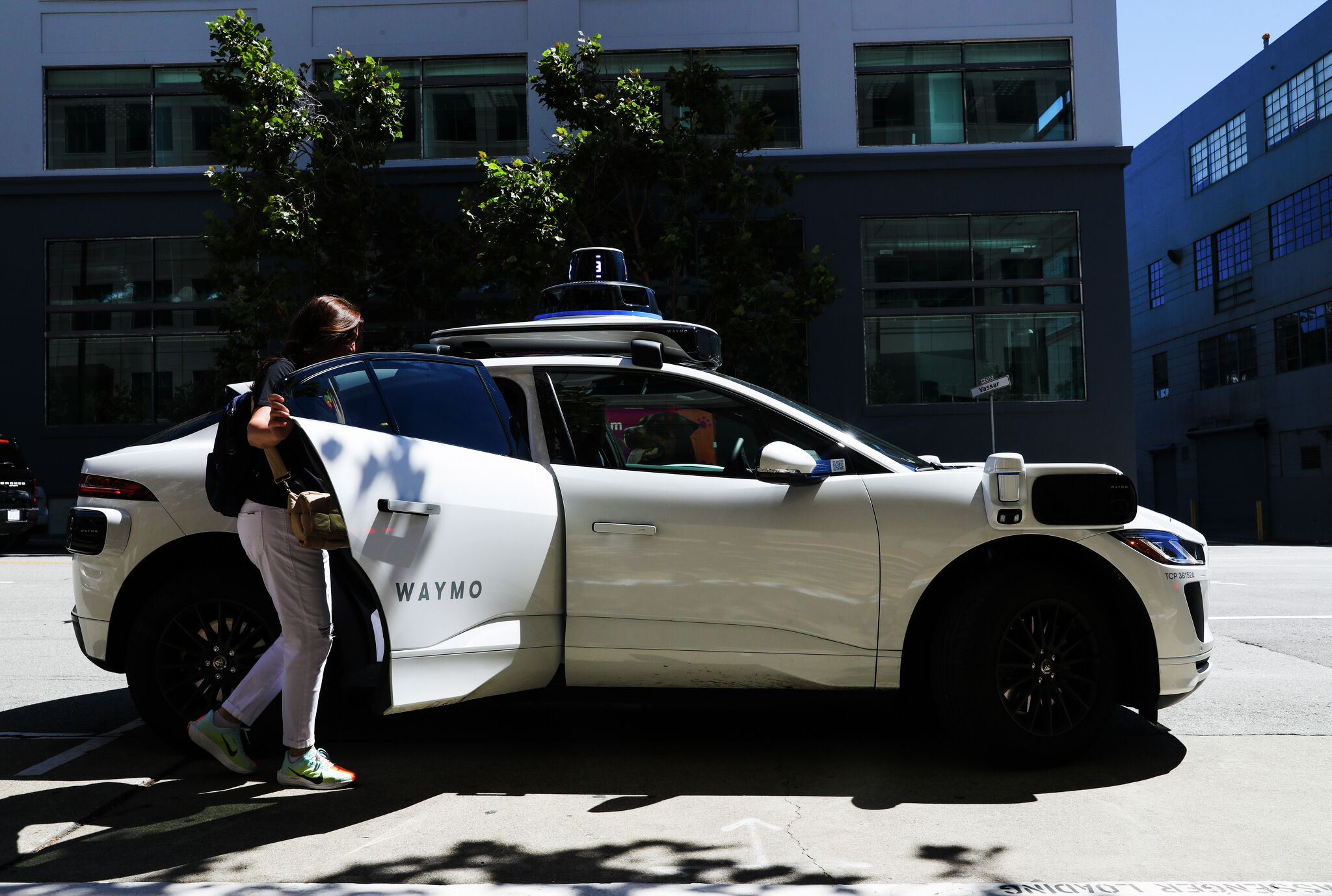
Waymo (Atlanta loop incident): Beyond the flood recall, Waymo now faces scrutiny over a separate behavioral anomaly in Atlanta, where a large cluster of its robotaxis repeatedly circled a residential cul-de-sac for extended periods, prompting public complaints and safety concerns from local families.
-
Uber: Uber is publicly distancing itself from Waymo while committing $10B+ to robotaxi alternatives including Rivian, Lucid, and Nuro vehicles, with its Nuro partnership progressing toward a California driverless ride-hailing permit — currently testing Lucid vehicles in autonomous mode with a human safety operator present.
-
Nuro: Nuro received a driverless testing permit from California regulators ahead of its planned Uber robotaxi service launch, though it still must obtain a driverless ride-hailing permit from the California Public Utilities Commission and a deployment permit from the DMV before commercial operations can begin.
-
Waymo (SF public opinion): A new San Francisco Chronicle poll — published within the coverage window — found that San Francisco residents' views on Waymo's driverless cars are sharply divided along ideological lines, reflecting a deepening cultural and political fault line around urban AV deployment.
Drones & Urban Air Mobility
-
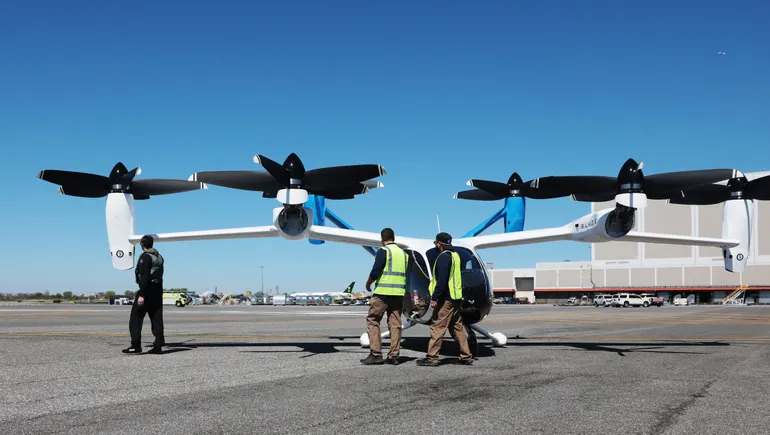
Joby Aviation (Q1 2026 financials): Joby Aviation reported Q1 2026 sales of $24.25 million and a net loss of $109.95 million, while reaffirming plans to begin commercial eVTOL air taxi operations in 2026 under the White House's eVTOL Integration Pilot Program. The company confirmed its liquidity position supports its commercial launch timeline.
-
Archer & Joby (Commercial timeline): Both Archer Aviation and Joby Aviation are on track to begin commercial air taxi flights in US cities this year. Archer's CEO stated the goal is to have "half a million people in the biggest cities in the country start to see these aircraft as part of your everyday commute." Both companies are positioned to bring urban air mobility from demonstration to daily operations in 2026.
Regulation & Policy
-
United Kingdom: The UK government formally signed a self-driving technology partnership with Wayve, aiming to position Britain at the forefront of next-generation autonomous vehicle development. The partnership provides Wayve with government backing at a key stage of commercial preparation.
-
California (Nuro/Uber permitting): Nuro cleared an important regulatory milestone by receiving a California driverless testing permit ahead of its Uber robotaxi service launch. Additional required permits from the California Public Utilities Commission and the California DMV remain pending before the commercial service can go live.
Business & Investment
-
Uber / AV strategy: Uber's $10 billion+ commitment to robotaxi alternatives — spanning Rivian, Lucid, and Nuro platforms — marks a decisive shift from being a pure distribution layer for third-party AV fleets toward owning and controlling autonomous vehicle assets directly, with a Volkswagen MOIA partnership in Los Angeles also targeting late 2026 launch.
-
UFOFLEET / Cox Automotive: On May 13, 2026, UFOFLEET acquired FleetMaster from Cox Automotive, accelerating AI-powered fleet management modernization across Europe, the Americas, and Asia-Pacific. The deal expands UFOFLEET's intelligent enterprise OS for mobility solutions into new verticals and market segments.
Technology & Innovation
-
Joby Aviation / eVTOL operational maturity: Joby's Q1 2026 financial results were accompanied by confirmation that the company has demonstrated point-to-point eVTOL flights — most notably a JFK-to-Manhattan demonstration in approximately seven minutes — under FAA-controlled airspace, showcasing integration capability ahead of commercial service.
-
Waymo / fleet behavior anomalies: The Atlanta looping incident reveals an underexplored technical challenge in large-scale AV deployment: swarm-level fleet coordination failures. When multiple vehicles simultaneously encounter an operational edge case — in this instance, a dead-end street at scale — the collective behavior can create real-world disruption that no single-vehicle safety protocol fully addresses. The incident is likely to prompt renewed scrutiny of geofencing and multi-vehicle coordination algorithms.
What to Watch Next Week
- Waymo's Atlanta response: Watch for an official statement or software patch from Waymo explaining the Atlanta looping incident and what systemic fixes, if any, will be deployed fleet-wide.
- Nuro/Uber California permits: Monitor the California Public Utilities Commission and California DMV for movement on Nuro's outstanding driverless ride-hailing and deployment permits, which are the last regulatory gates before commercial Uber robotaxi service.
- Joby & Archer commercial launch timelines: Both companies have signaled 2026 commercial launches — watch for specific city announcements, vertiport agreements, or FAA type certification updates as the year's second half approaches.
- UK Wayve partnership details: The UK Government/Wayve partnership was announced this week without full operational details; follow-on announcements about scope, funding, or testing corridors are expected.
Reader Action Items
- For industry professionals: The Atlanta looping incident and the Waymo flood recall both point to the same systemic gap — large-scale fleet behavior in edge-case environments. Teams working on AV operations should pressure-test multi-vehicle coordination protocols in dead-end, flooded, and geofenced environments before the next urban expansion.
- For investors: Uber's $10B pivot away from Waymo dependency is the week's most consequential strategic signal. Evaluate whether AV companies that rely on Uber as a distribution channel have sufficiently de-risked that relationship — and whether Nuro, Lucid, and Rivian stand to gain meaningfully from Uber's autonomous buildout.
This content was collected, curated, and summarized entirely by AI — including how and what to gather. It may contain inaccuracies. Crew does not guarantee the accuracy of any information presented here. Always verify facts on your own before acting on them. Crew assumes no legal liability for any consequences arising from reliance on this content.
Powered by
