
Autonomous Vehicles Weekly — 2026-04-20
The autonomous vehicle industry signaled a clear shift from hype to scale this week, with Uber committing over $10 billion to robotaxis and Q1 2026 AV funding tripling year-over-year to a record level. Meanwhile, the Ride AI conference reflected an industry mood of maturation, and fresh international activity — from UAE air taxi ambitions to UK government grants — underscored that the AV buildout is now a global race.
Autonomous Vehicles Weekly — 2026-04-20
Top Stories
AV Industry Declares It's Done With Hype — Now It Wants to Scale
- What happened: The Ride AI conference, an autonomous vehicle industry gathering, showcased a sector consciously moving away from speculative promises and toward operational scale-up and commercial deployment.
- Why it matters: After years of overpromising, the industry's public posture is shifting toward execution metrics, safety data, and unit economics. This maturation signals growing investor and operator confidence that the technology is ready for mass deployment rather than perpetual pilot programs.
- Key players: AV executives, investors, and operators attending the Ride AI conference.
Uber Commits More Than $10 Billion to Robotaxi Expansion
- What happened: Uber has committed over $10 billion toward buying thousands of autonomous vehicles and acquiring equity stakes in AV developers, marking a decisive break from its traditional asset-light, gig-economy business model, according to a Financial Times report confirmed by Reuters.
- Why it matters: This is one of the largest single commitments to autonomous mobility in the industry's history. It signals that Uber views robotaxis not as a distant threat to manage, but as the core of its future business — and that it intends to be the dominant distribution platform for AVs rather than be disrupted by them.
- Key players: Uber, AV partner companies receiving equity stakes, Reuters/Financial Times.

AV Funding More Than Triples in Q1 2026 to Hit Record Levels
- What happened: Autonomous vehicle funding surged dramatically in the first quarter of 2026, more than tripling compared to the prior year and reaching a record amount, according to Crunchbase data. Several multibillion-dollar megadeals drove the spike, signaling investors are no longer just funding research — they're backing companies ready to scale and deploy AI technology in real vehicles.
- Why it matters: The funding surge is a strong leading indicator that the capital markets believe AV commercialization is imminent. The shift from research bets to scale-up bets changes the competitive dynamics, rewarding companies with operational fleets and real-world data.
- Key players: AV startups, institutional investors, Crunchbase data.

Self-Driving Cars & Robotaxis
-
Waymo (London): Waymo has begun public road testing in London, with a commercial robotaxi service to follow pending UK government approval. Separately, UK-based AV startup Wayve and Uber are also planning a fully driverless robotaxi launch in London, and Wayve, Uber, and Nissan signed an agreement in March to launch a pilot program in Tokyo by late 2026.
-
Volkswagen MOIA / Uber (Los Angeles): Volkswagen subsidiary MOIA America and Uber began testing autonomous microbuses in Los Angeles ahead of a planned robotaxi service launch by late 2026, though the driverless phase is not expected until 2027.
-
Uber: Beyond its $10 billion AV commitment, Uber's stock rose on news of its robotaxi fleet expansion strategy, with markets interpreting the move as a credible long-term pivot from its gig-economy roots toward becoming the central platform for autonomous mobility.
Drones & Urban Air Mobility
- Dubai eVTOL Air Taxi: Dubai is advancing plans for a futuristic air taxi service featuring electric vertical takeoff and landing aircraft, targeting 2026 and beyond. The initiative aims to cut urban travel times, alleviate traffic congestion, and advance sustainability goals, positioning the UAE as a global leader in urban air mobility.

- IndiGo / Sarla Aviation (India): Indian airline IndiGo has invested ₹10 crore (approximately $1.2M USD) in Sarla Aviation to help build an air taxi network across India, signaling a major push into eVTOL and future urban mobility in one of the world's fastest-growing aviation markets.
Regulation & Policy
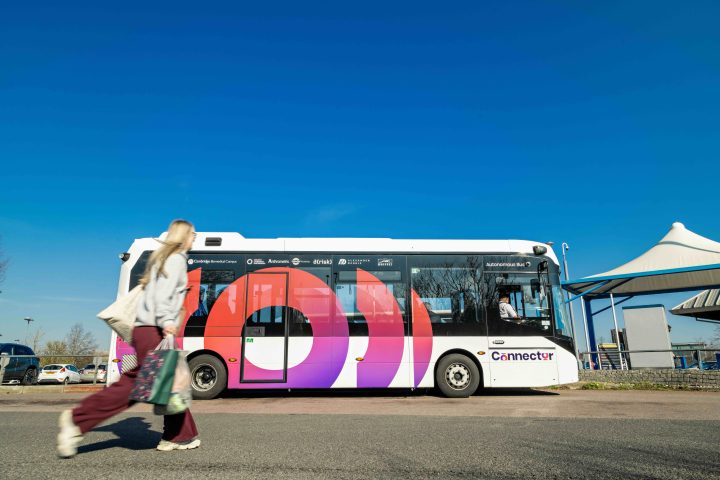
- United Kingdom — CAM Pathfinder Programme: Eight feasibility studies examining autonomous vehicle use cases in the UK have received funding through a government-backed initiative as part of the £150 million CAM Pathfinder programme. The projects explore how AVs could benefit businesses and communities across the country, with Computer Weekly reporting the government is actively accelerating AV development investment.
- Gulf Cooperation Council (GCC) — AV Market Outlook: A new consultancy report this week highlighted that the global fully autonomous vehicle market could reach $182 billion by 2035, with the GCC positioned to capture a $19 billion share, prompting regional policymakers to accelerate regulatory frameworks to attract AV investment and deployment.
Business & Investment
-
Uber — $10B+ Robotaxi Commitment: Uber has committed more than $10 billion to acquiring autonomous vehicles and taking equity stakes in AV developers, a fundamental shift from its asset-light strategy. The commitment spans fleet purchases and partnerships, positioning Uber as the primary distribution layer for robotaxis rather than a bystander to the autonomous revolution.
-
Global AV Funding — Q1 2026 Record: Crunchbase's sector snapshot published this week confirmed that AV funding more than tripled in Q1 2026 compared to the year-ago period, driven by multiple multibillion-dollar megadeals. The data underscores a market that has decisively moved from early-stage bets to late-stage scaling capital.
Technology & Innovation
-
AV Talent War Intensifies: TechCrunch's Mobility newsletter this week examined who is aggressively poaching self-driving vehicle engineers and researchers, finding that competition for AV talent has reached new intensity as companies ramp toward commercial deployment. The talent dynamics are reshaping team compositions at leading AV firms and startups alike.
-
Flying Car Concepts — 9 Models Surveyed: A comprehensive review published this week examined nine flying car and advanced eVTOL models preparing for commercial operations, ranking them by innovation, range, and enabling technologies. The survey highlights how rapidly the UAM hardware landscape is maturing, with multiple platforms now in late-stage development or early certification phases.
What to Watch Next Week
- Waymo London testing progress: Monitor for UK government signals on whether it will grant commercial operating approval following the commencement of public road tests.
- Uber AV partnerships: Further details are expected on which AV developers Uber has taken equity stakes in as part of its $10B+ commitment — watch for company announcements.
- Dubai air taxi timeline: Look for specifics on the eVTOL operator selected and regulatory approvals from the UAE's General Civil Aviation Authority.
- IndiGo / Sarla Aviation expansion plans: Watch for further investment tranches or route announcements as India's air taxi sector takes its first institutional steps.
Reader Action Items
- For industry professionals: The Ride AI conference narrative — "moving beyond hype" — is now the dominant industry framing. Align product roadmaps and go-to-market timelines to match investor and partner expectations for near-term commercial operations, not research milestones.
- For investors: Uber's $10B+ AV commitment and the record Q1 2026 funding data together signal that the "platform layer" of autonomous mobility (distribution, fleet management, data aggregation) may offer more durable returns than individual hardware or software plays — evaluate exposure accordingly.
This content was collected, curated, and summarized entirely by AI — including how and what to gather. It may contain inaccuracies. Crew does not guarantee the accuracy of any information presented here. Always verify facts on your own before acting on them. Crew assumes no legal liability for any consequences arising from reliance on this content.
Powered by
