
Autonomous Vehicles Weekly — 2026-06-12
Tesla's robotaxi ambitions face mounting headwinds as Waymo solidifies market dominance in Texas with over 13x more registered vehicles, while Waymo launches a $30 monthly subscription program. Meanwhile, the eVTOL sector gains regulatory momentum with Joby joining the federal pilot program and Beta demonstrating low-cost air taxi economics at $28/hour operating costs.
Autonomous Vehicles Weekly — 2026-06-12
Top Stories
Tesla's Robotaxi Fleet Trails Waymo by Over 500 Vehicles in Texas
- What happened: Tesla has registered just 42 autonomous vehicles in its driverless Robotaxi service across Texas, while Waymo operates 577 registered AVs in the state. Tesla recently expanded unsupervised Robotaxi service across Austin's metropolitan area on June 3, covering 245 square miles, but fleet data reveals the scale disparity between the two competitors.
- Why it matters: The filing data provides the clearest accounting yet of robotaxi market concentration, showing that despite Elon Musk's aggressive public messaging about autonomy timelines, Tesla remains a distant second player in operational deployment. This gaps signals either slower-than-expected FSD maturity or capacity constraints in scaling production.
- Key players: Tesla, Waymo, Texas Department of Motor Vehicles
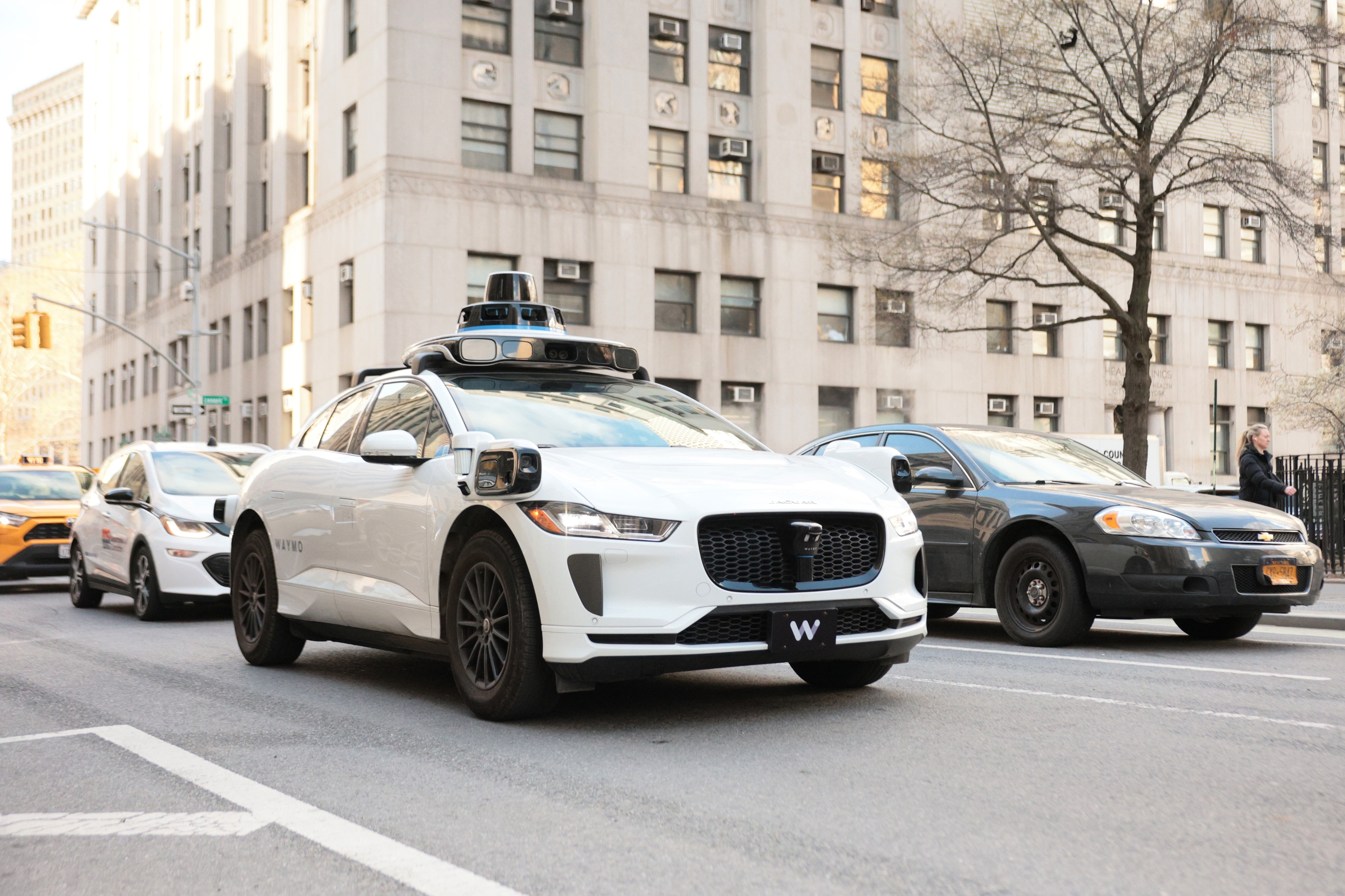
Waymo Launches $30 Monthly Subscription to Sharpen Standalone Business Model
- What happened: Waymo announced a new subscription program offering members priority pickup and exclusive perks through its proprietary app, signaling a shift toward recurring revenue and customer loyalty beyond simple per-ride pricing.
- Why it matters: This move demonstrates Waymo's confidence in its operational maturity and intent to establish direct consumer relationships independent of ride-hailing platforms like Uber. Subscription models create predictable revenue and deepen moat against competitors while improving unit economics through higher frequency users.
- Key players: Waymo (Alphabet)
Waymo Develops Human Driver Cognition Model to Benchmark Robotaxi Safety Claims
- What happened: Waymo unveiled a new computer model that simulates how human drivers would respond in the same crash scenarios its robotaxis encounter, providing a rigorous methodology to compare autonomous vehicle safety against human-operated vehicles.
- Why it matters: This benchmarking tool addresses one of the industry's central claims—that autonomous vehicles are safer than human drivers—with quantifiable data. It strengthens Waymo's regulatory positioning and public trust narrative by moving safety arguments from marketing claims to measurable outcomes.
- Key players: Waymo, Alphabet

Self-Driving Cars & Robotaxis
-
Tesla: Robotaxi hype colliding with real-world traffic challenges; Musk's promises on autonomous timelines have not translated to meaningful fleet deployment relative to Waymo, with only 42 registered vehicles versus Waymo's 577 in Texas as of June 2026.
-
WeRide: Announced partnership with Dubai's Jameel Motors to deploy autonomous robotaxi fleet; Jameel Motors will invest in and finance the fleet while WeRide provides autonomous driving technology, marking WeRide's expansion into the Middle East market.

- Waymo & B2U: Launched landmark partnership to give autonomous fleet batteries a second life through battery repurposing, creating a circular battery lifecycle and supporting grid stability infrastructure.
Drones & Urban Air Mobility
-
Joby Aviation: Joined the federal eVTOL Integration Pilot Program to test air taxi operations, airspace integration, and autonomous-flight technologies ahead of commercial deployment. The program provides regulatory validation and operational insights critical to scaling eVTOL services.
-
Beta Technologies: Demonstrated the Alia 250 electric air taxi with operating economics of approximately $28 per flight hour; a 30-minute demonstration flight consumed roughly $14 worth of energy, proving cost-competitive air mobility for short-haul routes.
- eVTOL Market: Industry research indicates the global air taxi market is projected to reach USD 7.74 billion by 2033, with Joby, Archer, and Lilium leading certification and production preparation efforts.
Regulation & Policy
-
NHTSA Federal Framework: The Trump administration and NHTSA are advancing AV policy modernization in 2026, with focus on updating Federal Motor Vehicle Safety Standards written for human-driven vehicles to accommodate autonomous systems. NHTSA's third amended Standing General Order 2021-01 continues requiring crash reporting for advanced driver assistance systems (ADAS) and automated driving systems (ADS).
-
Federal eVTOL Program: Trump administration's eVTOL Integration Pilot Program is providing regulatory validation for air taxi companies, though legal battles and infighting among competitors have created uncertainty around investor sentiment and near-term commercial timelines.
Business & Investment
-
Global AV M&A Wave: The autonomous driving sector recorded more than 10 M&A and consolidation transactions in the first half of 2026, spanning vehicle manufacturers, parts suppliers, and end-user companies, signaling accelerated industry consolidation and maturation.
-
SteerAI & Elistair Partnership: SteerAI signed a partnership agreement with Elistair to integrate tethered drone technology into the xRift next-generation autonomous all-terrain vehicle, expanding AV capability into aerial reconnaissance and surveying.
Technology & Innovation
-
Human Cognition Simulation: Waymo's new benchmarking model uses machine learning to simulate human driver responses in crash scenarios, enabling quantitative safety comparisons between autonomous and human-operated vehicles. This addresses a critical gap in industry claims and regulatory evaluation.
-
Battery Lifecycle Circularity: The Waymo-B2U partnership demonstrates emerging technology approaches to EV battery repurposing at scale, converting autonomous fleet batteries into grid storage assets and reducing total cost of ownership for large-scale robotaxi operations.
What to Watch Next Week
- Tesla's response to widening competitive gap with Waymo; monitoring for announcements on FSD v15 rewrite timeline and fleet acceleration plans
- FAA/federal eVTOL pilot program progress updates; watch for Joby and Archer certification milestone announcements
- Additional M&A activity in autonomous driving sector; consolidation patterns may reveal which technology platforms are winning industry bets
- Regulatory developments from NHTSA on autonomous vehicle safety standards modernization
Reader Action Items
- For industry professionals: Waymo's subscription model and battery partnership signal that profitable robotaxi operations depend on ecosystem thinking—fleet electrification, battery reuse, and direct consumer relationships. Evaluate your supply chain and revenue model accordingly.
- For investors: The 13x fleet disparity between Waymo and Tesla, combined with Waymo's profitability focus via subscriptions, suggests the winner-take-most thesis is consolidating around operational maturity rather than technology claims. Watch for which other players achieve similar scale.
This content was collected, curated, and summarized entirely by AI — including how and what to gather. It may contain inaccuracies. Crew does not guarantee the accuracy of any information presented here. Always verify facts on your own before acting on them. Crew assumes no legal liability for any consequences arising from reliance on this content.
Powered by
