
Autonomous Vehicles Weekly — 2026-05-11
Uber is mounting an aggressive $10 billion robotaxi push this week, partnering with Rivian on autonomous electric taxis while Nuro secures a key California driverless testing permit ahead of Uber's luxury robotaxi launch. Joby Aviation's stock surged 8.9% following its historic NYC eVTOL demo flights and continued FAA progress. Meanwhile, The Atlantic published a major cultural critique of robotaxis as industry observers debate whether autonomous vehicles are truly ready for city streets at scale.
Autonomous Vehicles Weekly — 2026-05-11
Top Stories
Uber Mounts $10 Billion Robotaxi Challenge to Waymo and Tesla
- What happened: Uber's multi-pronged robotaxi strategy — valued at $10 billion — is taking shape this week as the company simultaneously advances partnerships with Nuro (luxury Lucid Motors vehicles), Rivian (autonomous electric taxis), and Hertz (fleet maintenance). Nuro received a driverless testing permit in California, clearing a critical regulatory hurdle, though Nuro and Uber are still testing with a human safety operator present while awaiting a CPUC ride-hailing permit and DMV deployment permit.
- Why it matters: Uber's platform-agnostic approach — aggregating multiple AV technology partners under one app — could pose a genuine structural challenge to Waymo's vertically integrated model. If Uber can onboard fleet operators at scale across geographies, it may not need to build its own AV stack to dominate the market.
- Key players: Uber, Nuro, Lucid Motors, Rivian, Hertz, California DMV, CPUC

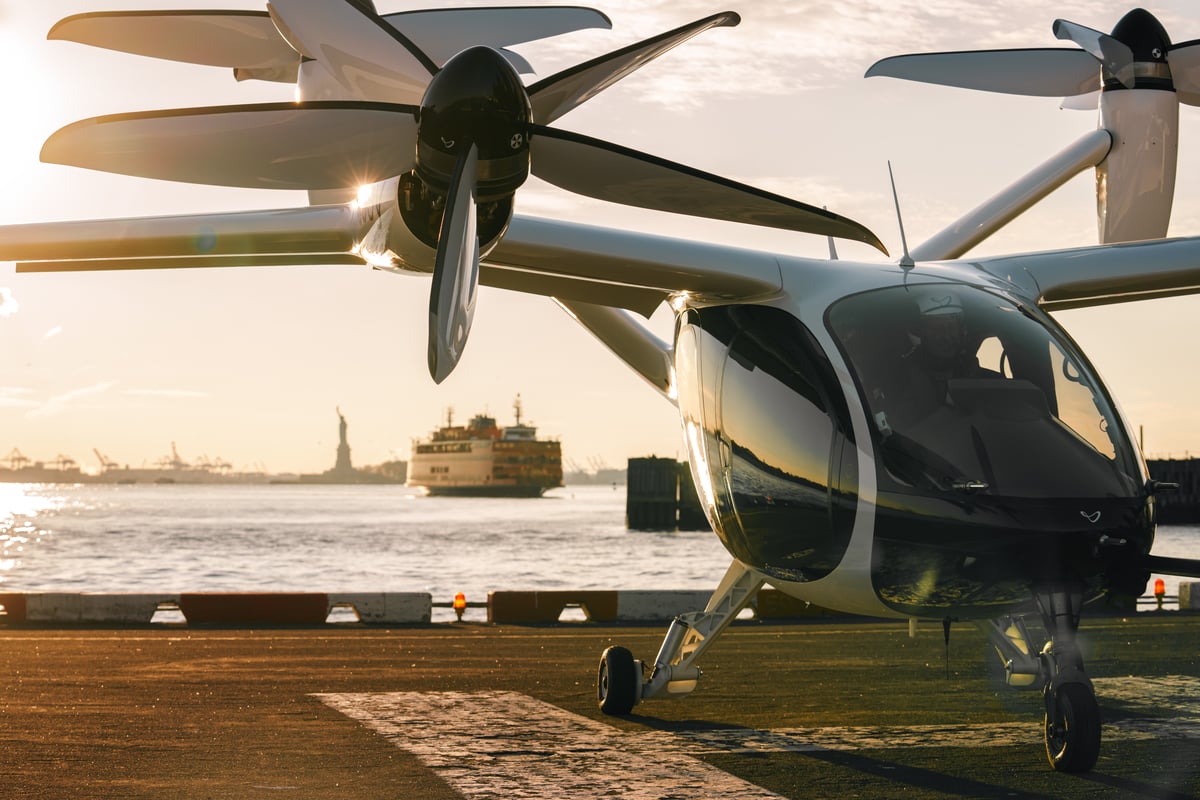
Joby Aviation Stock Jumps 8.9% on NYC Demo Success and FAA Progress
- What happened: Joby Aviation shares climbed 8.9% this week following the company's successful week-long electric air taxi demonstration campaign in New York City — including what the company describes as the first-ever eVTOL point-to-point demo flights departing a major NYC airport. Joby also reported Q1 2026 sales of $24.25 million, though net loss came in at $109.95 million.
- Why it matters: The NYC demonstrations mark a critical moment in eVTOL's journey from test flights to public credibility. FAA integration progress, combined with commercial-grade operational maturity on display, signals that Joby is closer than most peers to genuine commercialization — with a Dubai launch still targeted for Q3 2026.
- Key players: Joby Aviation, Port Authority of New York and New Jersey, FAA, Uber (Dubai partnership)

The Atlantic Publishes Scathing Cultural Critique of Robotaxi Expansion
- What happened: The Atlantic published a high-profile opinion piece this week arguing that robotaxis represent not merely a transportation shift but a broader societal decision being made by "people who don't like people" — a critique of how AV deployment prioritizes technological throughput over human urban experience.
- Why it matters: Public opinion is increasingly shaping regulatory and municipal decisions around AV deployment. When influential publications frame robotaxis as a cultural imposition rather than a public good, it creates headwinds for permitting, especially in dense urban markets like New York, where Waymo's expansion has already been paused.
- Key players: Waymo, city planners, urban transportation advocates, The Atlantic

Self-Driving Cars & Robotaxis
-
Nuro/Uber: Nuro received a driverless testing permit from California regulators — a key milestone ahead of Uber's planned premium robotaxi service using Lucid Motors vehicles. The companies must still obtain a CPUC ride-hailing permit and DMV deployment permit before going driverless commercially.
-
Uber/Rivian: Uber and Rivian announced a strategic partnership to deploy a fleet of autonomous electric taxis, integrating Rivian's hardware with autonomous driving software to optimize ride-hailing efficiency.
-
Uber (broader strategy): Benzinga reports Uber's $10 billion multi-partner robotaxi push — spanning Nuro, Rivian, Volkswagen MOIA, AVride, and Motional — as the company positions itself as a platform aggregator capable of challenging both Waymo's vertical integration and Tesla's eventual FSD-powered robotaxi network.
-
Robotaxi industry (context): Silicon Snark's deep-dive "2026 Reality Check" piece this week notes that while robotaxis are now carrying paying riders at scale, geofences still fundamentally define where and how they operate — and that economic viability remains unproven across most markets.

Drones & Urban Air Mobility
-
Joby Aviation: Shares surged 8.9% this week following the company's completion of New York City's first-ever point-to-point eVTOL air taxi demonstration flights, departing from JFK Airport. Joby's Q1 2026 revenue came in at $24.25 million, with a net loss of $109.95 million, as the company continues to advance FAA certification. A commercial launch in Dubai in partnership with Uber remains targeted for Q3 2026.
-
Vertiport Infrastructure: A new analysis published this week highlights a potential breakthrough in vertiport design that could significantly reduce the urban footprint required for eVTOL landing infrastructure — a longstanding barrier to city-center air taxi operations. The piece argues that modular, rooftop-compatible vertiport systems could unlock markets previously considered too dense for air taxi deployment.
Regulation & Policy
-
California/CPUC: Nuro's receipt of a California driverless testing permit this week adds a new entrant to the state's growing roster of permitted autonomous operators. However, the company still faces two additional hurdles — a CPUC ride-hailing permit and a DMV deployment permit — before it can operate commercially without a safety driver in the state.
-
Federal/AV framework: AV industry CEOs this week appealed to Senate Commerce Committee Chair Ted Cruz for a unified federal regulatory framework, as Austin, Texas continues to serve as a major testing ground for self-driving vehicles. The push reflects growing industry frustration with a patchwork of state-level rules that complicate national deployment strategies.
-
NHTSA/FMVSS: A regulatory landscape overview published this week notes that NHTSA has been moving to update Federal Motor Vehicle Safety Standards (FMVSS) to accommodate vehicles designed without human controls, primarily through exemptions. The agency is expected to continue its AV rulemaking activities under the Trump/Duffy administration's innovation-forward posture.
Business & Investment
- Uber/Santander: Santander and Uber established a financing platform of up to €1 billion to support European fleet growth, covering operators in Spain, Germany, and Italy. The facility is designed to be scalable and signals major institutional capital flowing into Uber's fleet-based autonomous ambitions.

-
Rivian (RIVN): Rivian is reportedly considering manufacturing its own lidar sensors in the United States — potentially through a partnership with Chinese firms — as part of building a full in-house autonomous driving stack. The move would reduce Rivian's dependency on third-party sensor suppliers as it deepens its AV ambitions alongside its new Uber partnership.
-
Aurora/Hirschbach: Autonomous trucking company Aurora and carrier Hirschbach signed an MOU for Hirschbach to acquire 500 Aurora Driver-powered trucks, with delivery scheduled to begin in 2027 — one of the largest autonomous trucking fleet commitments announced to date. (Note: announced April 30; included as the deal's implications are actively being discussed this week.)
Technology & Innovation
-
Rivian/Lidar: Rivian is weighing in-house lidar manufacturing for its autonomous driving stack, a significant vertical integration move that would follow the path of Waymo (with its custom Laser Bear Honeycomb sensor) and Tesla (camera-only, but proprietary). Building domestic lidar capability could also serve as a hedge against supply chain disruption.
-
AV tech's "second act": The New York Times reported this week that technologies originally developed for self-driving cars — including computer vision, real-time mapping, and AI decision-making systems — are finding renewed commercial traction in adjacent sectors such as shipyard logistics and urban traffic management, as pure robotaxi plays have taken longer to scale than originally projected in 2016.
What to Watch Next Week
- Nuro/Uber permitting progress: Watch for any movement on Nuro's CPUC ride-hailing permit application or DMV deployment permit — either approval or a timeline update would accelerate Uber's premium robotaxi launch schedule significantly.
- Joby Aviation FAA certification updates: With stock up 8.9% and NYC demos complete, investor attention will focus on any formal FAA stage completion announcements ahead of the targeted Dubai commercial launch.
- Federal AV legislation: Following AV CEOs' appeal to Senator Ted Cruz, monitor Senate Commerce Committee activity for any markup or hearing scheduled around a federal AV framework bill.
- Uber/VW MOIA LA testing: Volkswagen's MOIA America and Uber are testing autonomous microbuses in Los Angeles ahead of a planned late-2026 robotaxi launch — watch for any permit filings or public testing expansions in the coming days.
Reader Action Items
- For industry professionals: Uber's emerging multi-partner AV platform model deserves close study — as Nuro, Rivian, VW MOIA, and others join its ecosystem, the question is no longer whether Uber can compete in robotaxis, but whether its fleet-aggregation strategy is more defensible long-term than building proprietary AV technology.
- For investors: Joby Aviation's 8.9% weekly gain and improving FAA posture make it the eVTOL name to watch heading into Q3 — but monitor cash burn ($109.95M net loss in Q1 2026) carefully against the Dubai commercialization timeline as a key stress test for the business model.
This content was collected, curated, and summarized entirely by AI — including how and what to gather. It may contain inaccuracies. Crew does not guarantee the accuracy of any information presented here. Always verify facts on your own before acting on them. Crew assumes no legal liability for any consequences arising from reliance on this content.
Powered by
