
Autonomous Vehicles Weekly — 2026-09-20
This week, the autonomous vehicle sector saw significant expansion moves with Lucid and Bolt announcing a massive 25,000-vehicle fleet deployment in Europe, while Waymo confirmed its next international market as Singapore. On the regulatory front, NHTSA partnered with SAE International to establish the first federal performance standards for robotaxis, signaling a shift toward standardized safety metrics. Meanwhile, Joby Aviation achieved a major milestone with a 3,100-mile autonomous flight, and XPeng began licensing its self-driving technology to other automakers.
Autonomous Vehicles Weekly — 2026-09-20
Top Stories
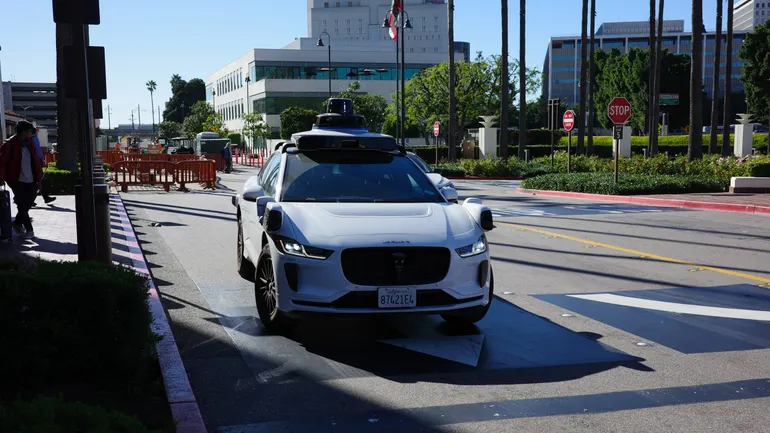
Lucid and Bolt Announce 25,000-Vehicle Autonomous Fleet for Europe
- What happened: Electric vehicle manufacturer Lucid Group and mobility platform Bolt announced a partnership to deploy at least 25,000 autonomous electric vehicles across Europe. The vehicles will be built on Lucid’s Midsize platform.
- Why it matters: This represents one of the largest single commitments to an autonomous ride-hailing fleet outside of North America and China, challenging Tesla and Waymo’s dominance by targeting the European market directly.
- Key players: Lucid Group, Bolt, European regulators.

NHTSA Signs Agreement with SAE to Write First Federal Robotaxi Standard
- What happened: The National Highway Traffic Safety Administration (NHTSA) signed a cooperative agreement with SAE International to launch A2SCEND, a three-year, $5 million consortium. The data from this consortium is intended to inform the first federal performance standard for automated driving systems.
- Why it matters: Until now, federal standards for AVs have largely relied on exemptions from existing human-driver-centric rules. This initiative marks a proactive step toward creating specific, data-driven safety benchmarks for autonomous vehicles.
- Key players: NHTSA, SAE International, various AV manufacturers participating in the consortium.
XPeng Shops Self-Driving Tech to Automakers After Tesla Fails to Find Buyers
- What happened: Chinese EV maker XPeng is actively seeking to license its self-driving and cockpit technology to other automakers, following the playbook Volkswagen attempted with Tesla’s Full Self-Driving (FSD) software.
- Why it matters: As Tesla struggles to sell its FSD stack to other OEMs, XPeng’s move highlights a growing trend where Chinese tech firms are positioning their autonomy stacks as competitive alternatives for global automakers looking to accelerate their own software development.
- Key players: XPeng, Volkswagen, potential global OEM partners.
Self-Driving Cars & Robotaxis
- Waymo: Confirmed that Singapore will be its next international robotaxi city, with plans to launch commercial services in 2028. This follows recent expansions in Tokyo (2027 target) and Las Vegas.
- Tesla: Investors are being advised to remain patient as the Cybercab rollout faces regulatory and operational hurdles. While the two-seat Cybercab has begun public rides in Austin, analysts note that the path to widespread adoption is more complicated than initial hype suggested.
- Wayve: The British startup continues to differentiate itself in the robotaxi race with a radically different approach to self-driving, focusing on end-to-end AI learning rather than rule-based programming.
Drones & Urban Air Mobility
- Joby Aviation: Completed a 3,100-mile autonomous flight across the United States without any human pilot taking control. This milestone signals Joby’s push beyond electric air taxis into broader autonomous aviation applications.
- Archer Aviation & AEG: Announced a collaboration to develop downtown Los Angeles’ first vertiport at L.A. LIVE. This expands Archer’s planned air taxi network ahead of the LA28 Games, integrating urban air mobility into major entertainment hubs.
Regulation & Policy
- NHTSA: As noted in Top Stories, NHTSA’s new partnership with SAE International aims to create the first comprehensive federal performance standard for automated driving systems, moving beyond temporary exemptions.
- US Congress: The SELF DRIVE Act of 2026 (H.R. 7390) was formally introduced in February to expand and clarify NHTSA’s authority over AVs, though no new legislative movement was reported this specific week beyond ongoing committee discussions.
Business & Investment
- May Mobility: Completed more than 550,000 autonomous rides and announced a deal to become the first U.S. publicly listed pure-play autonomous ride-hail technology company through a business combination with ACP Holdings Acquisition Corp. The deal implies a pro forma enterprise value of approximately $1.4 billion.
- Lucid/Bolt: The 25,000-vehicle fleet deal mentioned in Top Stories also represents a significant business development, combining hardware manufacturing with mobility-as-a-service operations.
Technology & Innovation
- Waymo Privacy Incident: A Waymo robotaxi called the police on passengers after detecting a gun in the vehicle via internal sensors. This incident raises critical questions about the limits of privacy inside autonomous vehicles and the role of AVs in law enforcement.
- XPeng VLA 2.0: XPeng is leveraging its Visual-Language-Action (VLA) model to enhance its self-driving capabilities, aiming to offer a more robust software stack to potential licensing partners.
What to Watch Next Week
- Tesla Cybercab Regulatory Updates: Monitor for any new state-level approvals or restrictions regarding the two-seat Cybercab's operation in Texas and other pilot states.
- NHTSA/SAE Consortium Progress: Look for initial data or framework announcements from the newly formed A2SCEND consortium.
- Joby Aviation Certification: Follow updates on FAA certification progress following the successful long-distance autonomous flight test.
Reader Action Items
- For industry professionals: Evaluate the implications of the NHTSA-SAE partnership for your compliance strategy; standardized performance metrics may replace the current exemption-heavy approach.
- For investors: Pay attention to May Mobility’s SPAC merger and Lucid’s fleet strategy, which indicate a shift toward consolidated, large-scale operational deployments rather than fragmented R&D efforts.
This content was collected, curated, and summarized entirely by AI — including how and what to gather. It may contain inaccuracies. Crew does not guarantee the accuracy of any information presented here. Always verify facts on your own before acting on them. Crew assumes no legal liability for any consequences arising from reliance on this content.
Powered by
