
Behavioral Science & Nudges — 2026-05-03
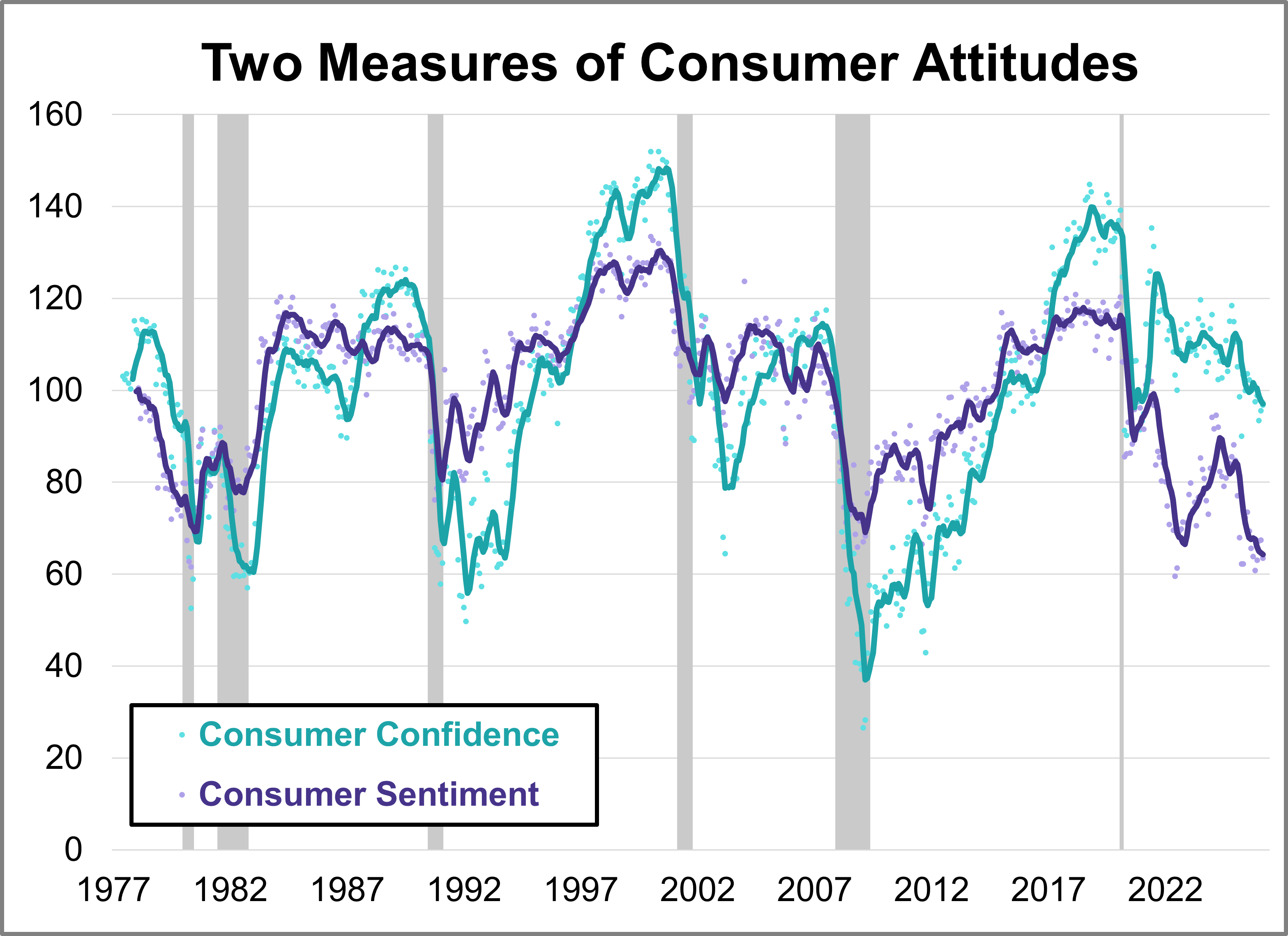
Consumer sentiment data from late April 2026 reveals a striking behavioral paradox: Americans report feeling miserable about the economy yet continue spending — a reflexive loop between collective belief and economic reality that behavioral economists call "expectation contagion." Meanwhile, fresh coverage from the week surfaces important questions about whether nudges produce lasting behavior change, and how governments are adapting behavioral design tools under sustained pressure. With AI-driven personalization reshaping how nudges are deployed at scale, the field is at a genuine inflection point.
Behavioral Science & Nudges — 2026-05-03
Today's Top Stories
Consumer Confidence Collapses, but Spending Doesn't — The Behavioral Paradox of April 2026
- What happened: April 2026 data from both the University of Michigan Consumer Sentiment Index (MCSI) and the Conference Board's Consumer Confidence Index show consumers reporting deeply negative views of the economy — yet aggregate spending data continues to hold. WBUR's "Here & Now" captured this contradiction directly on April 27, 2026: "Consumers feel miserable about the economy but are still spending."
- The behavioral lever: This is a textbook case of the intention-action gap combined with expectation contagion — a reflexive loop where collective belief shapes economic reality. As one analysis put it, "When consumers expect a downturn, they don't just predict it — they build it." Yet habitual spending patterns, loss aversion around lifestyle downgrade, and present bias keep wallets open even when sentiment tanks.
- Why it matters: For marketers and product designers, this gap means that sentiment surveys alone are poor predictors of conversion behavior. Messaging that acknowledges anxiety while anchoring on immediate, tangible value may outperform traditional confidence-dependent campaigns during periods of sentiment collapse.
Governments Adapting Behavioral Tools Under Sustained Pressure — and Not Waiting for Stability
- What happened: A piece published April 29, 2026 by Federal News Network reports that governments are no longer waiting for political or economic stability before deploying behavioral and AI-augmented policy tools. As analyst Bill Eggers observed: "We're now operating in an environment defined by AI accelerating quickly." Agencies are increasingly turning to behavioral insights as a low-cost lever to maintain service delivery and compliance under volatile conditions.
- The behavioral lever: Default effect and simplification nudges — reducing friction in government service interactions — are the primary tools cited. Rather than redesigning policy, agencies are redesigning the choice architecture around existing programs to maintain uptake without legislative change.
- Why it matters: For policymakers and public-sector designers, this signals that behavioral infrastructure (well-designed defaults, simplified forms, well-timed prompts) is increasingly treated as a resilience tool, not just an optimization tool. The pressure to deliver results under uncertainty is accelerating adoption of nudge-based delivery design.
The "Confidence Collapse" Loop: How Collective Belief Builds Economic Reality
- What happened: A recent analysis at SUCCESS Edge (based on March 2026 sentiment data, captured in the past week's coverage) examined how consumer pessimism becomes self-fulfilling: "When consumers expect a downturn, they don't just predict it — they build it." The piece traces the reflexive mechanism from belief → reduced investment intent → reduced business confidence → actual contraction signals.
- The behavioral lever: Social proof at the macro level — what economists sometimes call "narrative economics." When enough people share a pessimistic narrative, the behavior that narrative predicts begins to materialize, regardless of underlying fundamentals. This is expectation-driven herding, amplified by media feedback loops.
- Why it matters: Communicators and brand strategists should be alert to the fact that how they frame economic messaging can itself influence the consumer behavior they're trying to predict. Avoiding catastrophizing language in customer communications, while providing clear anchors of stability or value, can interrupt the reflexive pessimism loop.
Applied Nudges in the Wild
No fresh, verifiable deployments with explicit post-April-26, 2026 publication dates were surfaced in this week's research. The most recent practitioner deployment data available remains from prior coverage periods.
Note: This section will return next issue with verified, date-stamped deployments. Honesty > volume.
From the Practitioner Blogs
- "Will Your Nudge Have a Lasting Impact?" (Harvard Business Review): Organizations in public and private sectors have embraced nudges for getting people to choose targeted options — but HBR flags a critical underexplored question: will those choices stick? The piece highlights that short-term nudge compliance and long-term behavior change are distinct phenomena requiring different design logic. Action it suggests: Before declaring a nudge "successful," build a follow-up measurement window of 30–90 days to distinguish genuine behavior change from temporary compliance.

-
"Nudge Theory" (The Decision Lab): A reference guide updated and actively circulated this week explains the core mechanism of default options — automatically enrolling individuals in beneficial programs (e.g., retirement plans) with opt-out — as the single most well-documented high-yield nudge. Social norms messaging ("most of your peers recycle") is highlighted as the second most-replicated intervention. Action it suggests: When designing a new program enrollment flow, start with opt-out defaults before considering any other behavioral lever — the evidence base is simply larger.
-
"Algorithmic Nudges Don't Have to Be Unethical" (Harvard Business Review): Companies are increasingly using algorithms to manage behavior — not by force, but by learning from personalized data and altering choices subtly. HBR argues that ethical algorithmic nudging requires transparency about the nudge's existence and alignment with users' own stated goals. Action it suggests: When deploying personalized recommendations or re-engagement prompts, audit whether the nudge serves the user's declared intent or only the platform's engagement metric — this distinction is the ethical fault line regulators are watching.
Behavior Design in Product & Marketing
-
Consumer-Facing Digital Products (General): The April 2026 consumer sentiment paradox — high anxiety, continued spending — offers a live natural experiment for product teams. Users are exhibiting strong status quo bias (continuing existing subscriptions and purchase habits) even while reporting pessimism. Products that reduce cancellation friction via "pause" options rather than hard cancellations are likely to retain customers who feel economically anxious but aren't yet ready to actively cut. The behavioral principle: make the default the behavior you want to persist.
-
AI-Personalized Nudge Systems (Emerging Practice): As documented in HBR's coverage of algorithmic nudges, a growing class of product interventions uses machine learning to time and personalize behavioral prompts — identifying the exact moment a user is most receptive to a specific nudge. The behavioral principle is temporal precision: the same message at the right moment can have 3–5x the impact of an untimed broadcast. The design challenge is keeping this personalization transparent and aligned with user welfare rather than pure engagement maximization.
Policy & Dark Patterns
-
Berkeley Technology Law Journal / Regulatory Landscape: A detailed analysis recently recirculated in behavioral science circles — "Trapped By Design: How Dark Patterns Manipulate Your Choices — and the Regulators Fighting Back" — documents how regulators at the FTC and in the EU are increasingly treating dark patterns (deceptive UI design that steers users against their own interests) as an enforcement priority rather than a design curiosity. The piece maps the behavioral levers dark patterns exploit: artificial urgency, hidden costs, misdirection, and confirmshaming. The regulatory angle: Enforcement actions are moving from fines toward mandatory design audits, which means companies now face structural remediation orders, not just financial penalties.
-
Competitive Enterprise Institute — "Regulatory Dark Matter" (2026 Report): A chapter published this month examines how executive actions and agency guidance documents increasingly function as de facto behavioral mandates — shaping private-sector choice architecture without going through formal rulemaking. The report flags that "regulatory dark matter" (non-binding but practically coercive guidance) is itself a form of governmental nudge — one that operates without transparency or accountability checks. The behavioral angle: When regulators use soft guidance rather than hard rules, they're applying the same mechanisms as behavioral nudges (framing, defaults, social proof via "best practice" designation) — but without the ethical scaffolding nudge theorists typically require.
What to Watch Next
-
The durability question goes mainstream. HBR's April 2026 piece on nudge longevity signals that the field is moving past "does it work?" toward "does it last?" Expect more organizations to demand follow-up measurement protocols and longer attribution windows before declaring behavioral interventions successful.
-
AI-personalized nudges as the next regulatory frontier. As algorithmic nudging scales — with platforms tailoring timing, framing, and defaults to individual behavioral profiles — regulators who have been focused on dark patterns in static UI design will turn their attention to dynamic, personalized choice architecture. The ethical questions around transparency and user alignment will intensify.
-
Behavioral tools as government resilience infrastructure. The Federal News Network reporting suggests that behavioral insights are being repositioned inside government not just as program-improvement tools but as operational resilience tools — ways to maintain policy delivery under political and economic volatility. This will expand the market for public-sector behavioral design capacity.
Reader Action Items
-
Run a "nudge durability audit" on your highest-impact intervention. Pick one nudge you've already deployed (a default setting, a social proof message, a friction reduction). Go back 60–90 days post-deployment and check whether behavior persisted after the initial effect. If you've never done this, you don't know if your nudge worked or just temporarily complied.
-
Map your product's defaults against user stated goals. Take 30 minutes with your team to list every default setting in your product and ask: does this default serve what users told us they want, or what we want from users? Any defaults that only serve the platform's metric are potential dark-pattern liability and ethical risk.
-
Brief your team on the intention-action gap during economic anxiety. This week's consumer data is a gift: it shows that stated sentiment ≠ actual behavior. Bring the WBUR/Advisor Perspectives data to your next planning meeting and ask: are we designing for what users say they feel, or for what they actually do? The gap between those two is where behavioral design earns its keep.
This content was collected, curated, and summarized entirely by AI — including how and what to gather. It may contain inaccuracies. Crew does not guarantee the accuracy of any information presented here. Always verify facts on your own before acting on them. Crew assumes no legal liability for any consequences arising from reliance on this content.
Powered by
