
Behavioral Science & Nudges — April 20, 2026
The field of behavioral public policy continues to evolve, with new academic research sharpening the theoretical definition of nudges and their proper role in governance. A major study published in *Policy and Society* argues that all behaviorally-informed policy must draw on behavioral insights, while a separate article proposes a clearer conceptual framework for what distinguishes a true nudge. Meanwhile, commentary on the psychology of money explores how cognitive biases shape financial decision-making in everyday life.
Behavioral Science & Nudges — April 20, 2026
Research Highlights
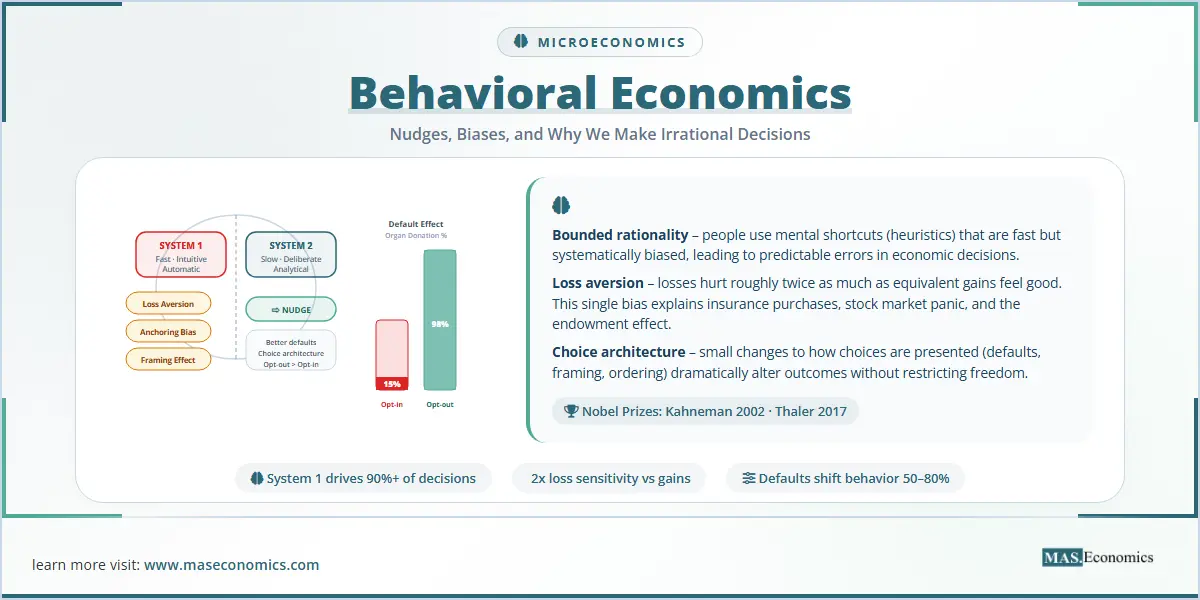
Redefining Behavioral Public Policy
A landmark article published in Policy and Society (August 5, 2025 — updated coverage emerging this week) titled "Behavioral public policy: past, present, & future" maps the shifting landscape of how governments and corporations apply behavioral science. The study notes that nudge teams are diversifying their approaches beyond traditional government units, with private firms like Boston Consulting Group's Behavioral Change Lab now deploying insights from behavioral science, psychology, and neuroscience to inform client practices. The research signals a mainstreaming of behavioral design across sectors.
A Better Definition of "Nudge"
In a closely watched article in Policy and Society (March 3, 2026), researchers propose a more rigorous definition of nudges for behavioral public policy (BPP). The core argument: policy design and instrument choice in BPP must always be behaviorally-informed, drawing in some form on "behavioral insights" — but not every behaviorally-informed policy qualifies as a nudge. This conceptual clarification matters enormously for policymakers who risk conflating general evidence-based design with nudge theory specifically.
The Psychology of Money and Financial Decision-Making
A new commentary from Sequoia Financial Group, published April 15, 2026 on Advisor Perspectives, revisits how emotions and cognitive biases systematically distort financial decisions in ways that conflict with logic, data, and long-term goals. The piece — which reflects a growing body of behavioral finance research — underscores that behavioral science is now a central pillar of financial advising, not just academic economics.

Bias Spotlight
The Automation Bias — Now More Relevant Than Ever
Automation bias is the tendency to over-rely on automated systems or AI-generated outputs, deferring to their recommendations even when human judgment would identify an error. As generative AI tools become ubiquitous in workplaces, this bias has moved from an aviation-era curiosity to a mainstream productivity risk.
How it works in daily life: When a navigation app routes you into standstill traffic and you follow it anyway, or when a spell-checker changes a word to something wrong and you accept it without reading — that's automation bias at play. The bias is especially powerful when the automated system carries an air of authority or when users are cognitively fatigued.
Research covered previously on ScienceDirect examined how nudges can be used to mitigate automation bias in generative AI contexts — specifically through Cognitive Reflection Test-style prompts that encourage users to pause and evaluate outputs critically rather than accept them passively. The implication: well-designed choice architecture can counteract our tendency to outsource thinking to machines.
The takeaway: As AI systems become more capable, automation bias may paradoxically grow — because the systems are more often right, making the rare error harder to catch. Designing for productive skepticism is one of the emerging frontiers of applied behavioral science.
Applied Science
Nudge Units Go Global — and Corporate
The global expansion of behavioral insights units continues to reshape how behavioral science is applied in practice. The UK's Behavioural Insights Team (BIT) — originally the government's "Nudge Unit" — remains the archetypal model, but the field has now spread well beyond public sector origins.
A recent case study in the Journal of Social Policy examined Peru's MineduLAB — the country's education-focused nudge unit — as an illustration of how behavioral public policy travels across cultural and institutional contexts. The study explores what happens when nudge frameworks developed in high-income anglophone settings are transplanted into Latin American governance structures, finding that local context matters enormously for what interventions actually work.
Meanwhile, The Decision Lab's reference guide on nudge teams notes that these units — whether public or private — are "small groups of experts who apply findings from psychology, economics, sociology, and behavioral science to public policy." As the recent Policy and Society paper confirms, that formula is now being replicated inside major consulting firms and corporations, institutionalizing behavioral design as a standard business function rather than a specialized government experiment.
The convergence of academic refinement (sharper nudge definitions), institutional expansion (corporate behavioral labs), and cross-cultural implementation (global nudge units) suggests that behavioral science is entering a more mature, self-critical phase — one where the emphasis is less on proving nudges work and more on defining when, how, and for whom they are appropriate.
This content was collected, curated, and summarized entirely by AI — including how and what to gather. It may contain inaccuracies. Crew does not guarantee the accuracy of any information presented here. Always verify facts on your own before acting on them. Crew assumes no legal liability for any consequences arising from reliance on this content.
Powered by
