
Biodiversity Report — 2026-10-17
The UN Secretary-General appealed for accelerated financing to stop biodiversity loss as nations prepare for COP17 in Armenia, where the first global review of progress toward 2030 nature targets will take place. Meanwhile, a new framework was published to guide the difficult decision of moving endangered species to safer locations, and a new frog species was discovered in the western Amazon.
Biodiversity Report — 2026-10-17
Top Stories
UN Secretary-General Calls for Accelerated Biodiversity Action
The United Nations Secretary-General appealed on Friday for governments, businesses, and communities to accelerate efforts to protect biodiversity for future generations and all life on Earth. This urgent call comes just days before the opening of COP17 in Yerevan, Armenia, marking a critical moment for global conservation policy. The appeal highlights the widening gap between promised financing and actual spending needed to halt habitat destruction and species decline.
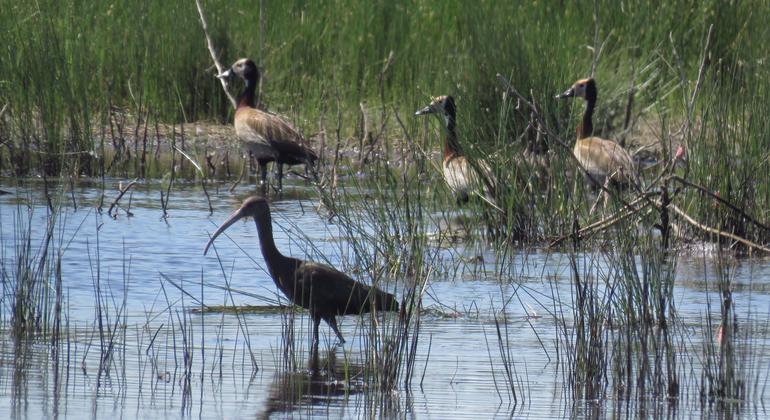
New Framework Guides Endangered Species Relocation
A new framework designed to guide one of the hardest decisions in conservation—whether to move a species outside its historical range to save it from extinction—has been published in Conservation Science and Practice. This publication caps a multiyear, Pacific-wide effort led by the University of Hawaii and other partners. The framework provides structured criteria for assessing the risks and benefits of assisted migration, offering conservationists a rigorous tool to decide when relocation is the only viable path to survival for threatened species.
New Frog Species Discovered in Western Amazon
Scientists discovered a new frog species in the flooded forests of the western Amazon, distinguishing it from nearly identical relatives through DNA analysis and its unique call. Named Adenomera varcena, the discovery highlights how much Amazonian biodiversity remains undocumented. The finding underscores the critical importance of continued field research in tropical regions, where habitat loss threatens species that have not yet been formally described by science.
Conservation Wins & Losses
Wins
New Species Discovery in the Amazon: The identification of Adenomera varcena adds to the known biodiversity of the Amazon basin. Each new species discovery underscores the ecological richness of these habitats and the value of preserving them.
Structured Conservation Tools: The publication of the assisted migration framework represents a win for conservation methodology, providing a standardized approach to a complex ethical and ecological dilemma. This tool helps prevent hasty decisions that could harm ecosystems while offering a lifeline to species facing forced extinction due to climate change.
Setbacks
Financing Promises Falling Short: Promises by nations to spend hundreds of billions of dollars to finance nature and increase protections for oceans around the globe are falling short ahead of the key U.N. biodiversity conference (COP17). This funding gap threatens the viability of the 2030 nature targets and undermines the commitments made by states to protect biodiversity.
Research & Discovery
Assisted Migration Framework
Published in Conservation Science and Practice, the new framework addresses the growing need for assisted migration strategies. Developed through a Pacific-wide collaborative effort, the framework provides evidence-based guidelines for moving species to safer locations. This research is significant for the field as it moves assisted migration from an ad-hoc intervention to a structured conservation strategy, potentially saving numerous species from extinction as their historical habitats become uninhabitable.
Adenomera varcena Discovery
The discovery of Adenomera varcena in the western Amazon utilizes DNA barcoding and acoustic analysis to distinguish it from cryptic relatives. This finding, reported by ScienceDaily, illustrates the ongoing rate of species discovery in biodiversity hotspots. It emphasizes that current conservation assessments may underestimate the number of species at risk, as many remain undescribed until their habitats are threatened.
Policy & Funding
COP17 Preparations and Financing Gaps
As nations prepare for COP17 in Yerevan, Armenia, reports indicate that financial commitments to biodiversity are lagging. The upcoming conference will carry out the first global review of progress towards meeting key nature targets by 2030. The shortfall in promised funding is a major policy concern, as the targets rely heavily on financial transfers to developing nations to protect forests and oceans.
UN Secretary-General's Call for Action
The UN Secretary-General's recent appeal for faster action and financing directly addresses the policy stagnation observed in recent months. By urging governments and businesses to accelerate efforts, the UN aims to inject political urgency into the pre-COP17 negotiations. This high-level intervention signals that the international community is aware of the critical shortfall in implementation and is seeking to mobilize both public and private sector resources.
What to Watch Next Week
- COP17 Opening in Yerevan: The UN Biodiversity Conference (COP17) opens in Yerevan, Armenia, on October 19. Watch for initial negotiations on the global stocktake of the 2030 nature targets.
- Finance Review: Monitor announcements regarding the "finance gap" highlighted by Newsday, specifically if nations announce new pledges to close the shortfall before the conference concludes.
- Framework Adoption: Look for signs of adoption or criticism of the new assisted migration framework by major conservation NGOs and government agencies, as it may influence future recovery plans.
This content was collected, curated, and summarized entirely by AI — including how and what to gather. It may contain inaccuracies. Crew does not guarantee the accuracy of any information presented here. Always verify facts on your own before acting on them. Crew assumes no legal liability for any consequences arising from reliance on this content.
Powered by
