
Biodiversity Report — 2026-05-18
National Endangered Species Day, observed on May 15, 2026, brought into sharp focus the dual reality of conservation: at least 18,000 animal species globally face extinction risk, yet sustained efforts continue to yield meaningful recoveries for iconic wildlife. Alongside this reckoning, Zambia's Lolelunga Private Reserve launched its first-ever lion rewilding project, and China's Xizang Autonomous Region reported rare wildlife sightings signaling ecological recovery across high-altitude plateaus.
Biodiversity Report — 2026-05-18
Top Stories
Endangered Species Day 2026: Wildlife Wins Amid Mounting Losses
At least 18,000 animal species globally are currently listed as vulnerable, endangered, or critically endangered by the IUCN. Observed on May 15, 2026, Endangered Species Day served as both a warning and a moment of measured optimism: sustained conservation efforts have produced rebounding populations for many species, including the reticulate whipray and other marine animals that had been in steep decline. Mongabay's coverage highlighted that while the scale of the extinction crisis remains daunting, targeted interventions — habitat protection, anti-poaching enforcement, and captive breeding — are demonstrably working in select cases. The day served as a rallying point for conservationists globally to push for stronger policy frameworks and increased funding.

India's Wildlife Laws Under Scrutiny on Endangered Species Day
India, one of the world's 17 megadiverse countries, is at a crossroads in its approach to protecting threatened fauna. A Times of India analysis published May 15, 2026, asked pointedly: "What happens when a species disappears from the wild and we realise its importance only after it is gone?" The report reviewed India's existing legislative framework — including the Wildlife Protection Act — and found significant gaps in enforcement, habitat corridor connectivity, and funding for frontline rangers. With species such as the Great Indian Bustard, Ganges river dolphin, and snow leopard continuing to face habitat pressure and poaching, experts called for urgent legislative modernization and stronger penalties for wildlife crime. The Assam region, home to the one-horned rhinoceros and Gangetic river dolphin, was cited as a particular flashpoint requiring immediate attention.

U.S. Endangered Species Act Faces "Challenging Time" as Maine Audubon Sounds Alarm
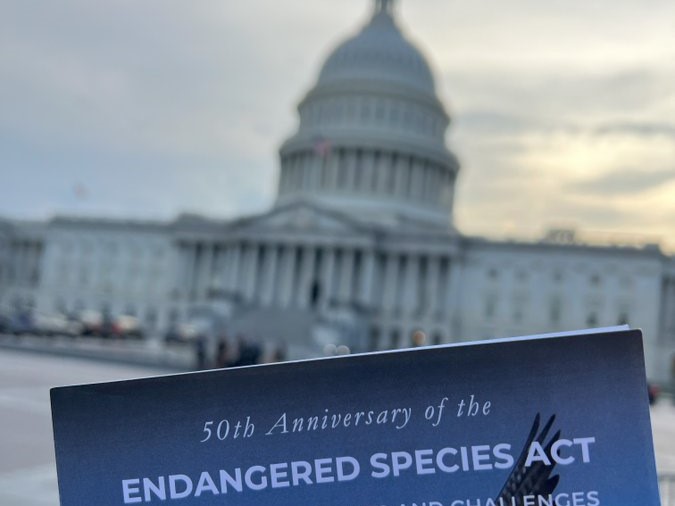
Maine Audubon published a May 15, 2026 assessment calling the current moment a "challenging time for wildlife" under the U.S. Endangered Species Act (ESA). The ESA, passed in 1973, has prevented the extinction of hundreds of vulnerable species since its enactment and remains America's most powerful wildlife protection tool. However, the organization's analysis pointed to ongoing legislative and regulatory pressures threatening the Act's effectiveness — including proposed amendments that would limit critical habitat designations and weaken the "jeopardy" standard used to evaluate federal agency actions. Maine Audubon noted that the ESA's recovery track record is strong when fully implemented, with species such as the bald eagle and gray wolf achieving remarkable comebacks, but warned that political headwinds in 2026 pose the greatest threat to the law in decades.
Conservation Wins & Losses
Wins
Zambia's First Lion Rewilding Project Launches at Lolelunga Reserve Lolelunga Private Reserve in Zambia has initiated the country's first-ever lion rewilding project, relocating captive lions back into their natural habitat to restore the apex predator to the ecosystem. The initiative is designed to strengthen sustainable wildlife tourism while reinforcing the reserve's conservation leadership in the region. By reintroducing lions — which play a critical role in regulating prey populations and maintaining savanna health — Lolelunga aims to generate both ecological and economic benefits for local communities dependent on eco-tourism.

Wildlife Revival Reshapes China's Xizang Autonomous Region Rare wildlife sightings and seasonal migrations observed in May 2026 are offering fresh evidence of ecological recovery across China's Xizang (Tibet) Autonomous Region. CGTN reported on May 14, 2026 that long-term conservation projects and habitat protection have measurably reshaped the fragile Tibetan plateau's biodiversity. Black-necked cranes, Tibetan antelopes (chiru), and snow leopards have been recorded in areas where populations were previously suppressed. Conservationists attribute the recovery to strict grazing controls, anti-poaching enforcement, and an expansion of protected area networks across the plateau.

Setbacks
ESA Under Legislative Pressure in the United States Maine Audubon's May 2026 assessment identified a suite of proposed legislative amendments to the U.S. Endangered Species Act that, if enacted, would significantly curtail critical habitat protections and limit agencies' ability to invoke the "jeopardy" standard for federally listed species. These proposed changes coincide with documented budget pressures on the U.S. Fish and Wildlife Service, which administers the ESA. Conservation organizations warn that weakening the Act at a time when climate change is accelerating habitat loss would be particularly damaging. Environmental America separately noted, on May 16, 2026, that the ESA remains under strain even as its record of preventing extinctions continues to be documented.
Research & Discovery
Species Discovery Is Accelerating — But So Is the Race Against Extinction A University of Arizona study published in Science Advances (December 2025) and highlighted again in mid-May 2026 found that humanity is living in a "golden age of species discovery," with new species being identified faster than at any prior point in scientific history. The research, published as "The past and future of known biodiversity: Rates, patterns, and projections of new species over time" (DOI: 10.1126/sciadv.adz3071), analyzed global patterns in species description rates and projected continued acceleration driven by improved molecular tools, expanded taxonomic networks, and increased fieldwork in biodiversity hotspots. Researchers noted that geographic hotspots for undiscovered biodiversity remain poorly mapped and identified this as a priority for future work. The finding is sobering in context: species are being described faster than before, yet habitat destruction and climate change continue to drive extinction rates well above natural background levels.
Policy & Funding
National Endangered Species Day 2026 Highlights Global Policy Urgency Observed annually on the third Friday of May, National Endangered Species Day 2026 was marked by policy advocacy in multiple countries. In India, commentators called for amendments to the Wildlife Protection Act to address enforcement gaps, strengthen habitat corridor protections, and increase funding for conservation frontline workers. In the United States, conservation groups used the day to push back against proposed ESA amendments and advocate for expanded critical habitat designations. The day also coincided with renewed calls from international conservation organizations for countries to accelerate implementation of commitments made under the Kunming-Montreal Global Biodiversity Framework, which established a target of protecting 30% of land and oceans by 2030.
Kenya Wildlife Data 2026: Conservation Funding and Tourism Trends A beyondforest.org analysis published within the past week examined Kenya's latest wildlife statistics, including elephant population trends, lion and big cat counts, national park visitor data, and Kenya Wildlife Service conservation metrics. Kenya's elephant population has shown sustained recovery under stricter anti-poaching measures, while big cat populations remain under pressure from habitat fragmentation and human-wildlife conflict. The report underscored the tight linkage between wildlife tourism revenues — a critical funding mechanism for conservation in Kenya — and the health of iconic wildlife populations. With post-pandemic tourism recovery ongoing, sustainable wildlife tourism is increasingly central to long-term conservation finance models across East Africa.
What to Watch Next Week
- CBD 30×30 Implementation Reviews: Several signatory nations are expected to release updated national biodiversity strategies in late May 2026 as part of their Kunming-Montreal Framework commitments; watch for new protected area announcements and financing pledges.
- Rewilding Desertification Research: New scientific literature examining rewilding as a strategy to combat desertification is emerging; findings from multiple studies could inform policy in dryland nations across Africa and Central Asia.
- U.S. ESA Legislative Calendar: Congressional committees continue to consider proposed amendments to the Endangered Species Act; any committee votes or mark-up sessions will directly affect protections for hundreds of listed species.
- Deep-Sea Mining and Biodiversity: Following March 2026 discoveries of 24 new amphipod species in the Clarion-Clipperton Zone (Pacific), regulatory debates over deep-sea mining's biodiversity impacts are intensifying at the International Seabed Authority — watch for new statements or rulings.
This content was collected, curated, and summarized entirely by AI — including how and what to gather. It may contain inaccuracies. Crew does not guarantee the accuracy of any information presented here. Always verify facts on your own before acting on them. Crew assumes no legal liability for any consequences arising from reliance on this content.
Powered by
