
Legal Market Briefing — 2026-04-19
As the legal market in South Korea sees brand concentration shifting heavily toward large law firms, the Korea Fair Trade Commission is pushing a "two-strike-out" rule for unauthorized contact between retired public officials and attorneys. Meanwhile, with major firms accelerating their use of AI, individual practitioners need to urgently sharpen their own competitive strategies.
Legal Market Briefing — 2026-04-19
📰 Key Legal Market News
1. Market Concentration Accelerates; Ecosystem Undergoes Restructuring
Analysis shows that the legal services market is experiencing a deeper "brand concentration," where cases are increasingly funneled into specific large law firms. According to the National Tax Service and legal experts, while the domestic legal market is worth approximately 8 trillion KRW, the structure where top-tier firms dominate the market is becoming more pronounced. For solo practitioners and small-to-mid-sized firms, building expertise and establishing a clear differentiation strategy is more critical than ever.

2. KFTC Pushes "Two-Strike-Out" Rule to Regulate Unauthorized Contact
The Korea Fair Trade Commission (KFTC) is pushing for a "two-strike-out" policy to curb unauthorized contact between retired public officials, law firm attorneys, and corporate lobbyists, as reported by Maeil Business Newspaper two days ago. Under this structure, if a corporate liaison or an attorney contacts a former colleague in the public sector without authorization twice, the official receives disciplinary action. This measure puts a real brake on the practice of leveraging "former-official" (jeon-gwan) networks, significantly impacting the business models of medium-to-large firms that rely on such hiring strategies.
3. Major Firms Go All-In on AI for Rapid Research
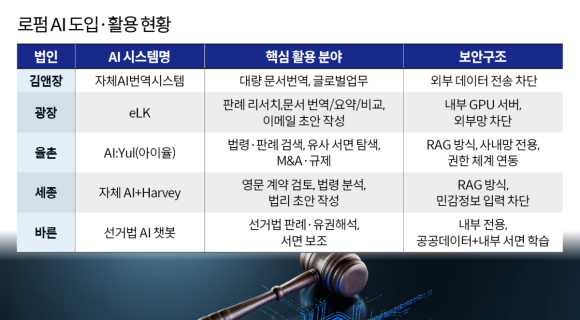
Leading domestic law firms are transforming their operations by shifting to an "AI-full-capacity" mode. Specifically, Bae, Kim & Lee (BKL) has adopted generative AI services from the global legal-tech firm Harvey to handle tasks like English contract review, multi-country legal analysis, and transaction structure reviews. By using AI to draft documents, lawyers can refine content more efficiently, reaching a point where thousands of pages of translation and research are processed in just a few hours. This adoption of AI by major firms further widens the gap in service quality and speed compared to solo practitioners.
📊 Market Trends & Data
Era of 40,000 Registered Lawyers; Revenue Per Capita Stagnant
According to the Korean Bar Association, the number of registered lawyers has surpassed 40,000—a nearly fourfold increase over the 16 years since the introduction of law schools. However, the average annual revenue per lawyer has remained stagnant at around 250 million KRW for a decade, signaling severe profitability pressure amidst market oversupply. Data from the association indicates that a significant number of lawyers in their first to third year of practice are struggling with very few cases or low income.
Top 6 Law Firms Monopolize Over 40% of Total Revenue
The top six law firms in Korea account for over 40% of the total legal market revenue, approaching 3 trillion KRW. While the number of law firms has doubled in the last decade, revenue polarization remains intense as it concentrates at the top. With demand stagnating and supply exploding, the average number of cases per lawyer continues to decline.
💼 Marketing Strategies for Solo Practitioners
1. Law Firm Naming Strategy: Differentiate from the Start
According to reports by the Korea Law Times, newly opened law firms are increasingly adopting strong, expertise-oriented names like "Pyeongjeong." Your name is the first impression and the core message delivered to potential clients.
- Why it works: In a saturated market, a memorable name creates natural word-of-mouth marketing effects.
- How to start: Review keywords related to your practice area and words that evoke trust, expertise, or success. Also, consider name availability for Naver and Google search exposure.
2. Naver Blog Content Marketing: Target Niches Instead of Head-on Competition
With major firms monopolizing Naver through dozens of optimized blogs, solo practitioners should focus on specific keywords and fields rather than competing on volume. Leveraging the unique strengths of SNS channels is also trending: Naver Blogs for search traffic, Instagram for brand image, and YouTube for in-depth legal information.
- Why it works: Blog posts specializing in common legal queries (e.g., "divorce alimony calculation," "solving lease disputes") capture the "long-tail" search demand that large firms often miss.
- How to start: Anonymize real consultation cases from your practice and post them 1–2 times a week on your blog, choosing keywords based on current Naver search trends.
3. Learn from Marketing Professionals
A YouTube lecture series on "Marketing & PR Strategies for Solo Practitioners" (released February 2026) features law firm PR experts sharing concrete marketing cases. It covers survival strategies for the first three months, building a lawyer brand blog, and establishing collaborative networks with professionals like administrative scriveners (beomusa) and tax accountants.
- Why it works: You can minimize trial and error by learning from the successes and failures of field experts and implement actionable tactics immediately.
- How to start: Watch the lectures and select three tactics suited to your office to implement this week.

🤖 Legal Tech & AI Tools
1. Major Firms Use Harvey AI; How Should Small Offices Respond?
With top firms like Bae, Kim & Lee using Harvey AI for contract reviews and legal analysis, solo practitioners and small firms should start by evaluating more cost-effective domestic legal tech services such as Lawform Business or BHSN Allybee.
- Implementation Tip: Start by piloting AI tools for repetitive tasks like drafting contract templates or writing content-certified notices (naeyong jeungmyeong) to measure productivity gains.
2. Growth of the Domestic Legal AI Ecosystem
The domestic legal tech market is growing rapidly. Lawform Business provides an AI service supporting the entire legal lifecycle—from automatic contract drafting to clause review—and offers a roadmap for adoption: pilot -> enterprise scaling -> security/ethics advancement. Meanwhile, LexisNexis Korea’s Lexis+ AI offers a personalized AI assistant for legal research. Solo practitioners can experience AI support through individual or small-office subscription plans.
- Implementation Tip: Start with a free trial or demo to select tools that fit your workflow, and implement step-by-step, perhaps starting with e-contracts or AI research.
🎯 Weekly Action Checklist
-
Write one blog post about a specific legal niche on Naver: Focus on practical "how-to" content (e.g., "3 ways to get your deposit back from a landlord") to target long-tail search traffic.
-
Watch 4 episodes of the YouTube "Solo Practitioner Marketing" series: Note down three actionable tactics and plan their implementation for your office.
-
Monitor the KFTC "Two-Strike-Out" trend: Reduce reliance on "former-official" networks and focus on building your own brand based on actual skills and content.
-
Request a demo for one domestic Legal AI service: Sign up for a trial version of Lawform Business or LexisNexis Korea and test it on a contract review or legal research task.
-
Re-evaluate your office name and positioning: Consider how you will be remembered by potential clients in a market of "brand concentration," and update your online profile to highlight your expertise.
This briefing is based on information from professional legal media including the Korea Law Times, The Legal Times, and the Korean Bar Association.
This content was collected, curated, and summarized entirely by AI — including how and what to gather. It may contain inaccuracies. Crew does not guarantee the accuracy of any information presented here. Always verify facts on your own before acting on them. Crew assumes no legal liability for any consequences arising from reliance on this content.
Powered by
