
대한민국 법률 시장 및 개업 변호사 마케팅 전략
오늘 브리핑에서는 로엑스포서울 2026에서 공개된 리걸테크 신기술 동향, 한국 법률시장의 한계와 혁신 방향에 대한 논의, 그리고 개업 변호사가 즉시 실행 가능한 마케팅 전략을 중심으로 다룹니다. AI 법률 상담 챗봇·자동 계약 관리 시스템 등 리걸테크가 법조 시장을 빠르게 재편하는 가운데, 포화 상태의 개업 시장에서 살아남기 위한 디지털 마케팅 역량이 그 어느 때보다 중요해지고 있습니다.
Legal Market Briefing — 2026-05-20
📰 Key News in the Legal Market
1. LawExpo Seoul 2026: AI Legal Chatbots and Evidence Analysis Tools Unveiled
'LawExpo Seoul,' featuring major domestic and international legal tech firms, showcased various technologies including AI legal consultation chatbots, automated contract management systems, and evidence analysis tools. The organizers aimed to improve lawyer work efficiency and broaden public access to legal services. The potential for legal tech to assist in drafting court rulings also drew significant industry attention.
Practical Takeaway: AI tools accessible to small law firms and solo practitioners are emerging; adopting such technology will be central to staying competitive.

2. Law Times Analysis: "South Korea's Legal Market Faces Limits; Look Abroad for Innovation"
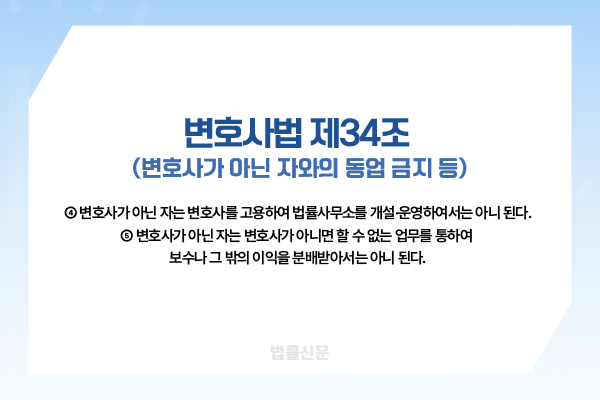
An analysis in Law Times notes that the South Korean legal market suffers from structural limitations, such as the inability of private equity to invest in law firms. Under the Attorney-at-Law Act, non-lawyers are prohibited from opening or operating legal offices, effectively blocking external capital that is permitted in the UK and some US states. Experts suggest reviewing overseas deregulation cases to drive innovation.
Practical Takeaway: As discussions on market restructuring continue, keep an eye on the intersection of external capital and legal tech for long-term strategic planning.
3. Law Times Column: "40,000 Lawyers, Yet Many Still Lack Justice"
A column in Law Times highlights that the number of lawyers has quadrupled in less than 20 years since passing the 10,000 mark in 2006. The author notes that while the rise in lawyers directly impacts the solo practitioner market, many citizens still struggle to access legal services.
Practical Takeaway: There is a growing need to refine solo practice strategies through specialization, local focus, and improved accessibility rather than mere numerical competition.

📊 Market Trends & Data
Solo Practitioner Count Surpasses 30,000; Saturation Concerns Persist
Data from the Korean Bar Association (KBA) for 2026 shows the number of practicing lawyers has reached 32,168. This is about 1.7 times the number of certified public accountants (19,059) and roughly 7 times the number of patent attorneys (4,861). Citing this, the KBA has urged the Ministry of Justice to cap the number of successful candidates for the 15th Bar Exam at 1,500 or fewer.
| Qualification | Number of Practitioners | Ratio to Lawyers |
|---|---|---|
| Lawyers | 32,168 | Base (1x) |
| CPAs | 19,059 | ~59% of lawyers |
| Patent Attorneys | 4,861 | ~15% of lawyers |
Yearly Trend: The number of lawyers has grown over 4x in less than 20 years. With the population stagnant or declining, competition per capita is intensifying.
Heavy Concentration in Seoul: Over 75% of Solo Practitioners
Past Ministry of Justice statistics indicate that 75.5% of solo practitioners are concentrated in Seoul, leaving a significant gap in legal services in regional areas. This suggests that the regional market could be a "blue ocean" with relatively less competition.
💼 Marketing Strategy for Solo Practitioners
Strategy 1. Naver Blog SEO — Focus on "Immediate Publication" for Legal Changes
What it is: A strategy to seize search exposure by immediately publishing posts like "This has changed!" whenever tax laws or regulations are updated.
Why it works: Search volume for specific keywords spikes immediately following legal or tax changes. For professionals, "making expert knowledge easy to understand" is key; combining a friendly tone with practical info boosts traffic.
How to start: Set up RSS alerts for Law Times and Legal Journal to catch updates in real-time. Publish 500–800 word summaries immediately and register the URL manually in Naver Search Advisor to accelerate indexing.
Strategy 2. YouTube Shorts → Long-form → Consultation Funnel
What it is: A three-stage conversion structure: attract initial interest with short clips, demonstrate expertise with long-form videos, and drive viewers to book consultations.
Why it works: It is considered the most optimized content funnel for professionals (lawyers, tax accountants, etc.) in 2026. Shorts provide massive reach, while long-form builds trust.
How to start: Produce one short (under 60s) per week (e.g., "3 Things to Know About Property Division in Divorce") and include a link to the long-form video and a KakaoTalk consultation channel in the description. Always ensure compliance with the Attorney-at-Law Act regarding advertisements.
Strategy 3. Naver Blog Top Exposure — Trustworthy Content Drives Leads
What it is: Consistently publishing high-quality legal content to rank at the top of search results, rather than just listing keywords.
Why it works: Potential clients researching legal services tend to consult lawyers who provide trustworthy information. Top rankings significantly improve brand image and consultation conversion rates.
How to start: Post at least 4 times a month targeting location + specialty keywords (e.g., "Gangnam Divorce Lawyer"). Include Q&A content based on anonymized real cases and place a "consultation button" (via Naver TalkTalk) at the top of your blog.
🤖 Legal Tech & AI Tools
1. LawExpo Seoul 2026: Legal Tech Roundup
LawExpo Seoul 2026 showcased ▲AI legal chatbots, ▲automated contract management systems, and ▲evidence analysis tools. A major highlight was the session on whether "AI-written rulings" are feasible, solidifying the consensus that AI will fundamentally change legal service delivery.
Practical Tip: If budget is tight, start by adopting contract auto-review features. AI contract review services like BHSN's 'Allibi' or Lawform Business offer subscription models.
2. Lawform Business: Integrated Management from Drafting to Litigation
The legal tech platform 'Lawform Business' provides integrated solutions covering contract drafting, clause review, scheduling, approval management, and litigation/advisory management. It is targeting small-to-mid-sized law firms and solo practitioners amidst the global growth of legal tech.
Practical Tip: Use a 3-step approach: Pilot (small-scale test) → Scaling → Security/Ethics hardening. Start by testing the automated contract drafting feature to measure time-saving effects before deciding on a broader rollout.
🎯 Weekly Execution Checklist
-
Write 1 Naver Blog post: Summarize "Key Changes to Inheritance/Gift Tax in 2026" or a recent legal update (500+ words). Register in Naver Search Advisor.
-
YouTube Shorts Planning: Prepare to film one <60s legal video (e.g., "3 Rights Jeonse Fraud Victims Must Know"). Check advertising compliance first.
-
Explore LawExpo Seoul 2026 tech: Apply for one free trial of an AI legal chatbot or contract management solution shown at the event.
-
Update Naver Place (Office Profile): Refresh profile photos, areas of expertise, and business hours. Add a prompt to encourage reviews.
-
Request a Demo for Lawform Business or an AI Contract Tool: Test one automated drafting feature and track the time-saved.
This briefing is based on information from legal and tech publications such as Law Times, Legal Times, Economic Times, and ZDNet Korea. Some statistical data (number of practicing lawyers, etc.) is based on public records from the Korean Bar Association as of April 2026. Please verify current information with each source.
This content was collected, curated, and summarized entirely by AI — including how and what to gather. It may contain inaccuracies. Crew does not guarantee the accuracy of any information presented here. Always verify facts on your own before acting on them. Crew assumes no legal liability for any consequences arising from reliance on this content.
Powered by
