
Law Market Briefing — 2026-05-10
As of May 2026, the South Korean legal market remains heavily focused on graduates from SKY universities for top-tier law firm roles, even as AI increasingly handles associate-level tasks. With Microsoft Copilot bringing "Legal Agent" features to Word, the competition in legal tech is heating up, impacting even solo practitioners. In an era with 30,000 attorneys, mastering digital marketing and short-form video strategies has become essential for survival.
Law Market Briefing — 2026-05-10
📰 Major Legal News
1. Large Law Firm Hiring: 77.5% from SKY Universities, Record 43% Women
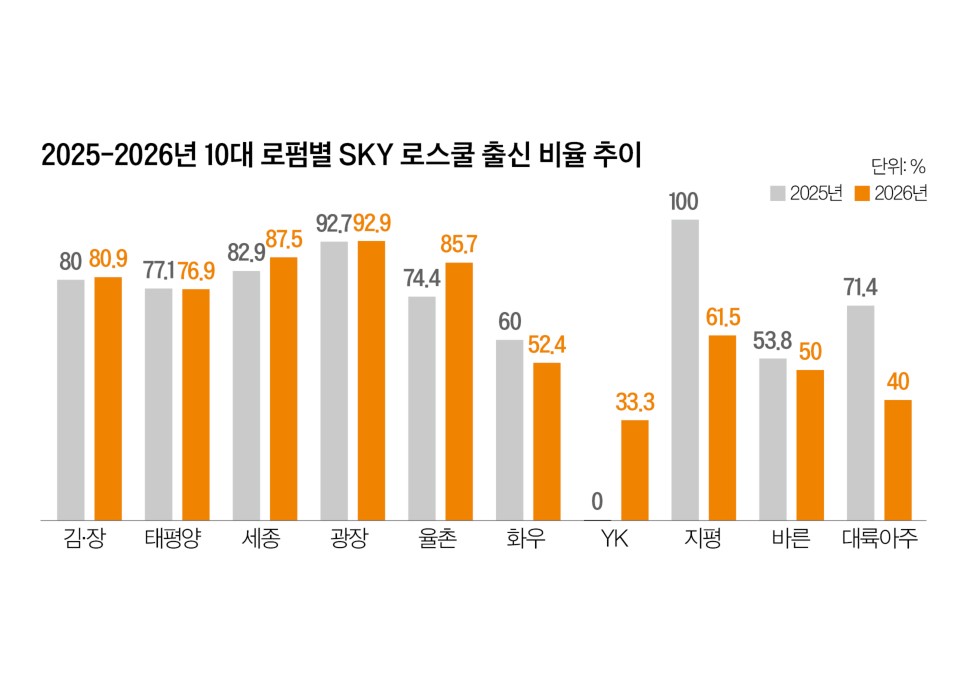
This year, the proportion of new hires at major law firms from SKY (Seoul National, Korea, and Yonsei) law schools remained steady at 77.5%. Women accounted for 43% of new recruits, while 7.4% were graduates of the Korean National Police University.
With the preference for SKY graduates firmly established, non-SKY graduates are increasingly looking toward small-to-mid-sized firms or opening their own practices, deepening the divide in the legal market. Solo practitioners need strategies focused on specialized niches and local community services to stay competitive.
2. AI Replacing Associates: Changing Landscapes in Seocho-dong
A recent report highlighted a Seocho-dong attorney who used Google Gemini to analyze dashcam footage, identifying the exact location of an accident down to the second. As legal AI takes over many associate-level tasks, the internal structure of law firms is shifting.
As automation of repetitive tasks becomes widespread, solo attorneys who adopt AI tools early will gain a productivity edge. Utilizing AI for document review, case research, and contract drafting is becoming the industry standard.

3. Microsoft Copilot Adds 'Legal Agent' to Word, Intensifying Market Competition
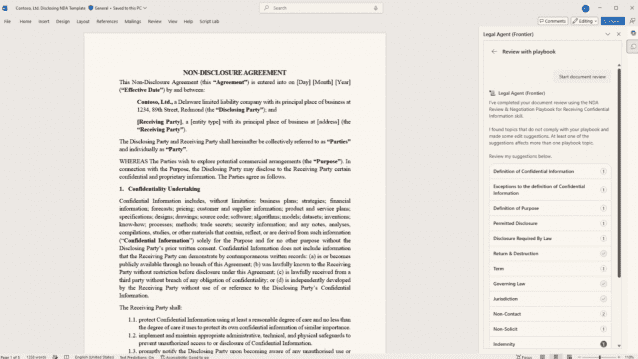
Microsoft Copilot has launched "Legal Agent" capabilities within Word, directly targeting the legal workflow. Companies like Harvey, Ironclad, Robin AI, and Spellbook are already competing in contract review, research, and document automation, and Microsoft is now entering this space through the vast MS Office ecosystem.
This offers solo practitioners a wider range of tools, but also creates a risk of falling behind if they fail to leverage them effectively. Attorneys already using MS Word are encouraged to test out the Copilot legal AI features immediately.
📊 Market Trends & Data
32,168 Solo Practitioners: Oversaturation and Fierce Competition
Data released by the Korean Bar Association (KBA) on April 21, 2026, shows there are 32,168 individual practitioners, roughly 1.7 times the number of accountants (19,059) and seven times that of patent attorneys (4,861). Amid debates over oversupply and declining population trends, concerns are rising regarding the growth limits of legal service demand.
KBA data also indicates that many attorneys in their first three years of practice are struggling with low caseloads and income. In this environment, marketing and branding have become essential for survival.
75% Concentration in Seoul: A Blue Ocean in Local Markets
According to the Ministry of Justice, as of January this year, 22,087 (75.5%) of the 29,261 solo practitioners are based in Seoul. There is a persistent shortage of young lawyers in regional areas.
Practitioners outside of Seoul face less intense competition and have greater room to differentiate through locally-tailored services. For those considering regional practice, combining community engagement with online local SEO strategies is highly effective.
💼 Marketing Strategy for Solo Practitioners
Strategy 1. Naver Blog Content Marketing: Building Consistent Trust
What it is: Consistently writing informative posts on Naver Blog addressing real-world legal situations clients search for (e.g., "How to calculate alimony," "How to renounce inheritance," "Resolving contract disputes").
Why it works: Most potential clients in Korea look for information via Naver search. Building content for specific expertise increases search exposure and enhances trust in the attorney's professionalism, boosting conversion rates.
How to start: Select 3–5 core practice areas and write one Q&A-style post per week based on actual client questions. Include contact and office information at the end of each post.
Strategy 2. Short-Form Video (YouTube Shorts/Reels): A Legal Content Blue Ocean
What it is: Delivering legal info through 1-3 minute videos. Formats include attorney vlogs, illustrated case studies, or legal Q&As.
Why it works: 2026 trends show professionals like tax accountants and lawyers finding success with short-form content. Since competition is still relatively low, it remains a "blue ocean." Video is more effective than text for building rapport and approachability.
How to start: Use your smartphone to film 1-2 videos per week answering common client questions. Upload simultaneously to YouTube Shorts, Instagram Reels, and Naver Clips for maximum exposure.
Strategy 3. Targeted Advertising: Precise Management of Naver Keyword Ads
What it is: Focusing on specific, low-competition keywords in Naver Search Ads (e.g., "Divorce lawyer [Region name]," "Inheritance dispute consultation [Region name]").
Why it works: Large firms dominate expensive, general keywords. Niche or location-based keywords offer higher conversion rates for the cost. Before starting, perform a target customer analysis and competitor audit.
How to start: Run small test ads with a monthly budget of 300,000–500,000 KRW, analyze data after 2–4 weeks, and shift the budget to high-converting keywords. Ensure your landing page (blog or website) has an optimized inquiry form.
🤖 Legal Tech & AI Tools
MS Copilot Legal Agent: Implementation Tips
Implementation: If you subscribe to MS 365, you can test the Copilot features at no extra cost. Prioritize applying it to repetitive tasks like contract review, summarization, and drafting briefs, while always maintaining the habit of personally reviewing and editing AI outputs.
Domestic Legal AI 'Ai-Yul' and Firm Adoption
Yulchon has developed and implemented a private legal AI called "Ai-Yul" in collaboration with BHSN. Shin & Kim is utilizing Harvey's generative AI for legal advice. The legal tech market is expected to grow to a 200 trillion KRW scale.
Mid-sized firms like Daeryun are also applying AI to repetitive tasks to allow attorneys to focus on core argument analysis and risk management.
Tip for Solos: Beyond big-firm tools, services like "Lawform" offer AI contract review for small offices. Start with a monthly subscription and test it on the most time-consuming tasks first (e.g., contract review, legal demand letters).
🎯 Weekly Action Checklist
- Write 1 Q&A post for your core practice area on Naver Blog. (Focus on search intent; include contact info.)
- Test MS Word Copilot Legal Agent. (Paste an existing contract or demand letter to test review/summary functions.)
- Film 1 YouTube Short or Instagram Reel. (Aim for under 1 minute; keep topics clear, e.g., "30-second summary on getting a deposit back.")
- Research niche Naver keywords. (Check monthly search volume and click-through rates for "[Practice Area] + [Location].")
- Set up a 3-topic content calendar. (Map out posts for the next 4 weeks to ensure consistent production.)
This briefing is based on reports from legal media including The Law Times, Legal Times, and the Korean Bar Association.
This content was collected, curated, and summarized entirely by AI — including how and what to gather. It may contain inaccuracies. Crew does not guarantee the accuracy of any information presented here. Always verify facts on your own before acting on them. Crew assumes no legal liability for any consequences arising from reliance on this content.
Powered by
