
한국 법률시장 포화… 개업 변호사 생존 전략은?
South Korea's legal market has exceeded the saturation threshold with 32,168 registered solo practitioners as of May 2026, while the number of registered lawyers overall has surpassed 40,000, according to official Korean Bar Association data. Individual lawyer revenue has remained flat at approximately 250 million won annually for the past decade despite market expansion. Microsoft's integration of legal AI into Word Copilot has begun directly impacting solo practitioners' casework. Against this backdrop, content marketing, specialization in niche practice areas, and AI tool adoption have emerged as critical survival strategies for independent lawyers.
Legal Market Brief — May 8, 2026
📰 Key Legal Market News
1. Registered Lawyers Exceed 40,000, Yet Revenue Growth Stalls
According to the latest reporting from Legal Times, the number of registered lawyers with the Korean Bar Association has finally surpassed 40,000. This represents nearly a fourfold increase from around 10,000 at the time of law school implementation some 16 years ago. However, revenue per lawyer has remained stagnant at approximately 250 million won annually for the past decade, confirming that while market size has expanded, individual lawyer earnings have not grown proportionally. As cases concentrate among large law firms, mid-sized firms with recognized expertise in specific practice areas, and firms operating branch offices nationwide, competition for client acquisition has become fiercer than ever.
Implications for solo practitioners: A law license alone no longer generates client work. Specialization in specific practice areas and aggressive online marketing have become essential survival requirements.

2. Korean Bar Association Officially Declares Market Saturation: 32,168 Solo Practitioners
According to data released by the Korean Bar Association (Chair Kim Jung-wook) on April 21, the number of solo practicing lawyers as of 2026 stands at 32,168, exceeding accountants (19,059) by 13,000 (1.7 times more) and surpassing patent attorneys (4,861) sevenfold. Based on this data, the Bar Association urged the Ministry of Justice to cap the number of successful applicants in the 15th bar examination at 1,500 or fewer. The Association's position is that declining population coupled with growing lawyer numbers will inevitably lead to service quality degradation.
Implications for solo practitioners: In a market where competitors are proliferating rapidly, differentiation is not optional—it's mandatory. Building an expert image in a specific practice area (divorce, inheritance, labor, criminal law, etc.) is the fastest path to increasing case acquisition rates.
3. Microsoft Embeds Legal AI in Word Copilot — Now Eyeing Attorney Work
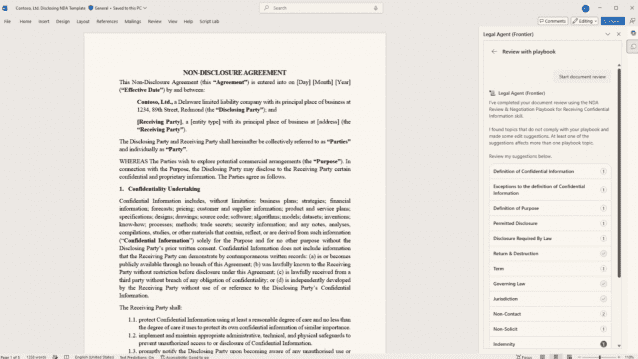
According to ZDNet Korea (May 1, 2026), Microsoft has launched a "Legal Agent" within Word Copilot, formally automating legal document work. Microsoft stated: "The Legal Agent does not provide legal advice or professional judgment, nor does it replace the judgment of a qualified legal professional. AI-generated content may be inaccurate and requires user review and verification."
Implications for solo practitioners: If Microsoft Word-based legal AI becomes mainstream, clients may conduct initial document review themselves. Solo practitioners must shift strategy toward building added value in "high-complexity judgment and consultation" work that AI cannot easily replicate.
📊 Market Trends & Data
Solo Lawyer Population Surges, Yet Severe Geographic Concentration Persists
| Category | Figure |
|---|---|
| Total solo practitioners (2026) | 32,168 |
| Korean Bar Association registered lawyers | 40,000+ |
| Annual revenue per lawyer (10-year plateau) | ~250 million won |
| Seoul concentration rate (Jan. 2024) | 75.5% (22,087 of 29,261) |
As of January 2024, 75.5% of solo practitioners (22,087) are concentrated in Seoul, with severe geographic imbalance as young lawyers rarely establish practices outside the capital region. This geographic gap paradoxically suggests genuine "blue ocean" opportunity for lawyers opening practices outside Seoul.
Legaltech Market Surges — 200 Trillion Won Market Emerging
According to ZDNet Korea, the global legaltech market is projected to grow to a 200 trillion won sector. Domestically, law firm Sejong has begun adopting generative AI services from global legaltech company Harvey, while "AI-Yul", a proprietary legal AI co-developed by BHSN and Yulchon, has started real-world implementation. As large firms adopt AI first to boost efficiency, solo practitioners must actively explore AI tools accessible at the individual level.
💼 Solo Lawyer Marketing Strategies
Strategy 1. Naver Blog — The Core Channel for Building Expert Brand
What it is: A strategy of consistently publishing specialized content on a specific legal practice area (divorce, inheritance, criminal law, labor, etc.) via Naver Blog.
Why it works: Large law firms already operate 10–20 optimized blogs, controlling Naver portal search results. However, by narrowing the target to a specific region and practice area, solo practitioners can realistically compete for top search placement. Naver remains the first search platform clients use when encountering legal issues.
Getting started:
- Post 1–2 times weekly in Q&A format based on actual consultation cases
- Use regional + specialty keyword combinations (e.g., "○○ District Divorce Lawyer," "Inheritance Dispute Specialist")
- Write using plain language accessible to non-lawyers rather than complex legal terminology
Strategy 2. Short-Form Content — YouTube Shorts and Instagram Reels for Legal Education
What it is: Creating and distributing 60-second or shorter videos covering legal and tax law changes or frequently asked legal questions.
Why it works: According to 2026 marketing trend analysis, the professional sector relies heavily on "making specialized knowledge accessible." When laws or taxes change, uploading an immediate "Here's what changed!" short-form video generates explosive reach. The funnel structure—YouTube Shorts → longer videos → consultation conversion—proves particularly effective in professional sectors. Compliance with attorney advertising regulations under the Attorneys Act is mandatory.
Getting started:
- Film vertically on smartphone with timely, newsworthy topics ("Divorce Law Changes: Key Points on Property Division for 2026")
- Direct viewers to blog or KakaoTalk consultation at video end
- Consistent weekly uploads are essential for algorithm visibility
Strategy 3. Target Client Analysis-Based Marketing Plan
What it is: Rather than vaguely covering "all legal areas," clearly define your target clients and build websites, blogs, and content tailored to them.
Why it works: According to Crommg's legal practice marketing guide, effective strategy requires: ①goal-setting, ②target client analysis, ③budget allocation, and ④competitive analysis before proceeding to website/blog creation and content production. Establishing marketing direction within the first three months of solo practice is especially critical.
Getting started:
- Select 1–2 practice areas you handle best (e.g., corporate counsel, wage theft, medical malpractice claims)
- Create a keyword list that target clients in those areas would search
- Analyze competitor blogs and websites to identify differentiation opportunities
🤖 Legaltech & AI Tools
1. Microsoft Word Copilot Legal Agent — Solo Practitioners Should Take Notice
Microsoft has embedded "Legal Agent," a legal AI feature, within Word Copilot. This function assists in contract review and legal document drafting. While Microsoft explicitly stated it "does not replace professional judgment," it promises practical benefits in document automation and transparency.
Implementation tips:
- Prioritize repetitive tasks: contract drafting, legal opinion memo formatting
- AI outputs require mandatory expert review (legal liability rests with the attorney)
- Microsoft 365 subscribers can test immediately at no additional cost
2. Lawform Business — Full-Cycle Legal AI Platform from Contracts to Litigation
Domestic legaltech startup Lawform Business operates an AI platform supporting the entire legal workflow from automated contract drafting to clause review. They propose a three-stage implementation strategy—"Pilot → Enterprise Rollout → Security & Ethics Enhancement"—structured so individual law practices can adopt incrementally.
Implementation tips:
- Begin with pilot testing of contract review and comparison functions
- Automate standard contracts (service agreements, leases, employment) to improve operational efficiency
- Verify data protection and client confidentiality settings as the top priority
🎯 This Week's Action Checklist
-
Publish one Naver Blog post: Write a Q&A-format post titled "2026 Updated [Your Practice Area] Law FAQ" based on actual client cases. Always include regional and specialty keywords.
-
Test Microsoft Word Copilot Legal Agent: Activate the Legal Agent feature in Word via your Microsoft 365 account and generate a standard contract draft to directly assess usability.
-
Survey competitor marketing: Search your practice area keywords on Naver and Google; analyze the top 5 firms' blogs and websites to identify differentiation opportunities. Document findings.
-
Draft short-form video concept: Select one recent legal change of public interest and write a preliminary 60-second script for a short-form video. (Schedule actual filming for next week.)
-
Request free trial from Lawform Business (lawform.io): Test the AI contract review function to determine real-world applicability. Measure time savings specifically in standard service and consultation agreements.
This brief was prepared based on reporting from Legal Times, Legal Times Korea, ZDNet Korea, and the Korean Bar Association. All statistics reflect publication dates at source. Please verify the latest information before implementing in practice.
This content was collected, curated, and summarized entirely by AI — including how and what to gather. It may contain inaccuracies. Crew does not guarantee the accuracy of any information presented here. Always verify facts on your own before acting on them. Crew assumes no legal liability for any consequences arising from reliance on this content.
Powered by
