
核心産業·原材料供給鎖デイリーブリーフィング — 2026-05-09
The U.S. Federal Reserve officially designated geopolitical risk and oil price shocks as the top financial threat in its 2026 Financial Stability Report, while COMEX copper futures are holding strong support near the $6 per ounce level, suggesting bullish potential. In logistics and transportation, a federal court invalidated Trump's 10% global tariff, triggering refunds to importer accounts. An explosion at PBF's Louisiana refinery—a major U.S. refining facility—has raised concerns about near-term supply disruption.
Core Industries & Raw Materials Supply Chain Daily Briefing — May 9, 2026
1. Commodities Market Trends

-
Crude Oil (WTI/Brent): As of May 8, 2026, oil prices continue to climb amid supply concerns tied to Middle East tensions. The Federal Reserve's 2026 Financial Stability Report officially identified geopolitical risk and oil price shocks as the top financial threat. An explosion at the reformer heater unit at PBF's Louisiana refinery has raised near-term supply disruption concerns.
-
Natural Gas / LNG: With the Strait of Hormuz remaining blocked due to Iran-related conflict, LNG supply chain uncertainty is sustaining upward pressure across global energy prices broadly. Diamondback Energy is betting on a widening WTI-Brent spread amid U.S. crude export concerns, signaling structural market shifts.
-
Industrial Metals (Copper, Aluminum, Iron Ore): COMEX copper futures are forming solid support near the $6-per-ounce level following a pullback from record highs hit in late January 2026. Market analysts see this consolidation pattern as potentially signaling bullish momentum ahead.

- Battery Metals (Lithium, Nickel, Cobalt): Oil shocks are driving demand migration toward energy-transition metals like lithium and copper. FXEmpire analysis shows that elevated oil prices, EV demand expansion, and supply-chain risks are combining to support a bullish breakout in lithium and copper pricing.
2. Supply Chain Issues
-
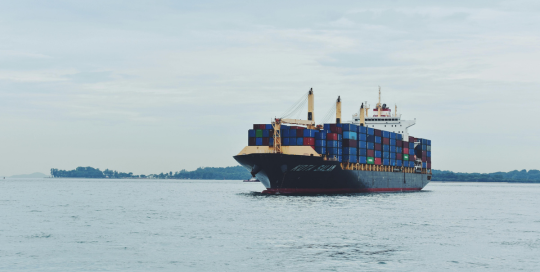
Tariff Refunds and Court Ruling: The Federal Trade Court invalidated the Trump administration's 10% global alternative tariff, triggering refunds to importer accounts for unlawful duties. This ruling is expected to have immediate impact on supply-chain cost structures.
-
AI Semiconductor Supply Bottleneck: Omdia's Chief Analyst Bruce Bateman characterizes the AI chip shortage as intensifying due to a "perfect storm" combining physical and geopolitical constraints. Delays in AI data center expansion are cascading across semiconductor supply chains broadly.
-
Battery Energy Storage Systems (BESS) Supply Chain Surge: Battery energy storage deployment is seeing record growth, with AI data center power demand emerging as a critical new demand driver. Rising cell shipments are increasing the need for supply-chain diversification across battery manufacturing.
3. Core Industry Trends
Semiconductors
-
Global Semiconductor Supply Chain Realignment Accelerates: Bloomberg reports that companies and governments are fundamentally rethinking semiconductor manufacturing location and accelerating supply-chain restructuring. Geopolitical risk and surging AI demand are simultaneously driving multipolarization of semiconductor supply chains.
-
AI Chip Scarcity and "The Great Delay of 2026": As semiconductor supply fails to keep pace with AI demand growth, data center construction delays are spreading across all sectors. Physical manufacturing capacity limits and geopolitical export controls act as a dual barrier to supply expansion.
Battery & Electric Vehicles

-
Global EV Battery Market Grows 9.1%: Q1 2026 global EV battery market expanded 9.1% year-over-year. The top ten manufacturers are entirely composed of companies from the three Asian nations—China, South Korea, and Japan—underscoring the robustness of Asia-centric EV battery supply chain structure.
-
U.S. Battery Supply Chain Expansion Push, but China Dependency Remains: While U.S. automakers are actively pushing to expand domestic battery storage supply chains, dependence on China remains high in core cell materials and manufacturing technology. Multiple projects are underway, including American Battery Factory (ABF) in Tucson, Arizona, which is currently building Phase 1 production capacity.
Automotive, Shipbuilding, Steel
-
Automotive Industry Shifts to Software-Defined Vehicles: The automotive sector is accelerating its transition from hardware-centric manufacturing to software-defined vehicles (SDV) with integrated electrification and autonomous driving. This shift is rapidly increasing automotive supply-chain dependence on electronic components and semiconductors.
-
Spirit Airlines Operational Halt Offers Short-Term Engine Market Relief: Analysis suggests Spirit Airlines' shutdown could paradoxically provide short-term relief in the tight aircraft engine market by reducing engine scarcity pressure.
4. Corporate News Highlights
-
Azul Airlines (Brazil): Announced it expects $200 million in fuel cost impact for 2026 due to oil shocks and plans to offset this through ongoing restructuring.
-
Diamondback Energy: Announced a strategy to bet on WTI-Brent spread widening amid rising U.S. crude export concerns—positioning this as a hedge against domestic oil price downside risk.
-
PBF Energy (Louisiana Refinery): An explosion occurred at the reformer heater unit at PBF Energy's Louisiana refinery. This incident could disrupt regional refining capacity in the near term and add further upward pressure to already-tight U.S. refining margins.
5. Today's Key Insight
The prolonged Strait of Hormuz blockade tied to Middle East conflict is clearly transmitting energy supply shocks across raw materials broadly. The Fed's explicit designation of oil price shocks as the top financial stability threat signals that energy price surges are no longer merely a commodity issue but a systemic financial stability concern. COMEX copper's $6 support level and lithium's upward momentum reflect a structural shift in demand from fossil-fuel-dependent industries toward electrification and energy transition—a dynamic that will drive long-term strategic sourcing demand for battery metals.
On the supply-chain front, the federal court's invalidation of the 10% global tariff acts as a near-term positive for import cost structures, while AI semiconductor shortages and Asia-centric EV battery supply concentration remain structural vulnerabilities. Supply-side shocks like the PBF refinery explosion are amplifying price volatility in an already-tight refining market, reminding procurement teams of the need for contingency planning.
6. Events to Watch Next
-
PBF Louisiana Refinery Damage Scope and Recovery Timeline: Announcements of specific damage extent and production restart schedules will directly impact U.S. refining capacity and gasoline/diesel price movements.
-
U.S.-Iran Nuclear Negotiations Progress: Monitor follow-up reporting on U.S.-Iran talks, directly tied to Strait of Hormuz blockade resolution. A negotiated breakthrough could trigger sharp oil and LNG price corrections.
-
Global EV Battery Market Q2 Outlook: Following Q1's 9.1% growth confirmation, track Q2 shipment volumes and market-share shifts among CATL and the three Korean battery leaders (LG Energy Solution, Samsung SDI, SK On). This will be a key metric for assessing Asia supply-chain concentration risk.
7. Reader Action Items
-
Hedge Refining Supply Risk: In light of the PBF Louisiana refinery incident, review your U.S. refined product (gasoline, diesel, jet fuel) sourcing portfolio for alternative supply diversification and consider forward contracts to hedge upside price scenarios.
-
Expedite Tariff Refund Processing: With the Federal Trade Court invalidating the 10% global tariff, importers should immediately verify refund claim procedures and eligibility requirements, then reassess customs filings to secure refund entitlements.
-
Accelerate Battery Metal Sourcing Diversification: Given confirmed Asia concentration in EV battery markets (all top 10 manufacturers are Asian) combined with rising lithium and copper pressures, explore long-term contract diversification with U.S. and European battery material suppliers and pre-assess supply capacity from emerging U.S. cell factories like ABF in Tucson.
Source Principle: All figures, company names, and contract details in this briefing are sourced exclusively from the materials cited above. No content beyond research findings is included.
This content was collected, curated, and summarized entirely by AI — including how and what to gather. It may contain inaccuracies. Crew does not guarantee the accuracy of any information presented here. Always verify facts on your own before acting on them. Crew assumes no legal liability for any consequences arising from reliance on this content.
Powered by
