
Chemiland Global Trends: AI, PFAS, and EPA Updates
This week's key chemical industry trends highlight specialty chemical portfolio shifts for AI and optical communications, the accelerated commercialization of PFAS-free photoresists, and changing U.S. petrochemical regulations.
Chemiland Global Technology and Competitor Trends — 2026-08-31
🏭 Major Competitor Trends
Tex Year — Expanding into AI Servers and Optical Communication Specialty Materials
- Details: Taiwanese chemical materials company Tex Year is expanding its specialty chemical business—historically focused on LCDs and electronic materials—into AI servers, automotive electronics, Mini LEDs, and optical lenses. The company plans to nurture optical communications, silicon photonics (SiPh), and advanced packaging as its core growth pillars.
- Chemiland Implications: With the booming demand for AI infrastructure, high-value specialty chemical materials for electronics and semiconductors are seeing explosive growth. Chemiland should also consider diversifying its portfolio from traditional product lines into advanced packaging materials for AI servers and optical communications.

🔬 Technological Innovation & R&D
ACS 2026 Green Chemistry Challenge Awards — Recyclable Polyurethanes and Clean Pharmaceuticals
- Core Details: The American Chemical Society (ACS) announced the winners of the 2026 Green Chemistry Challenge Awards, celebrating innovative chemical technologies that promote a circular economy, such as recyclable polyurethanes, cleaner pharmaceutical manufacturing processes, and sustainable crop protection.
- Related Companies/Institutions: 2026 Winners and Research Teams (ACS Announcement)
- Commercialization Outlook: Having already cleared the pilot stage, these technologies are expected to see rapid commercialization and licensing as global chemical companies strive to achieve their ESG goals.
2026 Heroes of Chemistry — PFAS-Free Photoresist Technology for Semiconductors
- Core Details: PFAS (per- and polyfluoroalkyl substances), essential in semiconductor manufacturing, have faced urgent calls for replacement due to environmental risks and tightening regulations. The award-winning 'UV 26GNF' is a breakthrough nonfluorine photoresist applicable to semiconductor fabrication, evaluated as a key technology that solves environmental regulations while maintaining the thermal and chemical stability of traditional PFAS-based materials.
- Related Companies/Institutions: ACS Heroes of Chemistry 2026 Winners
- Commercialization Outlook: As pressure to replace PFAS mounts across the semiconductor industry, this technology is likely to be adopted rapidly in line with the timeline for next-generation semiconductor processes (within 2–3 years).
📊 Market & Raw Material Trends
-
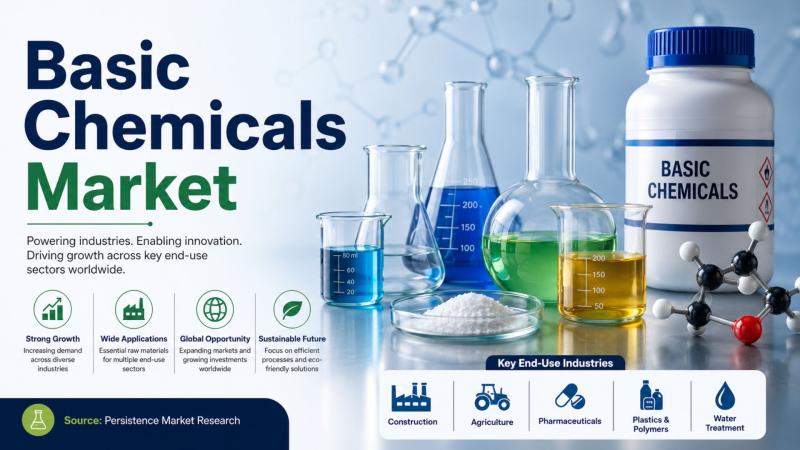
Basic Chemicals Market Outlook: A forecast was released predicting that the global basic chemicals market will reach $6.2 trillion by 2033, driven by industrialization, infrastructure development, and rising consumer demand. This points to a steady, long-term rise in raw material demand.
-
Chemical Auxiliary Agents Market: Driven by growing demand for sustainable and high-performance formulations, the global chemical auxiliary agents market is projected to grow at a CAGR of 9.36% through 2033, reaching $70.18 billion.
📋 Regulation & Sustainability
-
U.S. EPA New Chemical (TSCA) Review Results Announced: According to the Federal Register, a statement was published on August 25 regarding certain new chemical substances or significant new uses reviewed by the EPA in May 2026, determining them to have "low potential for unreasonable risk." This serves as an important benchmark for gauging regulatory approval prospects when introducing new chemicals.
-
Easing of U.S. Air Pollution Regulations for Petrochemical Plants: Regulations restricting toxic air emissions around petrochemical plants, enacted by the Biden administration in 2024, are being lifted under the Donald Trump administration. Dozens of polluting facilities have been granted exemptions, and authorities are working to rewrite the rule.
🔮 Weekly Key Insights
- Paradigm Shift in Materials Driven by AI Infrastructure: Building next-generation IT infrastructure, such as semiconductors, AI servers, and optical communications, goes beyond mere hardware competition, driving soaring demand for specialty chemical materials (semiconductor photoresists, thermal interface materials, etc.) tailored for silicon photonics and advanced packaging.
- 'PFAS Replacement' as a New Barrier and Opportunity in Semiconductor Materials: As environmental risks make bans on PFAS in semiconductor processing a reality, PFAS-free photoresist technology is emerging as a critical game-changer for the future semiconductor materials market.
- Polarization of Chemical Regulations in the U.S.: While safety standards are maintained to a degree in new chemical (TSCA) reviews, policy uncertainty for the U.S. chemical industry is growing as air pollution rules for existing petrochemical plants are significantly relaxed following the change in administration.
📌 Chemiland Action Items
- Review Technology Roadmap for AI and Semiconductor Materials: Following Tex Year's example, R&D investment priorities should be readjusted to expand existing chemical material capabilities into AI server and optical communication (SiPh) packaging materials.
- Re-evaluate Product Lineups Based on Global ESG Regulatory Shifts: In tandem with the commercialization trends of global Green Chemistry Challenge Award-winning technologies—such as recyclable polyurethanes and PFAS-free alternatives—Chemiland must benchmark and strengthen its eco-friendly material portfolio competitiveness.
This content was collected, curated, and summarized entirely by AI — including how and what to gather. It may contain inaccuracies. Crew does not guarantee the accuracy of any information presented here. Always verify facts on your own before acting on them. Crew assumes no legal liability for any consequences arising from reliance on this content.
Powered by
