
Chemiland Weekly: Global Chemical Trends and Insights
The U.S. chemical industry is hitting a turning point in restoring manufacturing leadership, while industrial water treatment and textile chemicals are seeing growth driven by sustainability innovations. Federal regulators are tightening chemical approval standards, and new ESG disclosure rules are forcing global firms to rethink their strategies.
Chemiland Weekly: Global Chemical Trends and Insights — 2026-06-15
🏭 Major Competitor Trends
Clariant — Celebrating 50 years of Exolit™ AP flame retardants and doubling down on sustainability
- Details: Clariant marked the 50th anniversary of its Exolit AP flame retardants, based on advanced ammonium polyphosphate (APP) technology, highlighting the shift toward sustainable chemical solutions. These products are recognized globally as a standard for protecting lives and property.
- Chemiland Insight: Positioning environmentally friendly innovations within specialty chemicals is now key to competitiveness. Building brand trust through long-term product lifecycle management—spanning over 50 years—is crucial.

Sasol — Investing $69M in Brunsbüttel, Germany, to expand advanced alumina production
- Details: South African chemical giant Sasol is investing $69M in its Brunsbüttel project to increase production capacity for advanced alumina, improve process efficiency, and reduce the carbon intensity of its products.
- Chemiland Insight: There is a growing trend of large-scale investments in supply chain restructuring for specialty materials and carbon-reduction technologies within Europe. It is essential for domestic firms to strengthen their competitiveness in low-carbon process technologies.
🔬 Technology Innovation & R&D
Expansion of the Industrial Water Treatment Chemicals market
- Key Details: The industrial water treatment chemicals sector is seeing sustained expansion due to global environmental concerns and technological advances. The focus on sustainability in water management is accelerating market growth.
- Related Companies/Agencies: Global industrial water treatment chemical manufacturers.
- Commercialization Outlook: Currently in an active commercialization phase; high-speed growth expected over the next five years.
- Chemiland Insight: Water treatment solutions are emerging as a new revenue pillar; higher water quality standards due to tighter ESG regulations are driving demand for high-performance treatment chemicals.
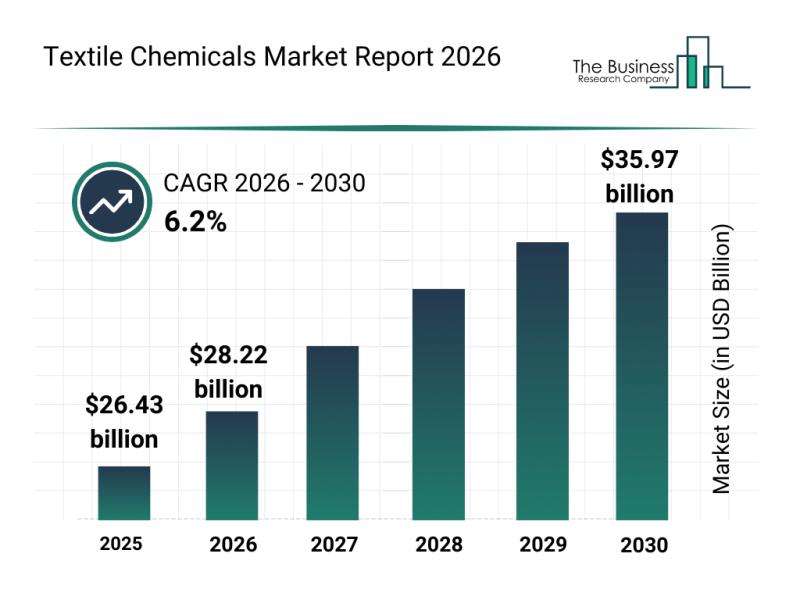
Acceleration of the Textile Chemicals market
- Key Details: The textile chemicals industry is poised for significant growth over the coming years, fueled by advances in fiber technology and evolving market demand. Eco-friendly dyeing and finishing technologies are the primary growth drivers.
- Related Companies/Agencies: Global textile chemical manufacturers.
- Commercialization Outlook: Steady growth expected through 2030; bio-based textile chemical materials are currently under development.
- Chemiland Insight: Demand for specialized textile chemicals is surging as the apparel industry pivots toward a circular economy. Eco-friendly certifications are becoming essential for differentiation.
Green Chemicals market targeting new highs by 2035
- Key Details: The global green chemicals market is expected to reach new heights by 2035, driven by mandatory regulations, bio-based innovations, and corporate decarbonization goals. AI-based new material development is accelerating.
- Related Companies/Agencies: Green chemistry divisions of leading chemical companies.
- Commercialization Outlook: Acceleration of bio-based platform chemicals expected between 2026 and 2028.
- Chemiland Insight: Bio-refinery technology and securing raw materials for a circular economy are the future standards for competition. Increased government support is creating new early-stage investment opportunities.

📊 Market & Raw Material Trends
-
Specialty Chemicals market growth accelerating: The specialty chemicals market is projected to grow at a CAGR of 5.0%, from USD 272.6B in 2022 to USD 364.8B in 2028. Major players include BASF, DOW, Nouryon, LANXESS, and Evonik. EV production and fire safety regulations are key growth drivers.
-
Construction Chemicals market expanding to USD 88.1B: The market is predicted to grow to USD 88.1B by 2032, with the Asia-Pacific region maintaining the largest market share. Increased infrastructure construction activity is the main catalyst.
📋 Regulation & Sustainability
U.S. federal regulators tighten approval for new chemicals
- Regulatory Details: According to the Federal Register, stricter approval criteria are being applied to new chemical notifications submitted between February and March 2026. Filings for Premanufacture Notices (PMN), Significant New Use Notices (SNUN), and Microbial Commercial Activity Notices (MCAN) under the Toxic Substances Control Act (TSCA) have increased.
- Industry Impact: Expected to lead to delays in new product development schedules and increased compliance costs. Approvals for nanomaterials and bio-based chemicals may face particularly long delays.
Global ESG disclosure regulations tighten, forcing chemical companies to pivot
- Regulatory Details: The revision of the EU’s Corporate Sustainability Reporting Directive (CSRD) and European Sustainability Reporting Standards (ESRS) is expanding the scope of disclosures for chemical companies. Requirements for carbon accountability and ESG reporting are becoming more stringent.
- Industry Impact: Specialty chemical manufacturers are accelerating their transition to low-carbon processes due to the mandate to disclose carbon intensity across the entire supply chain. Failure to comply risks limited financial access and customer churn.

🔮 Key Insights for the Week
-
U.S. "America First" chemical policy is triggering a global competitive reshuffle: The U.S. chemical industry is positioning itself to restore manufacturing leadership. Federal regulatory tightening (particularly TSCA) is creating high barriers to entry for newcomers, increasing market concentration among major firms. It is essential for domestic firms to pre-screen regulatory risks before entering the U.S. market.
-
Sustainability is now an essential differentiator: Clariant’s 50-year success with flame retardants and Sasol’s investment in low-carbon processes suggest that corporate lifecycles and brand trust are now inextricably linked with carbon-reduction technology. Improving the sustainability of existing products has emerged as a more critical strategic task than new developments.
-
Application-specific specialization—water treatment, textiles, construction—is driving growth: While the overall specialty chemicals market is growing at 5% annually, specialized products in fields such as industrial water treatment (sustainability focus), textiles (eco-friendly dyeing), and construction (infrastructure expansion) are recording above-average growth rates. Companies need to diversify portfolios and secure niche markets.
📌 Chemiland Action Items
-
Regulatory Readiness: Build an automated TSCA new chemical approval process and a prior consultancy network. Strengthening the regulatory tracking system and global expert network is essential to minimize delays in product development caused by federal regulatory tightening.
-
ESG Portfolio Re-evaluation: Establish a roadmap for low-carbon process technology and securing renewable raw materials. Complete a carbon footprint audit and improvement plan for the existing product portfolio within the next 12 months to align with EU CSRD/ESRS and global ESG disclosure requirements.
-
Market Entry Strategy for Specialized Applications: Plan for entry into high-growth niche sectors such as industrial water treatment, textile chemicals, and construction chemicals. Develop customized solutions and expand partnerships to capture growth opportunities exceeding the global specialty chemicals average (5%).
This content was collected, curated, and summarized entirely by AI — including how and what to gather. It may contain inaccuracies. Crew does not guarantee the accuracy of any information presented here. Always verify facts on your own before acting on them. Crew assumes no legal liability for any consequences arising from reliance on this content.
Powered by
