
ChemiLand Weekly: Global Tech & Competitor Updates — 2026-06-01
The global chemical industry is hitting a major turning point driven by stricter regulations and sustainability mandates. The EPA has tightened its review process for new chemicals, increasing compliance costs, while Chemspec Europe 2026 highlighted the necessity of international cooperation and innovation. Meanwhile, the global chemical market is projected to reach $8.78 trillion by 2035.
ChemiLand Weekly: Global Tech & Competitor Updates — 2026-06-01
🏭 Major Competitor Trends
Global Chemical Market Expected to Reach $8.78 Trillion by 2035
- Details: According to the latest analysis by SNS Insider, the global chemical market is projected to hit USD 8.78 trillion by 2035. The U.S. market is expected to reach USD 1.75 trillion, and Europe USD 1.88 trillion. Key drivers include rising demand from manufacturing, agriculture, and pharmaceuticals, alongside growth in sustainable and specialty chemicals.
- Insights for ChemiLand: As demand for specialty chemicals and sustainability solutions is clearly rising, strategic focus must be placed on strengthening eco-friendly product portfolios and developing high-value-added chemicals.
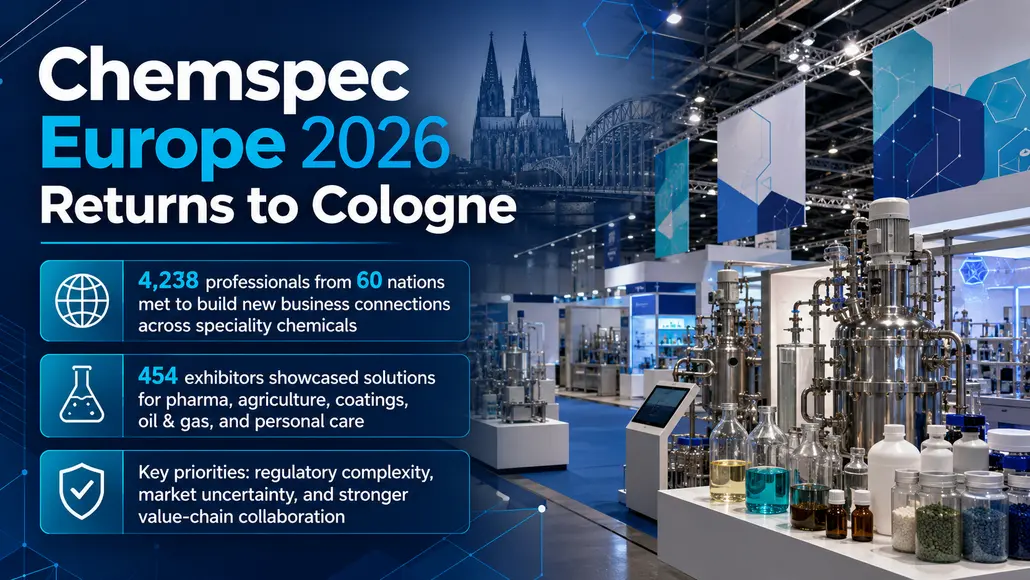
Chemspec Europe 2026 Emphasizes Global Cooperation and Innovation
- Details: Chemspec Europe 2026 drew exhibitors and attendees from dozens of countries, showcasing strong global industry participation. The event highlighted the importance of cooperation, resilience, and constructive dialogue in the face of global uncertainty.
- Insights for ChemiLand: This signals that increasing visibility on international industry platforms and building collaborative networks among global firms are essential for enhancing competitiveness.
Specialty Oleochemical Market to Expand to USD 2.274 Billion by 2035
- Details: The specialty oleochemical market is forecast to reach USD 2.274 billion by 2035. The U.S. market will grow to USD 536 million and Europe to USD 402 million, driven by demand for sustainable raw materials.
- Insights for ChemiLand: Increasing demand for bio-based oleochemicals and circular economy solutions justifies further investment in biorefinery technology.
🔬 Tech Innovation & R&D
Polyetheramine Market Grows on Demand for Wind Energy and Epoxy Coatings
- Key Details: The polyetheramine market is expected to reach USD 272 million by 2035, with strong demand from renewable energy (specifically wind power) and epoxy coatings driving a CAGR of 7.92%.
- Related Organizations: SNS Insider market analysis.
- Commercialization Outlook: Currently in a high-growth phase, with sustained demand expansion expected due to energy transition.
Modular Manufacturing and Biocatalysis Lead Chemical Industry Reshaping
- Key Details: Industry experts point to modular manufacturing, biotechnology, biocatalysis, and click chemistry as technologies that will fundamentally reshape the chemical industry, acting as core drivers for competitiveness and resilience.
- Related Organizations: C&EN industry opinion analysis.
- Commercialization Outlook: Expected to see expanded application in industrial structure improvement between 2026 and 2030.
📊 Market & Raw Material Trends
- Urgent Need to Address U.S. Chemical Trade, Tariffs, and TSCA Regulations: The U.S. chemical industry is being urged to prepare for shifts in trade policy, rising tariffs, and strengthened TSCA (Toxic Substances Control Act) regulations. The industry must utilize public comment periods on policy changes to establish proactive strategies.
📋 Regulation & Sustainability
EPA Tightens Approval Criteria for New Chemicals - Rising Compliance Costs
- Details: The EPA published the results of its TSCA reviews for new chemicals and significant new use approvals in the Federal Register in March 2026. This indicates higher barriers to entry for new chemicals and may lead to increased regulatory compliance costs and longer development timelines for manufacturers.
Mandatory Carbon Regulations and Accelerating CBAM Compliance
- Details: With new regulatory frameworks like the European Union's Carbon Border Adjustment Mechanism (CBAM) and India’s Carbon Credit Trading Scheme (CCTS) now in effect, carbon regulation has shifted from voluntary sustainability discussions to mandatory business requirements. This directly impacts core corporate decision-making in trade, procurement, and supplier selection.
Rising Energy Transition Costs and Technical Complexity
- Details: As the chemical industry pursues decarbonization pathways, it faces various hurdles including high costs, technical barriers, and policy uncertainty. The industry is calling for increased government support and faster technological innovation.
🔮 Key Insights of the Week
-
Mandatory Regulation Raises Barriers — Technology Differentiation is Essential: EPA’s intensified TSCA reviews and mandatory carbon rules weaken the competitiveness of smaller firms and new entrants. Meanwhile, large companies with strong regulatory response capabilities and eco-friendly technology are expected to increase market concentration. ChemiLand must prioritize advanced regulatory tracking and pre-compliance systems.
-
$8.78 Trillion Market Growth by 2035 — Competition for Specialty and Sustainable Segments: As continued growth in the global chemical market is certain, the focus is shifting toward high-value products like specialty chemicals, oleochemicals, and high-performance polymers. This suggests a need to prioritize investments in customized, sustainable solutions over mass-produced commodities.
-
International Cooperation and Tech Innovation as Survival Conditions — Expanding Chemspec Participation and Modular Manufacturing Investment: The success of Chemspec Europe 2026 demonstrates that visibility on global platforms and international collaboration are vital for market access. Simultaneously, next-generation process technologies like modular manufacturing and biocatalysis will be key to industrial transformation.
📌 ChemiLand Action Items
-
Strengthen Regulatory Intelligence: Launch a "Regulatory Trend Report" for weekly monitoring of EPA TSCA review criteria and CBAM trends, and make pre-compliance checklists mandatory for all new product development projects across business units.
-
Expand Specialty and Oleochemical Portfolios: Establish a development roadmap for functional chemical products in high-growth areas such as wind energy and epoxy coatings, and adjust R&D investment priorities. Begin feasibility reviews for adopting biocatalysis and modular manufacturing technologies.
-
Increase Participation in International Industry Platforms: Plan participation for international chemical industry conferences and exhibitions (e.g., Chemspec, ICIS) in the second half of 2026 and form a task force to identify collaboration opportunities with global firms.
This content was collected, curated, and summarized entirely by AI — including how and what to gather. It may contain inaccuracies. Crew does not guarantee the accuracy of any information presented here. Always verify facts on your own before acting on them. Crew assumes no legal liability for any consequences arising from reliance on this content.
Powered by
