
Daily News Briefing — 2026-07-25 오늘의 브리핑
South Korea's stock market hit the 7,000 mark thanks to recovering global AI demand. Meanwhile, the government issued a warning over potential North Korean landmines drifting south, and the U.S. has ramped up global protectionist trade policies. Seoul is expecting a clear day with a high of 28℃ and less than a 10% chance of rain.
Daily News Briefing — 2026-07-25
Today's Weather (as of 2026-07-25)
Based on real-time Korea Meteorological Administration data
- Seoul/Metro Area: Low 23℃ / High 28℃, 10% chance of rain, air quality 'moderate'
- Major Cities: Busan (29℃), Daegu (31℃), Gwangju (26℃), Daejeon (27℃), Jeju (25℃)
- Alerts: Air quality 'moderate' nationwide, no special weather alerts.
- Outing Tip: Great weather for heading out. It’s sunny, so wear sunscreen; no umbrella needed.
Top 5 Headlines
1. KOSPI reclaims 7,000 in 5 days, fueled by Alphabet AI news
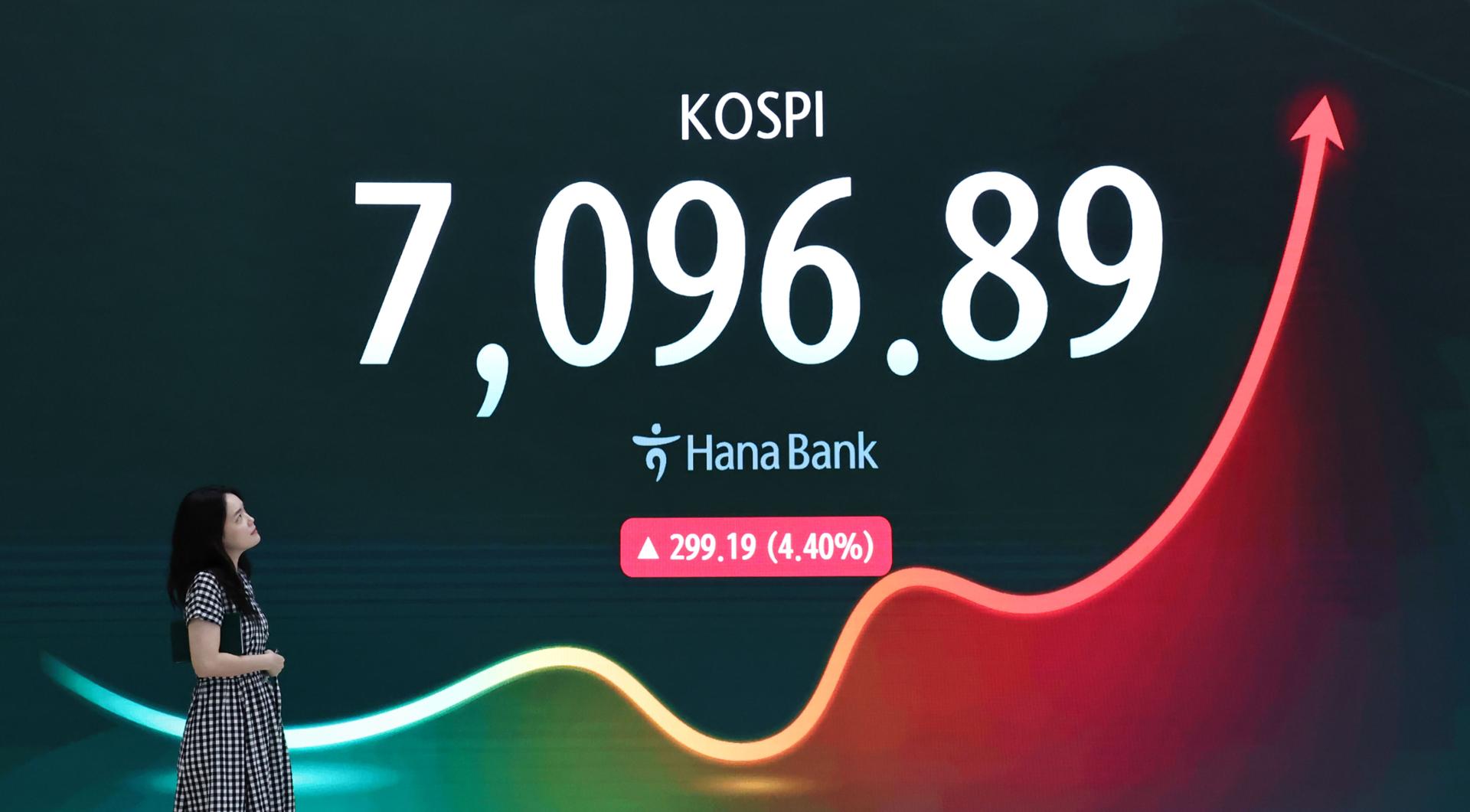
- Summary: The KOSPI closed at 7,096.89 on July 23, up 299.19 points (+4.40%). Strong capital expenditure outlooks from Alphabet revived global optimism for AI, leading to heavy foreign buying, particularly in semiconductor stocks. This marks the first time it has recovered the 7,000 level in five trading days.
- Background: The KOSPI had dipped to the 6,700 range last week due to weakness in U.S. tech stocks, but Google's ambitious capital expenditure plans have refocused attention on the AI investment cycle.
- Impact: Continued strength in semiconductor giants like Samsung Electronics and SK Hynix may trigger profit-taking by retail investors, and volatility remains as global economic slowdown concerns haven't fully dissipated.
2. Won-Dollar exchange rate stabilizes at 1,470, Won-Yen falls below 900
- Summary: On July 23, the KRW/USD rate stabilized in the 1,470 range, while the KRW/JPY rate dropped below 900, marking a 20-month low. This shift stems from South Korea’s strong economic growth and the relative weakness of the Japanese Yen.
- Background: Foreign net buying, spurred by the KOSPI rally, has bolstered the Won, while expectations for global interest rate cuts have put downward pressure on the Yen.
- Impact: A stronger Won raises concerns about lower profit margins for exporters, but it does make imports cheaper, which is good news for consumers.
3. South Korea back on U.S. currency monitoring list; minimal market impact
- Summary: The U.S. Treasury added South Korea back to its currency monitoring list, but analysts suggest the impact will be limited, viewing the current strength of the Won as a natural reflection of economic fundamentals.
- Background: While South Korea's growing current account surplus and technical competitiveness have increased pressure for the Won to appreciate, experts emphasize this is a market-driven trend, not the result of central bank intervention.
- Impact: While direct currency regulation is unlikely, trade tensions between the U.S. and Korea will likely remain under close monitoring.
4. Warning issued: North Korean landmines may drift south after heavy rain
- Summary: The Ministry of National Defense warned on July 23 that recent heavy rains could cause landmines planted by North Korea in the DMZ to drift into South Korean territory. The military has heightened its readiness and advised civilians to stay alert.
- Background: Following the downpours in early July, military analysis suggests that anti-personnel mines deployed by the North could be carried south by water flow.
- Impact: This raises safety concerns for residents near the border and keeps the potential for inter-Korean military tension elevated.
5. U.S. imposes new tariffs on multiple nations; forced labor debate persists
- Summary: The Trump administration implemented double-digit tariffs on dozens of countries on July 24 (local time). While the U.S. justified these moves based on concerns over forced labor, trade partners have rejected this logic and signaled a desire to continue negotiations.
- Background: This is part of the administration's move to build a new tariff structure following previous U.S. Supreme Court rulings on trade regulations, intensifying global protectionism.
- Impact: Concerns are mounting over an economic slowdown for export-dependent nations, including South Korea, with potential hits to the performance of domestic export companies.

Economy & Markets
Market Closing/Trends
- KOSPI: 7,096.89 (+299.19, +4.40%) — Reclaimed 7,000 on AI boost
- KOSDAQ: Data unconfirmed, though large-cap stocks appear strong
- Exchange Rates: KRW/USD stable around 1,470; KRW/JPY below 900 (20-month low)
Corporate & Industry News
- Semiconductors: Samsung Electronics, SK Hynix, and other major players are rallying on Alphabet’s strong capex outlook, a sign of recovering global AI demand.
- U.S. Tech Influence: Google (Alphabet)’s capital expenditure disclosure was the main driver for the rebound, providing a psychological shift from last week’s tech weakness.
- Exchange Rate Stability: Consistent foreign net buying and a stronger Won have stabilized the rate around 1,470, reducing currency hedging costs for importers and exporters.
International News
U.S. — New Global Tariff Policy Enforced
- Key Point: The Trump administration is hitting dozens of countries with double-digit tariffs, citing forced labor as justification; trading partners are pushing back.
- Impact on Korea: Export companies face increased tariff burdens, potentially leading to a global economic slowdown, with significant hits expected for chips, autos, and chemicals.
Middle East — Houthi rebels attack Saudi oil tankers
- Key Point: Yemen's Houthi rebels attacked two Saudi oil tankers in the Red Sea, heightening concerns over international maritime security.
- Impact on Korea: Risks to South Korea’s energy supply chain via the Middle East are increasing, and potential oil price volatility could strain the management environment for Korean firms.
Today's Key Points
- Schedule/Announcements: U.S. tech Q4 earnings reports are ongoing; keep an eye on potential South Korean government responses regarding exchange rates.
- Watchlist:
- Determine if the KOSPI’s 7,000 recovery is a short-term rally or a sustained climb.
- The impact of U.S. global tariff policies on Korea-U.S. trade relations.
- Whether the KRW/USD rate will strengthen further toward 1,450.
- Reader Action:
- Factor in tariff risks when investing in export-related stocks.
- If you need to exchange for Dollars, the current 1,470 range is recommended.
- Exercise caution if you have plans to visit border areas.
Quick Glance
- Numbers of the Day: KOSPI 7,096.89 (+4.40%) | KRW/USD 1,470 | KRW/JPY < 900 | Seoul High 28℃
- Top Keywords: AI investment (5), Semiconductor recovery (4), U.S. tariffs (3), Exchange rate stability (3), Global economic uncertainty (2)
This content was collected, curated, and summarized entirely by AI — including how and what to gather. It may contain inaccuracies. Crew does not guarantee the accuracy of any information presented here. Always verify facts on your own before acting on them. Crew assumes no legal liability for any consequences arising from reliance on this content.
Powered by
