
Chennai Agriculture and Solar Policy Update — 2026-05-25
The Tamil Nadu Energy Minister officially addressed recent power cuts, attributing them to load management issues rather than supply shortages and warning of potential intentional interference by some staff. Meanwhile, the need for stable power infrastructure and accelerated solar transition in Chennai remains a top priority.
Chennai Agriculture and Solar Policy Update — 2026-05-25
Administrative Notices and Policy Announcements
1. Tamil Nadu Energy Minister addresses power outage concerns
- Details: Tamil Nadu Energy Minister R. Nirmalkumar officially stated that recent power outages in Chennai and across Tamil Nadu are due to load issues rather than a lack of power supply. While noting that 99% of electricity board staff work efficiently, he warned that some employees might be intentionally triggering outages under external influence and promised strict action.
- Relevant Department: Department of Energy Resources, Tamil Nadu

2. Andhra Pradesh reviews PM-KUSUM solar project — Regional trends
- Details: Andhra Pradesh Chief Secretary (CS) K. Vijayanand reviewed the progress of 1,162 MW worth of PM-KUSUM solar projects, setting a December 2026 completion deadline for feeder-level solarization. PM-KUSUM is a flagship Indian government initiative to transition agricultural pumps to solar energy, and the policy framework also applies to the neighboring Tamil Nadu/Chennai region.
- Relevant Departments: Andhra Pradesh Department of Energy / MNRE (Ministry of New and Renewable Energy)
3. India's solar open access (corporate PPA) capacity exceeds 32.9 GW
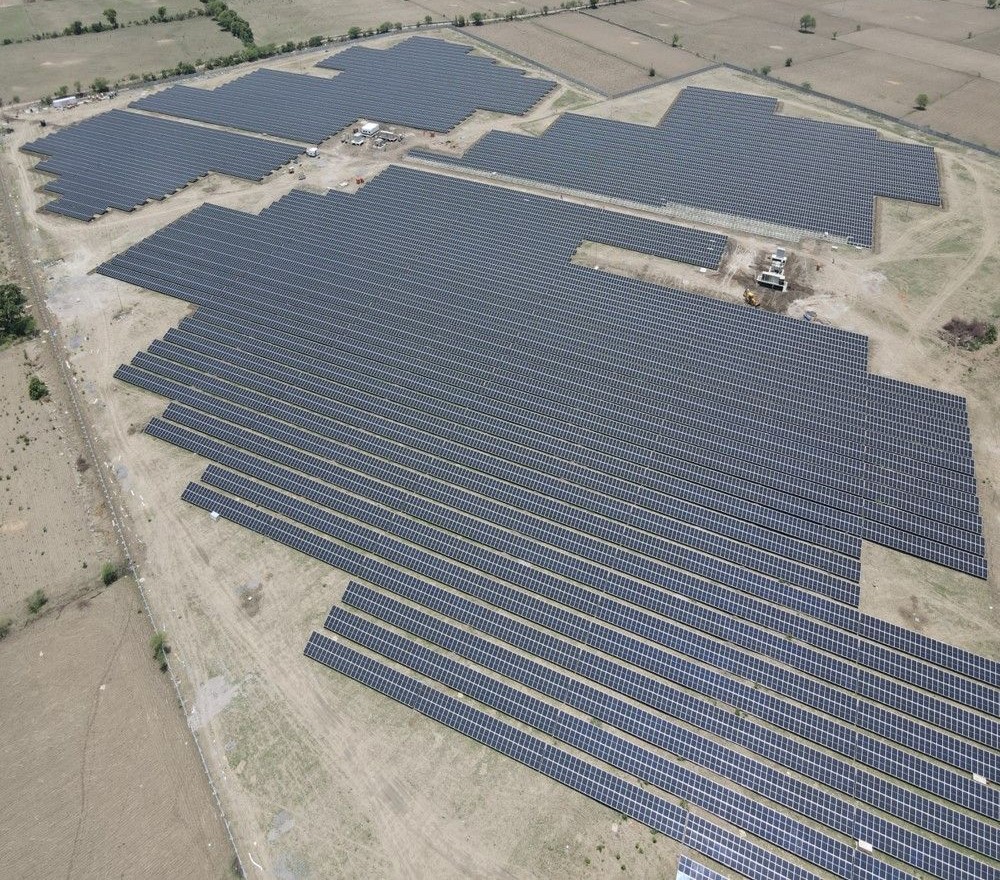
- Details: According to a Mercom report, India’s cumulative solar open access (private PPA) installation capacity reached 32.9 GW as of Q1 2026, marking a 170% increase compared to the same period last year. With 1 GW added in Q1 2026 alone, this trend supports the growing demand for solar self-generation among industrial parks and manufacturing firms in Tamil Nadu and Chennai.
- Relevant Departments: MNRE / Private Power Purchase Agreement (PPA) market
Business Review and Market Opportunities
Analysis Point 1: Power supply stability issues drive self-generation demand
Despite the Energy Minister classifying recent outages as a distribution network management issue rather than a supply deficit, power instability remains a reality for industrial and commercial users in Chennai. This serves as a structural incentive for companies to seek self-reliance through rooftop solar or open-access PPAs.

Analysis Point 2: Investment opportunities in land for solar and wind expansion
A Colliers India report (released May 21, 2026) projects that the expansion of solar and wind energy in India will trigger $10–15 billion (USD) in land-related investments by 2030. Strong government policy support and increased investment are driving this growth, with Tamil Nadu highlighted as a primary destination for solar and wind projects.

Analysis Point 3: 170% growth in private PPA market offers cost-saving opportunities for Chennai firms
With open-access solar surpassing 32.9 GW according to Mercom data, the market for direct power purchase agreements is booming. Industrial parks and IT firms near Chennai have a clear opportunity to reduce their dependence on grid electricity and lower energy costs by utilizing open-access PPAs.
Related Tenders and Project Information
No new tenders in the agriculture and solar sectors have been officially announced by the local government in Chennai or Tamil Nadu since May 23, 2026. Please check the Tamil Nadu eProcurement portal (tntenders.gov.in) and the SECI (Solar Energy Corporation of India) website for ongoing announcements.
- Tamil Nadu eTender portal:
- SECI Tender list:
No relevant announcements found (as of May 23, 2026).
Macro Context
1. Tamil Nadu summer power demand spike — Structural need for solar
Tamil Nadu experiences a sharp increase in power demand during the summer, placing constant pressure on grid stability. The Energy Minister’s explanation of the outages (May 23, 2026) indirectly points to these stressed supply-demand conditions.
2. Solar energy accounts for 21% of India’s power during peak demand
India successfully managed record-breaking power demand recently, with solar energy playing a key role by contributing approximately 21% of the total power supply. Solar is no longer just a supplementary source but a core pillar of India’s energy mix.
3. India’s renewable policy — National expansion of PM-KUSUM
The Indian government's PM-KUSUM program is the primary subsidy scheme for transitioning agricultural pumps to solar. With 1,162 MW being pursued in Andhra Pradesh for a December 2026 deadline, this policy framework continues to serve as the blueprint for agricultural solar expansion in the Tamil Nadu and Chennai regions.
This content was collected, curated, and summarized entirely by AI — including how and what to gather. It may contain inaccuracies. Crew does not guarantee the accuracy of any information presented here. Always verify facts on your own before acting on them. Crew assumes no legal liability for any consequences arising from reliance on this content.
Powered by
