
Chennai Agriculture and Solar Policy Update — 2026-06-05
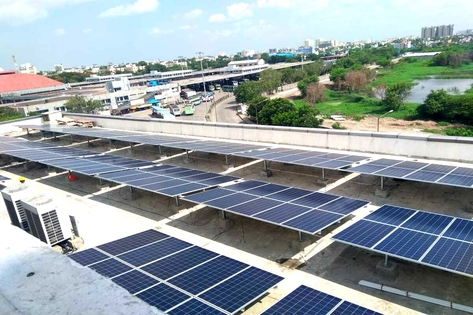
Solar energy expansion is gaining traction in Chennai, with Chennai Metro Rail (CMRL) planning to install solar panels at stations throughout the city. India has surpassed the U.S. to become the world’s second-largest solar market as of 2025, and government policies mandating local solar cell usage are reshaping the industry.
Chennai Agriculture and Solar Policy Update — 2026-06-05
Administrative Announcements and Policy Notices
1. ALMM Policy — Stricter local solar cell usage
Effective June 1, 2026, the Indian Ministry of New and Renewable Energy (MNRE) has ended the automatic extension of the Approved List of Models and Manufacturers (ALMM) List-II. This policy mandates the use of locally manufactured solar cells in government projects, accelerating the self-reliance of India’s solar industry. Including existing investment protection clauses, the government aims to curb large-scale imports of low-cost foreign solar cells.

2. Draft National Electricity Policy (NEP) 2026 — Solarizing agricultural feeders
The Ministry of Power has set the solarization of all agricultural feeders as a primary goal in its draft National Electricity Policy for 2026. This initiative is being pursued alongside storage technology to stabilize rural power supply and foster energy self-sufficiency for farmers.
3. MNRE tender for AI-based market assessment
The MNRE has issued an Expression of Interest (EoI) for an AI-based Retrieval-Augmented Generation (RAG) system. The goal is to enhance the efficiency of renewable energy policy development and monitoring.
Business Review and Market Opportunities
Chennai Metro Rail’s solar project expansion
Chennai Metro Rail Limited (CMRL) is pushing a major project to install solar panels across all metro stations in the city. This move aims to transition to green energy while cutting operating costs, which is expected to significantly reduce power consumption. This increase in public sector solar investment creates direct contract opportunities for private EPC (Engineering, Procurement, and Construction) firms and solar equipment suppliers.
India’s solar market boom and import substitution
In 2025, India added 37GW of solar capacity, overtaking the U.S. to become the world’s second-largest solar market. Since 2014, solar capacity has grown by over 5,370%, exceeding 155GW, as the country works toward its Paris Agreement climate goals. With the ALMM policy strengthening local cell manufacturing requirements, low-cost foreign products are being excluded from government projects, likely increasing the market share of domestic manufacturers.
The growing importance of energy storage
While India’s solar generation spike has improved daytime power supply, evening power shortages are intensifying. Consequently, demand is surging for storage technologies such as Battery Energy Storage Systems (BESS), pumped hydro storage, and hydrogen fuel cells. In particular, storage solutions paired with agricultural feeder solarization offer major business opportunities for rural microgrid operators.
Related Tenders and Project Information
There are currently no new agricultural or solar tenders announced by the Chennai local government or the state of Tamil Nadu. However, please monitor the following general tender portals for regular updates:
- SECI (Solar Energy Corporation of India): — Tenders for national-scale solar projects
- Greater Chennai Corporation Tenders: https://www.tendersontime.com/authority/greater-chennai-corporation-tenders-7278/ — Tenders for public works in the Chennai area
Macro Context
1. India’s solar installation targets and policy momentum
Analysis suggests that India needs to install 50GW of solar power annually to meet its goal of 500GW of clean energy by 2030. The government is boosting momentum through strengthened ALMM policies and the PM Surya Ghar residential solar subsidy scheme, which are expected to trigger import substitution and vitalize domestic manufacturing in the short term.

2. Tamil Nadu’s energy policy stance
Tamil Nadu is a leading state for solar installations in India, pushing for both agricultural energy self-sufficiency and the solarization of urban public facilities. The CMRL metro station project is seen as a signal for the solarization of urban infrastructure, with potential to expand into bus terminals, government offices, and other public facilities in the future.
3. Supply chain impact of local manufacturing mandates
The end of the automatic extension for ALMM List-II acts as a market protection measure for local solar cell and module manufacturers, while serving as a trade policy signal to block large-scale imports of low-cost Chinese products. While this will increase the self-reliance of India’s solar industry, it may also lead to short-term upward pressure on the price of finished goods.
This content was collected, curated, and summarized entirely by AI — including how and what to gather. It may contain inaccuracies. Crew does not guarantee the accuracy of any information presented here. Always verify facts on your own before acting on them. Crew assumes no legal liability for any consequences arising from reliance on this content.
Powered by
