
Chennai Agriculture and Solar Policy Update — 2026-06-20
The Tamil Nadu state government has officially approved five new dedicated renewable energy zones to speed up development. Meanwhile, rooftop solar subsidies in Chennai continue to be managed through the central government's PM Surya Ghar scheme.
Chennai Agriculture and Solar Policy Update — 2026-06-20
Administrative Notices and Policy Announcements
1. New Renewable Energy Zones in Tamil Nadu
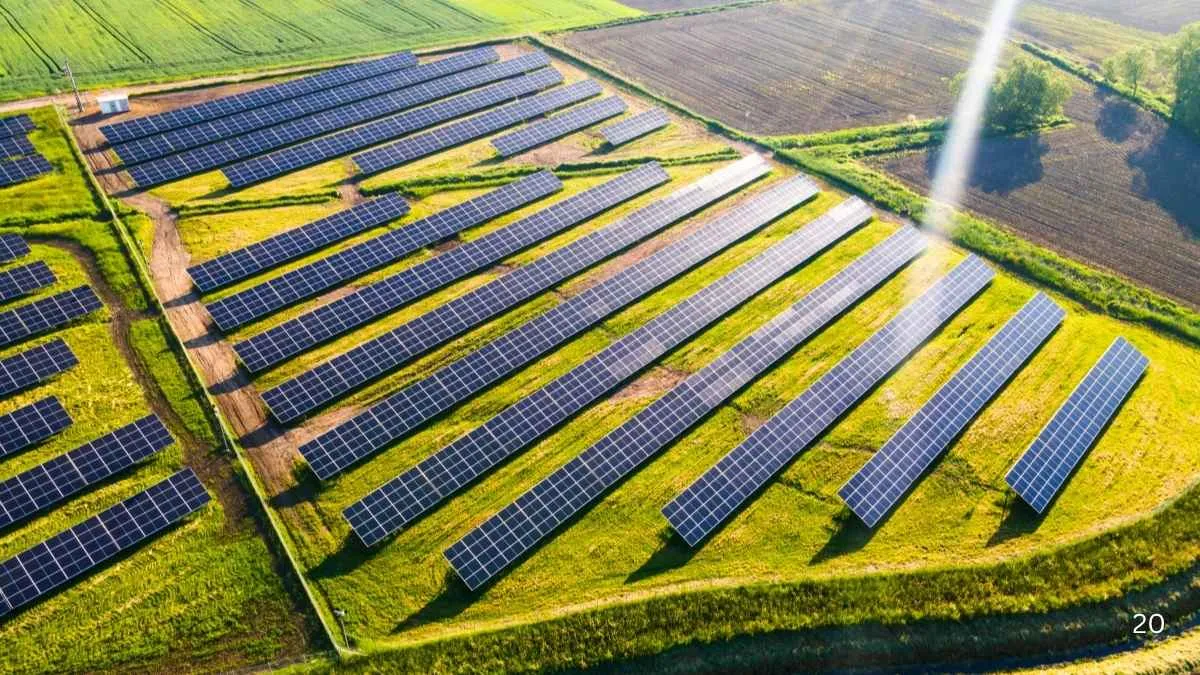
Overview: The Tamil Nadu state government has approved five dedicated renewable energy zones to fast-track wind and solar power projects. Under the oversight of the Tamil Nadu Green Energy Company Limited (TNGECL), these zones will offer a single-window clearance system to simplify administrative procedures for investors.
Department: Tamil Nadu State Energy Department
Approval Date: June 19, 2026
2. Chennai's Grid Improvement Strategy
Overview: The Tamil Nadu Power Distribution Company Limited (TNPDCL) is urgently upgrading the power distribution network to meet rising electricity demand in Chennai. This infrastructure modernization is directly linked to increasing capacity for renewable energy, including solar.
Department: Tamil Nadu Power Distribution Company Limited (TNPDCL)
Business Insights and Market Opportunities
1. Investment Opportunities in Renewable Energy Zones
The creation of five dedicated zones offers major opportunities for solar and wind developers. The introduction of single-window clearance will reduce approval times, thereby cutting project costs and improving profitability. Developers in urban areas, including Chennai, are expected to be the primary beneficiaries.
2. Grid Modernization and Solar Integration
Chennai's grid improvements will boost the capacity to connect both rooftop solar and large-scale projects. With central subsidies of up to ₹78,000 available under the PM Surya Ghar scheme, the enhanced grid is expected to drive increased demand for residential solar installations.

3. PM Surya Ghar as the Primary Policy Driver
Tamil Nadu currently does not provide separate state-level rooftop solar subsidies, relying instead on the central government’s PM Surya Ghar scheme. This program offers a central subsidy of up to ₹78,000 for 2-3kW systems, and TANGEDCO’s net metering policy allows users to sell surplus power, ensuring long-term investment returns.
Tenders and Project Information
No new official agriculture or solar-related tenders from the Chennai City Corporation or the Tamil Nadu state government have been confirmed in the last 24 hours. However, the Solar Energy Corporation of India (SECI) and the Tamil Nadu state eProcurement system frequently host ongoing renewable energy project tenders. Latest information can be found via:
- SECI Tenders:
- Tamil Nadu State eProcurement:
- Central Government eProcurement:
Macro Context
1. India’s Agri-Solar Policy: Strengthening International Cooperation
Prime Minister Narendra Modi is positioning the PM-KUSUM solar irrigation scheme as a scalable model for food security and farmer income growth in Africa. This suggests potential for Indian agri-solar technology exports, which could boost the competitiveness of domestic manufacturing and installation sectors.
2. Surge in Tamil Nadu's Power Demand
With Chennai’s electricity demand hitting a new high of over 5,000 MW, the expansion of renewable energy has become a core strategy for grid stability. The new renewable energy zones are the state government's proactive response to meet this surging demand through solar and wind power.
3. Central Small Hydro Power (SHP) Policy
The Union Ministry of New and Renewable Energy has completed administrative approvals for the development of Small Hydro Power projects (1MW to 25MW) for the 2026-27 to 2030-31 fiscal years. This is part of India’s broader strategy to diversify its renewable energy portfolio alongside solar.
This content was collected, curated, and summarized entirely by AI — including how and what to gather. It may contain inaccuracies. Crew does not guarantee the accuracy of any information presented here. Always verify facts on your own before acting on them. Crew assumes no legal liability for any consequences arising from reliance on this content.
Powered by
