
Chennai Solar And Agri Policy Briefing
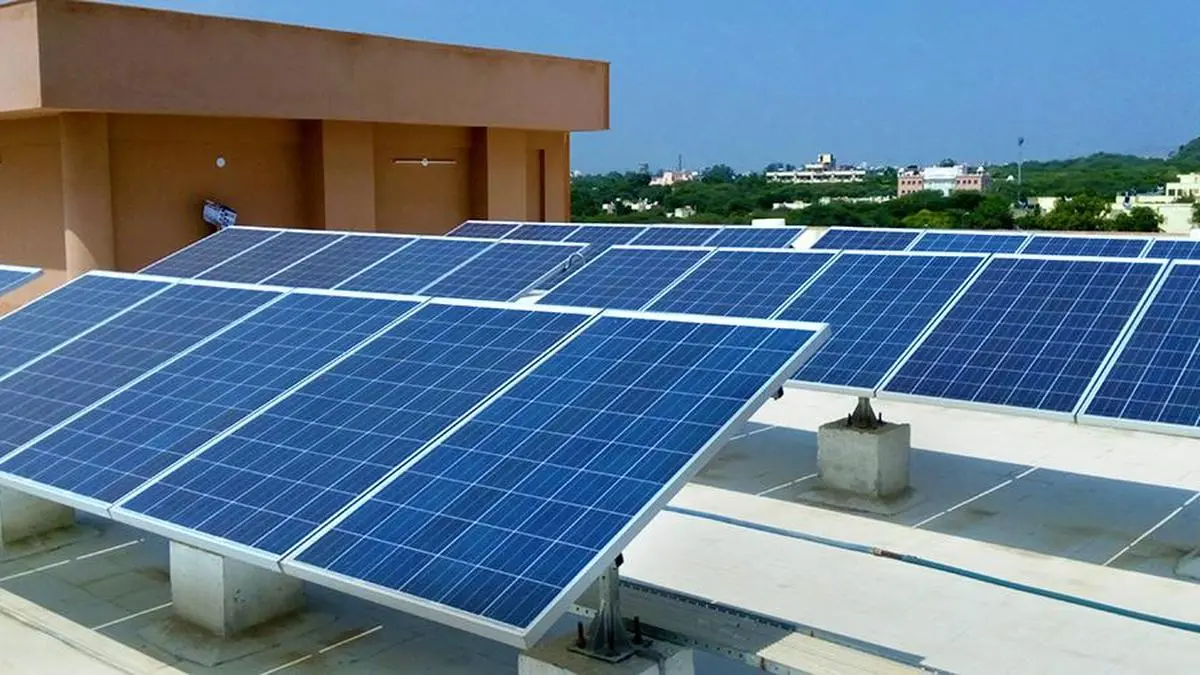
Chennai's residential solar adoption is being driven forward by state-level solar subsidies led by the Minister for Energy Resources of Tamil Nadu, while the Ministry of New and Renewable Energy (MNRE) is expanding the domestic supply chain through the 12th revision of the Approved List of Models and Manufacturers (ALMM) for solar cells on October 8.
Chennai Agricultural and Solar Policy Briefing — October 9, 2026
Chennai's residential solar adoption is being driven forward by state-level solar subsidies led by the Minister for Energy Resources of Tamil Nadu, while the Ministry of New and Renewable Energy (MNRE) is expanding the domestic supply chain through the 12th revision of the Approved List of Models and Manufacturers (ALMM) for solar cells on October 8.
<!-- /headline -->MNRE Issues 12th ALMM Revision for Solar Cells... Tamil Nadu Accelerates State-Level Subsidies
<!-- /headline -->Administrative Notices and Policy Announcements
Here are the key policy and administrative notices announced within the last 24 hours (since October 7, 2026):
-
Twelfth Revision of ALMM List-II for Solar PV Modules and Manufacturers
- Key Details: The Ministry of New and Renewable Energy (MNRE) issued the 12th revision of ALMM List-II for solar PV cells effective October 8, 2026. This revision adds 'Gopin Semicon', bringing the total approved capacity to 37.8 GW. This measure aims to boost self-reliance in the domestic solar cell manufacturing industry.
- Relevant Department: Ministry of New and Renewable Energy (MNRE)
-
Implementation of Tamil Nadu State Rooftop Solar Subsidy Scheme
- Key Details: The Minister for Energy Resources of the Government of Tamil Nadu officially launched a state-level solar subsidy scheme. The core of this initiative is to provide additional state subsidies to beneficiaries of the central government's 'PM Surya Ghar' scheme (applicants applying after August 5, 2026) to encourage residential solar installations. The goal is to reach 100,000 households.
- Relevant Department: Energy Resources Department, Government of Tamil Nadu
-
Strengthening Domestic Production Capacity for Solar Modules and Cells
- Key Details: To address supply chain bottlenecks such as U.S. tariff issues and cell shortages, India is stepping up capital-intensive investments in upstream processes such as cells, wafers, and storage. This is a strategic move for sustainable growth following solar capacity expansion.
- Relevant Department: Ministry of Power and Ministry of New and Renewable Energy, India
Business Review and Market Opportunities

The above policies impact the solar and related agricultural (Agri-PV) business environment in Chennai and Tamil Nadu in the following ways:
-
Surge in Demand for Residential and Small Commercial Solar Installations
- The Tamil Nadu state government's additional subsidies, combined with central government grants, significantly lower installation costs. This expands business opportunities for rooftop solar installers and EPC (Engineering, Procurement, and Construction) companies in the Chennai region. In particular, marketing competition is expected to intensify to achieve the target of 100,000 households.
-
Securing an Advantage in Domestic Solar Cell Component Procurement
- With the MNRE's ALMM List-II revision on October 8, the list of approved domestic cell manufacturers has been updated. Project developers will find it advantageous to procure cells from ALMM-listed companies (such as Gopin Semicon) to reduce import dependence and ensure regulatory compliance. This presents an opportunity to lower market entry barriers for domestic cell manufacturers and their partners.
-
Potential Profitability Improvement for Agri-PV Models
- Agri-PV (the coexistence of agriculture and solar power), aimed at increasing farmers' incomes, is gaining attention. As government policies support farmers' energy self-sufficiency and the sale of surplus power, smart agricultural infrastructure businesses combining rural solar installations could become a new growth engine.
Related Tenders and Project Information
While specific new tender announcements published in the last 24 hours are limited, ongoing projects and related trends include:
-
Tender for 112 kV Solar Project Construction (Agricultural Sector Integration)
- Project Name: Agriculture Offline #57627685 Live Tender For Erection Of 112 Kv Capacity Solar Project
- Deadline: October 14, 2026 (Ongoing)
- Eligibility: Companies with the capability to construct a 112 kV capacity solar project
-
Maintenance and Re-installation of Rooftop Solar Panels on Chennai Municipal Facilities
- Project Name: Removal and re-installation of rooftop solar panels at schools and health centers in Mugathuvarakuppam and Kathivakkam areas (2 kWp, 5 kWp, and 1 kWp capacities)
- Status: Ongoing (Tender ID: 55505455)
- Details: Includes maintenance and re-installation work for existing rooftop solar panels
-
Solar Energy Corporation of India (SECI) Tender Trends
- SECI manages tenders for major solar projects across India. The latest tender information is updated in real-time through its official website, and large-scale solar project tenders related to Tamil Nadu are announced periodically.
Macro Context
Macro factors for understanding the energy policy environment in Tamil Nadu and Chennai, India, include:
-
Domestic Manufacturing Protection and Supply Chain Self-Reliance (ALMM Policy)
- India strictly enforces the Approved List of Models and Manufacturers (ALMM) policy to reduce dependence on low-cost Chinese solar cells and modules and to protect domestic manufacturing. The recent 12th revision indicates that this stance continues.
-
Solar Bottlenecks: Cell and Wafer Shortages
- Although India's module assembly capacity has surged, the solar industry faces supply chain bottlenecks due to insufficient upstream production capacity for cells and wafers. Furthermore, changing U.S. tariff policies add uncertainty to the import-export environment.
-
Policy Integration for Farmers' Income Growth (Agri-PV)
- India's 'PM Surya Ghar' and state-level subsidy schemes align with political and economic goals to double farmers' incomes beyond merely supplying electricity. Agri-PV, combining stable agricultural power supply with solar power generation, is emerging as a major policy pillar.
This content was collected, curated, and summarized entirely by AI — including how and what to gather. It may contain inaccuracies. Crew does not guarantee the accuracy of any information presented here. Always verify facts on your own before acting on them. Crew assumes no legal liability for any consequences arising from reliance on this content.
Powered by
