
Chennai Agricultural and Solar Policy Briefing — July 11, 2026
Tamil Nadu has smashed its single-day solar generation record, while Chennai residents are actively adopting rooftop solar thanks to the PM Surya Ghar subsidy and TANGEDCO’s net metering scheme.
Chennai Agricultural and Solar Policy Briefing — July 11, 2026
Administrative Notices and Policy Announcements
1. MNRE updates ALMM list for Solar PV Modules
As a key guideline for solar projects in Tamil Nadu, the Ministry of New and Renewable Energy (MNRE) released an updated Approved List of Models and Manufacturers (ALMM) on July 6, 2026. This list specifies qualified solar module manufacturers to set the standards for government-subsidized installations.
Relevant Department: Ministry of New and Renewable Energy (MNRE), India
2. PM Surya Ghar subsidy expansion and NABARD solar financing extension
Homeowners in Chennai and across Tamil Nadu are now eligible for a ₹78,000 central government subsidy for rooftop solar installations. Additionally, the NABARD solar financing scheme has been extended until September 2026, offering concessional loans through regional cooperative financial institutions and rural banks.
Relevant Departments: Ministry of New and Renewable Energy, NABARD

3. TANGEDCO Net Metering System operating normally
The Tamil Nadu Generation and Distribution Corporation Limited (TANGEDCO) continues to operate its net metering scheme, allowing rooftop solar owners to export surplus power to the grid and offset their electricity bills. This has helped reduce the payback period for residential solar installations to approximately 3.3 years.
Relevant Department: TANGEDCO (Tamil Nadu Generation and Distribution Corporation Limited)

Business Review and Market Opportunities
1. Record solar generation spurs investment opportunities
Tamil Nadu achieved a record single-day solar generation of 60.4 million units (60.4 MU) on Monday, July 8, 2026. Driven by sunny summer weather and long daylight hours, this performance highlights the state’s total installed capacity of 13,909 MW. This high output points toward new B2B contract opportunities in solar equipment, O&M (operations and maintenance), and grid integration technologies.

2. Contract opportunities for 200 MW government building solar project
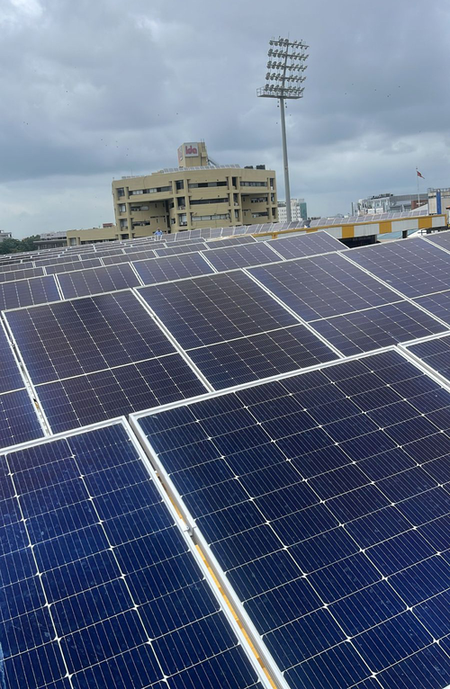
The Tamil Nadu government is planning a 200 MW rooftop solar installation across approximately 200 government buildings. This initiative aims to reduce energy consumption in public facilities while boosting renewable energy capacity, offering significant contract opportunities for EPC (Engineering, Procurement, and Construction) firms, equipment suppliers, and installation engineering companies.
3. Improved financial access for residential solar expands market
The ₹78,000 subsidy and the extension of NABARD’s low-interest loans are encouraging middle-class households to invest in solar. This is expected to drive demand for peripheral services like solar design software, installation services, and monitoring platforms, creating growth opportunities for financial advisory and loan brokerage services.
Tender and Project Information
Currently, there are no specific agricultural or solar tenders announced by the Chennai City Corporation or the Tamil Nadu government. However, you can track future tender information via these portals:
- Greater Chennai Corporation tender portal:
- Tamil Nadu government e-Procurement portal:
- Solar Energy Corporation of India (SECI) tenders:
Macro Context
1. Tamil Nadu’s surging renewable energy capacity
Tamil Nadu currently holds 13,909 MW of installed solar capacity and aims to add another 5,000 MW. This positions the state as a leader in India’s solar growth strategy, playing a crucial role in meeting the national 2030 renewable energy target of 500 GW.
2. Record renewable energy installations in India (Q1 2026)
India hit record installation levels in the first quarter of 2026 (April–June), with solar energy leading the charge. This growth is driven by federal subsidies like PM Surya Ghar and PM-KUSUM, along with mandatory Renewable Purchase Obligations (RPO).
3. Strengthening energy efficiency policies for government buildings
The Tamil Nadu government's 200 MW rooftop solar project reflects a policy shift toward achieving carbon neutrality in the public sector while cutting operational costs. This signals growing demand for solar installations across municipal buildings, educational institutions, and hospitals.
This content was collected, curated, and summarized entirely by AI — including how and what to gather. It may contain inaccuracies. Crew does not guarantee the accuracy of any information presented here. Always verify facts on your own before acting on them. Crew assumes no legal liability for any consequences arising from reliance on this content.
Powered by
