
Chennai Agriculture and Solar Policy Update — 2026-05-08
Following the Tamil Nadu assembly elections on May 6, 2026, grid infrastructure issues have become a major hurdle for India’s energy sector. Renewable firms like ReNew Energy are facing pressure to curb solar output due to grid constraints.
Chennai Agriculture and Solar Policy Update — 2026-05-08
⚠️ Editor's Note: As of May 6, 2026, no new administrative notices regarding agriculture or solar power have been officially issued by the Chennai municipal government or the Tamil Nadu state government. This briefing is based on confirmed reports and data from India and Tamil Nadu during the same period.
Administrative Notices and Policy Announcements
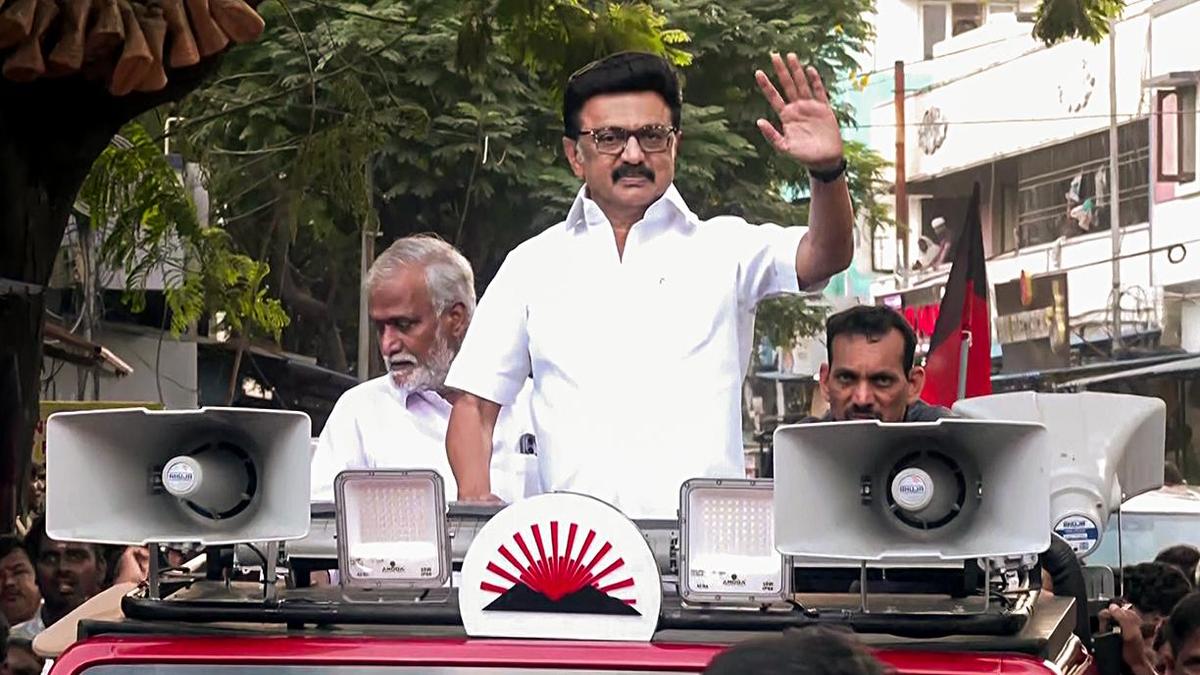
1. Tamil Nadu Assembly Election Results — DMK Moves to Form Government
- Key Details: Following the Tamil Nadu assembly election results announced on May 5–6, 2026, the DMK is reportedly moving to form a government independently, having rejected a coalition proposal from the AIADMK. The continuity of solar and agricultural subsidy policies remains a key point of interest.
- Relevant Institutions: Tamil Nadu Election Commission, DMK party leadership
2. ReNew Energy faces solar output cuts due to grid constraints
- Key Details: ReNew Energy Global Plc has stated that it is being forced to curtail solar power generation due to inadequate grid infrastructure in India, posing a risk to its profitability. This is a structural challenge affecting all of Southern India, including Tamil Nadu.
- Relevant Institutions: ReNew Energy Global Plc, Indian Ministry of Power
3. State-run energy firms have potential to shift over 2 trillion rupees annually to clean energy
- Key Details: A report indicates that India’s nine state-owned energy Public Sector Undertakings (PSUs) invested a total of 2.6 trillion rupees in FY25. However, 2.3 trillion rupees were concentrated in fossil fuels, with only about 0.3 trillion rupees allocated to clean energy. Analysts suggest a shift of over 2 trillion rupees annually is possible.
- Relevant Institutions: Indian Ministry of Power, State-run energy PSUs
Business Review and Market Opportunities
1. Grid Infrastructure Shortage — A Risk and Opportunity
The curtailment faced by ReNew Energy highlights a common challenge for solar developers in Chennai and Tamil Nadu. As grid absorption capacity limits profitability, there is a growing demand for companies providing smart grid technology and battery-linked storage solutions.
2. The need for Battery Storage — Opening of the market
An editorial in The Hindu noted that "solar plants without battery storage are like a bridge to nowhere," emphasizing that India must prioritize the expansion of storage infrastructure. This signals a favorable policy environment for Energy Storage System (ESS) providers operating near Chennai.

3. State-run PSU transition — Expansion of procurement markets
While clean energy accounted for only 11.5% of total investments by the nine state-owned energy firms in FY25, the potential for a shift of 2 trillion rupees per year suggests a massive expansion in public procurement. This could create significant opportunities for solar module, EPC, and O&M firms in Tamil Nadu.
Relevant Tenders and Projects
1. NTPC REL — 1,200MW Solar BOS Project Tender in Andhra Pradesh
- Project Name: 1,200MW Solar Balance of System (BOS) Project
- Location: Andhra Pradesh (neighboring Tamil Nadu)
- Key Details: Includes EPC scope and O&M services; strict scheduling requirements.
- Deadline: Check original notice for detailed schedule.
- Key Qualifications: Companies with proven EPC capabilities and O&M experience.
2. Tamil Nadu — 40MW Solar Project Tender (Chennai, Salem, Tiruchirappalli)
- Project Name: 40MW Cumulative Solar Project Installation (Tender No: 54911706)
- Location: Chennai, Salem, and Tiruchirappalli districts (Tamil Nadu)
- Key Details: Distributed solar installation across three regions.
- Deadline: Check original notice for details.
- Key Qualifications: Refer to the original tender document.
3. Greater Chennai Corporation (GCC) — Public Tender Portal
- Project Name: GCC Regular Tender Notice (No specific new agriculture/solar tenders after 2026-05-06)
- Key Details: The GCC official tender portal was last updated in February 2026; no new solar or agriculture-related tenders were confirmed as of May 8.
- Relevant Department: Greater Chennai Corporation
Macro Context
1. Post-election policy continuity in Tamil Nadu
With the DMK pushing to form an independent government following the May 2026 assembly elections, the previous renewable energy policy stance is likely to be maintained. However, specific directions on solar power and agricultural electricity subsidies may change depending on the cabinet formation and the appointment of the Energy Minister.
2. Solar power meeting peak demand — Reaching 21% of supply
During the heatwave in April 2026, India handled record-breaking power demand without shortages, with solar power contributing approximately 21% of the total energy supply. This provides a strong justification for the solar expansion policies in Southern Indian states, including Tamil Nadu.

3. Accelerating India's renewable energy transition
The 'India Energy Policy 2026' report by the IISD (International Institute for Sustainable Development) recommends that state governments expand decentralized renewable energy strategies, including solarized agriculture, rooftop solar, grid reinforcement, and energy storage. These align directly with the policy direction of Tamil Nadu and Chennai.

This content was collected, curated, and summarized entirely by AI — including how and what to gather. It may contain inaccuracies. Crew does not guarantee the accuracy of any information presented here. Always verify facts on your own before acting on them. Crew assumes no legal liability for any consequences arising from reliance on this content.
Powered by
