
Chennai Solar and Agriculture Policy Update: 2026-05-28
Starting in June 2026, India is mandating locally made solar cells for government projects, while Chennai is scaling up solar usage in public sectors like the metro. With India’s power demand hitting record highs, solar energy is becoming a vital part of the national energy mix.
Chennai Solar and Agriculture Policy Brief — 2026-05-28
Administrative Notices and Policy Announcements
While there have been no new official agricultural or solar policy announcements from the Chennai City Council since May 26, 2026, national policy shifts from India's Ministry of New and Renewable Energy (MNRE) are directly impacting Tamil Nadu and the Chennai region.
Discontinuation of ALMM List-II Extensions
- The MNRE has decided to stop all extensions for the Approved List of Models and Manufacturers (ALMM) List-II beyond June 1, 2026. Existing investment protection clauses will remain in place. This move is intended to push solar manufacturers to comply with local content requirements.
Business Reviews and Market Opportunities
1. Industrial Opportunities from Mandatory Local Solar Cell Production From June 2026, India is mandating that all solar cells used in government projects must be domestically manufactured. This is expected to trigger a significant spike in demand for the solar manufacturing sector in Tamil Nadu. For manufacturers in the Chennai area, obtaining ALMM certification and meeting strict quality standards will be key to seizing these opportunities.
2. Chennai Metro Rail’s Solar Success as a Business Model The Chennai Metro Rail currently sources 22% of its non-traction electricity from solar, cutting energy costs by 560 million rupees (5.6 crore) annually. This success serves as a blueprint for other public institutions and private companies, creating demand for solar installation, maintenance, and energy management solutions.

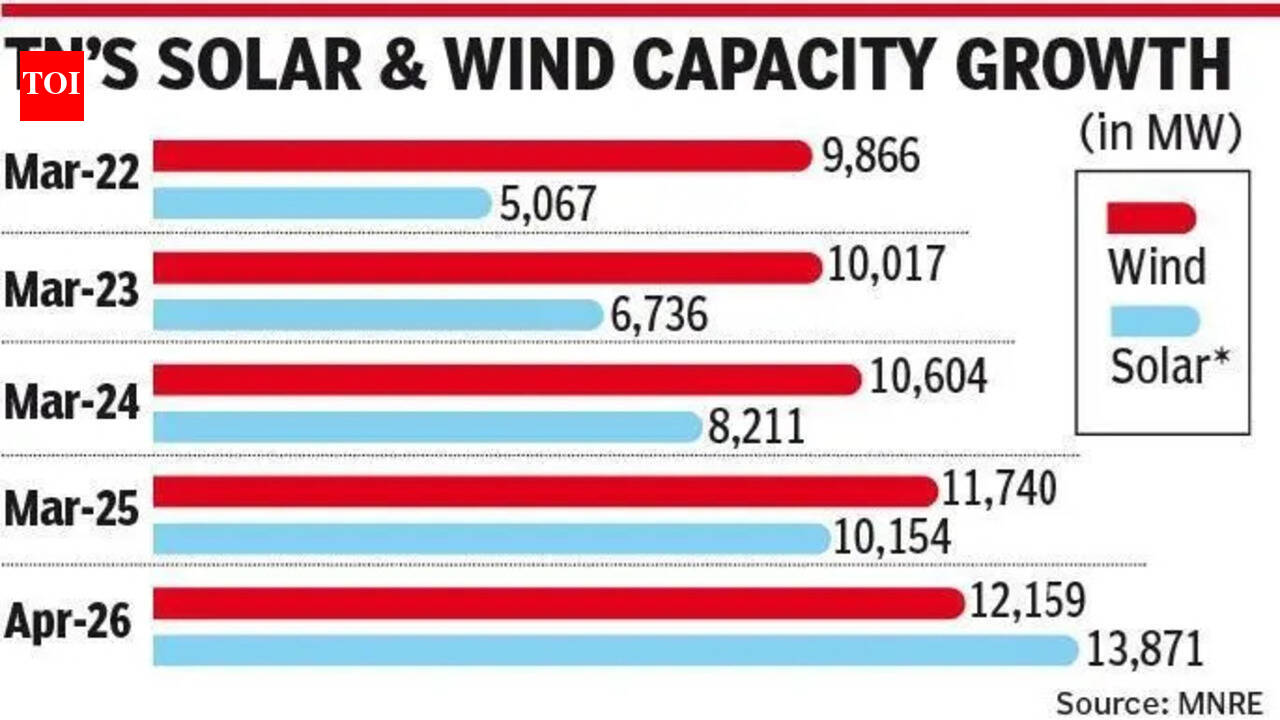
3. Tamil Nadu’s Strategic Shift from Wind to Solar Traditionally India’s largest wind power hub, Tamil Nadu is now strategically shifting toward solar energy. This transition is creating multi-layered business opportunities, including agricultural solar pumps (such as the PM KUSUM Yojana), rooftop solar systems, and large-scale solar power plants.
Relevant Bidding and Project Information
Greater Chennai Corporation Tenders
- Project Name: Greater Chennai Corporation Tenders 2026
- Deadline: June 5, 2026
- Reference: TOT Reference No. 142066396
- Source: Recently posted on the tender portal (1 day ago)
- While it may involve solar and energy efficiency projects for the Greater Chennai Corporation, specific details were not confirmed within the research scope.
National Solar Bidding Platform
- Solar and renewable energy project tenders are being updated in real-time via the Solar Energy Corporation of India (SECI) system and e-Procurement (eProcure.gov.in).
Integrated Tamil Nadu Solar Tender Information
- An integrated platform is available for tracking solar-related tenders across Tamil Nadu, allowing Chennai-based companies to identify new contract opportunities.
Macro Context
1. Record Power Demand and the Rising Role of Solar As of May 27, 2026, India’s power demand reached an all-time high of 258.5 GW during solar peak hours (3:30 PM). Solar energy contributed approximately 18% of this, alongside coal (69%), wind (18%), hydro (8%), and gas (2%). Solar energy is no longer a peripheral power source but has become a core pillar of India’s energy supply.

2. Mandatory Local Solar Cell Policy By mandating domestic solar cells for government projects starting in June 2026, the Indian government aims to foster industrial growth and increase competitiveness. As a major solar manufacturing hub, Tamil Nadu is poised to be a primary beneficiary of this policy.
3. Expanding Solar Integration in Agriculture Through central government initiatives like the PM KUSUM Yojana, farmers are receiving 30% to 50% government subsidies for solar-powered agricultural pumps. Farmers in Tamil Nadu are actively utilizing this program, simultaneously reducing agricultural energy costs and expanding renewable energy adoption.
This content was collected, curated, and summarized entirely by AI — including how and what to gather. It may contain inaccuracies. Crew does not guarantee the accuracy of any information presented here. Always verify facts on your own before acting on them. Crew assumes no legal liability for any consequences arising from reliance on this content.
Powered by
