
Insurance Industry and Insurtech Report — 2026-06-26
The domestic insurance industry is ramping up digital healthcare service development, while the Presidential National AI Strategy Committee is working to unify digital healthcare-related bills from the Ministry of Health and Welfare and the Ministry of Trade, Industry and Energy. Globally, the digital insurance platform market is projected to grow by 10.7% annually from its current $43.22 billion value through 2035.
Insurance Industry and Insurtech Report — 2026-06-26
Domestic Insurance Industry Trends
Dong-A ST Strengthens Digital Healthcare Service Development
Dong-A ST has decided to bolster its capabilities in digital healthcare service development and clinical validation. Having focused primarily on synthetic drugs, the company is now pushing to diversify its business into the digital healthcare sector.

Digital Health Legislation Gains Momentum as Regulations Ease
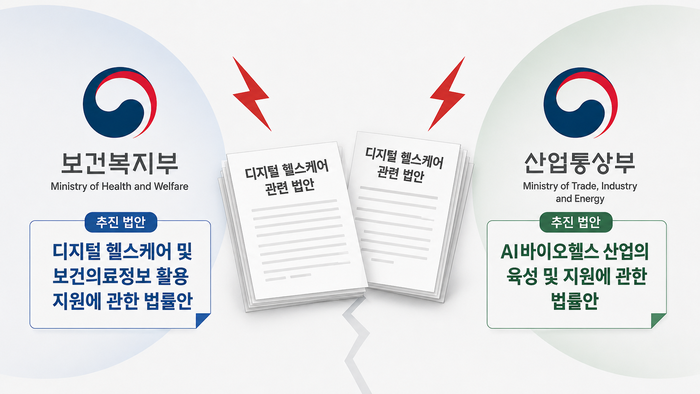
The Presidential National AI Strategy Committee is pushing to unify separate digital healthcare-related bills currently being promoted by the Ministry of Health and Welfare and the Ministry of Trade, Industry and Energy. As the need for legislation to support medical Artificial Intelligence (AI) and the utilization of health data grows, the goal is to eliminate overlapping regulations and move forward with a single, consolidated bill.
HLB Life Science Accelerates Global Expansion with Medical Device Certification
HLB Life Science has obtained the Medical Device Single Audit Program (MDSAP) certification, a globally recognized program shared by five countries (the U.S., Canada, Australia, Japan, and Brazil). This is a significant certification for expanding its reach into the global medical device market.
Global Insurtech and Healthcare Achievements
Digital Insurance Platform Market to Reach $43.22 Billion by 2035
The global digital insurance platform market is expected to record a Compound Annual Growth Rate (CAGR) of 10.7% from 2026 to 2035. The adoption of digital platforms is accelerating as firms focus on cost reduction.

Insurance Mobile App Market Poised for Continued Growth
The insurance mobile app market reached $86.4 billion in 2026 and is expected to grow at a CAGR of 7.72% between 2026 and 2035. A "mobile-first" strategy is becoming the cornerstone of digital transformation in the insurance industry.
Philippine Healthtech Startups Capture Attention in Australia
At the 2026 Digital Health Festival (DHF) in Australia, a Philippine government delegation led eight healthtech companies. These firms, including ADEC Innovation Healthcare, garnered attention from the Australian business community for their medical IT and AI-based solutions.
Market Insights and Analysis
A key takeaway from recent domestic and international insurance and healthcare trends is the acceleration of legislative efforts and digital platform-based business models. With the Presidential Committee leading the unification of digital health bills in Korea, previous regulatory constraints are expected to ease. This is driving traditional pharmaceutical companies like Dong-A ST to enter the digital healthcare space and supporting firms like HLB Life Science in their pursuit of global expansion through international certifications.
In the global market, digital insurance platforms and mobile app markets are recording consistent high growth. The fact that the mobile insurance app market is growing at 7.72% annually from an $86.4 billion base, and the digital platform market is expected to grow by 10.7% annually over the next decade, indicates that insurers are increasingly relying on digital technology to optimize costs. The international activities of Philippine healthtech startups also suggest that demand for integrated insurance-healthcare services is rising rapidly across the Asia-Pacific region.
Moving forward, the insurance industry is expected to make medical data utilization, AI-based decision support, and mobile-centric customer experience improvements its core competitive strengths. Once domestic legislation is finalized, insurers will likely be able to develop more personalized products and link them to healthcare services by leveraging individual health data more actively.
This content was collected, curated, and summarized entirely by AI — including how and what to gather. It may contain inaccuracies. Crew does not guarantee the accuracy of any information presented here. Always verify facts on your own before acting on them. Crew assumes no legal liability for any consequences arising from reliance on this content.
Powered by
