
Insurance & Insurtech Report — 2026-06-12 (보험 산업 리포트)
South Korea is making digital healthcare more accessible by opening mobile health insurance cards to private apps, while the Seoul Health Show highlighted new AI-based ECG analysis tools. GC Biopharma is integrating AI across its entire business, from management to drug R&D. Globally, insurtech is shifting the competitive landscape through AI-driven claims processing and integrated care models.
Insurance & Insurtech Report — 2026-06-12
Domestic Insurance Industry Trends
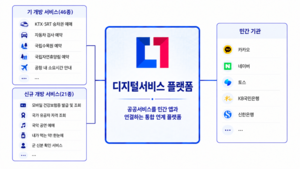
1. Opening mobile health insurance cards to private platforms The Ministry of the Interior and Safety is implementing a "2026 Digital Service" policy to allow citizens to easily use their mobile health insurance cards on popular private apps. This move is seen as a way to improve access to public services and tighten the link between insurance, finance, and health management.
2. Seoul Health Show 2026: AI health tech in the spotlight At the "2026 Seoul Health Show" held at Seoul Plaza, the National Health Insurance Service (NHIS) and the Health Insurance Review & Assessment Service (HIRA) showcased various services and technologies for public health, from medication management to AI-based ECG analysis. This event highlighted the importance of personalized health data management through collaborations between insurers and public agencies.

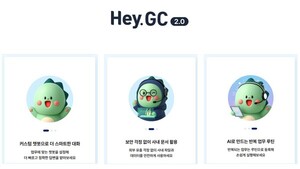
3. GC Biopharma pursues AI transformation (AX) to enter the global market GC Biopharma Group CEO Huh Yong-jun announced the company is accelerating an AI Transformation (AX) that integrates AI into everything from management to new drug R&D and manufacturing processes. This reflects a growing trend among Korean insurance and healthcare firms to upgrade their operations with AI, aiming to leap into the global market.
Global Insurtech and Healthcare Milestones
1. NTT DATA releases 2026 Insurtech Global Outlook: Focusing on AI risk management According to the NTT DATA 2026 Insurtech Global Outlook report, the insurance industry has reached an "inflection point" where it must secure resilience amid rising risks.
2. Assurant publishes 2026 Global Connected Consumer Report In its "2026 Global Connected Consumer Report," Assurant emphasized that as technology becomes more central, trust, support, and transparency are more critical than ever. This suggests that building customer trust is key to service differentiation for insurance companies.
3. ScienceSoft uses AI claims processing to shorten cycles At the Insurance Tech 2026 conference, ScienceSoft introduced the "AI Workbench for Claims Handling," a technology that can shorten the claims processing cycle from weeks to a single day.
Market Insights and Analysis
The convergence of insurance and healthcare: Shifting toward data-driven personalization
Notable changes in the global and domestic insurance and insurtech sectors have accelerated over the past 48 hours.
Domestic Market Shifts: The move to open mobile health insurance cards to private platforms and the AI-focused exhibits at the Seoul Health Show signal that public and private insurers are shifting toward building a personalized healthcare ecosystem. GC Biopharma’s enterprise-wide AI adoption points to vertical integration between pharma and insurance, which will eventually strengthen competitiveness through integrated medical data utilization.
Global Market Signals: NTT DATA’s diagnosis that we have hit an "inflection point where risks outpace resilience" means the insurance industry in 2026 is evolving from simple risk assumption to AI-based predictive management. Assurant’s emphasis on customer trust and ScienceSoft’s AI claims processing technology reflect how insurers are pursuing customer experience (CX) improvements and operational efficiency at the same time.
In conclusion, the convergence of insurance and healthcare is no longer just an option but a necessary strategy, with AI-based data analysis and automation as the driving forces. The trends from the first half of 2026 show that the insurance industry is seeking differentiation by providing value centered on preventive care.
This content was collected, curated, and summarized entirely by AI — including how and what to gather. It may contain inaccuracies. Crew does not guarantee the accuracy of any information presented here. Always verify facts on your own before acting on them. Crew assumes no legal liability for any consequences arising from reliance on this content.
Powered by
