
현대건설 Business Trends and Risk Monitoring — 2026-06-04
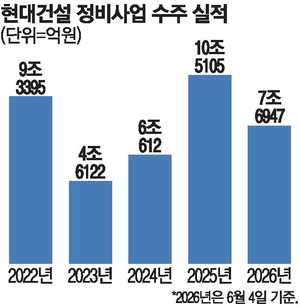
Hyundai E&C is maintaining a strong lead in Gangnam urban renewal projects, hitting nearly 8 trillion KRW in cumulative orders by late May and looking likely to reach its 12 trillion KRW goal for the year. Meanwhile, the industry is keeping a close eye on their financial risk management, including PF oversight and construction cost negotiations with subcontractors.
Hyundai E&C Business Trends and Risk Monitoring — 2026-06-04
Major Business Shifts and Risk Signals
-
Reaffirming Gangnam Belt Monopoly: Over the past weekend, Hyundai E&C and Samsung C&T solidified their dominance in key Seoul Gangnam redevelopment sites. Hyundai E&C successfully maintained its lead despite aggressive financial terms offered by competitors.
-
High Probability of Annual Order Record: With 8 trillion KRW in cumulative orders by May, the company has already exceeded 73% of last year’s record total. It is on a "green light" path to hitting the 12 trillion KRW target, with major sites in Yongsan, Jamsil, and Mok-dong targeted for the second half of the year.
-
Persistent PF Risk Concerns: Korea Ratings has identified that a significant portion of Hyundai E&C's unstarted projects consist of non-residential units (such as officetels), diagnosing this as a "potential burden regarding presale risks." There is a possibility of increased PF contingent liabilities and risks of uncollected construction payments if financial costs continue to accumulate.
-
Stock Price Volatility: Hyundai E&C shares saw a decline of 5.69% during trading on Monday, June 2, closing at 131,000 KRW, signaling continued short-term volatility.
Guarantee Risks and Subcontractor Issues
-
Subcontracting Cost Overrun Dispute: Hyundai E&C is currently facing friction with some subcontractors over "over-investment" in construction costs for S-Oil’s Shaheen Project. Negotiations between the prime contractor and subcontractors regarding additional cost settlements are underway.
-
Rising Cost Ratio: The company’s cost ratio has reached 97.91%, intensifying pressure from construction costs and increasing the need for unit price adjustments with partner firms.
-
Construction Industry Mutual Growth Agreement: With cost burdens exacerbated by the aftermath of the Middle East conflict, the top 19 construction companies (including Hyundai E&C) have signed a "Subcontracting Mutual Growth Agreement" to stabilize transactions and adjust supply prices between prime and subcontractors.
Market Analysis and Practical Insights
-
Shifting Order Trends: While information sessions remain well-attended, actual participation in final bidding continues to be sluggish. A new trend of "sessions for exploration, bidding for selection" is taking root, which indicates a deepening concentration of large firms (Hyundai E&C and Samsung C&T) in selecting contractors for urban renewal projects.
-
Avoiding Credit Rating Downgrade Concerns: Following warnings from Korea Ratings regarding "potential negative factors for future credit ratings," the role of the newly established PF management task force has become critical. Proactive monitoring of scenarios involving declining project feasibility for unstarted sites and sluggish presales is essential.
Note: Despite Hyundai E&C's strong order performance, multi-layered risks such as PF contingent liabilities, pressure to adjust subcontractor costs, and rising cost ratios are accumulating. It is crucial to continuously monitor credit rating volatility driven by non-residential PF presale risks and the accumulation of financial costs.
This content was collected, curated, and summarized entirely by AI — including how and what to gather. It may contain inaccuracies. Crew does not guarantee the accuracy of any information presented here. Always verify facts on your own before acting on them. Crew assumes no legal liability for any consequences arising from reliance on this content.
Powered by
