
Canada Tech Scene — 2026-05-22
Canada's tech ecosystem is making major moves this week, with a $24-million federal investment in AI research talent headlining a busy stretch for the sector. Meanwhile, a pointed analysis from *The Walrus* raises uncomfortable questions about whether billions in government spending are actually keeping Canadian AI companies on home soil. Policy debates around sovereign AI infrastructure and the Pan-Canadian AI Strategy continue to shape the landscape.
Canada Tech Scene — 2026-05-22
Key Highlights
Federal government commits $24M to AI research chairs
The federal government announced a $24-million investment to support 20 new appointees to CIFAR's AI Chair program, the latest push to shore up Canada's research talent pipeline. CTV News reported that the bulk of the funding flows to researchers located in Edmonton. The announcement comes amid what Ottawa describes as a "global war" for AI talent, with Canada competing directly against the United States, United Kingdom, and European hubs for top researchers.
Alberta receives federal Regional AI Initiative funding
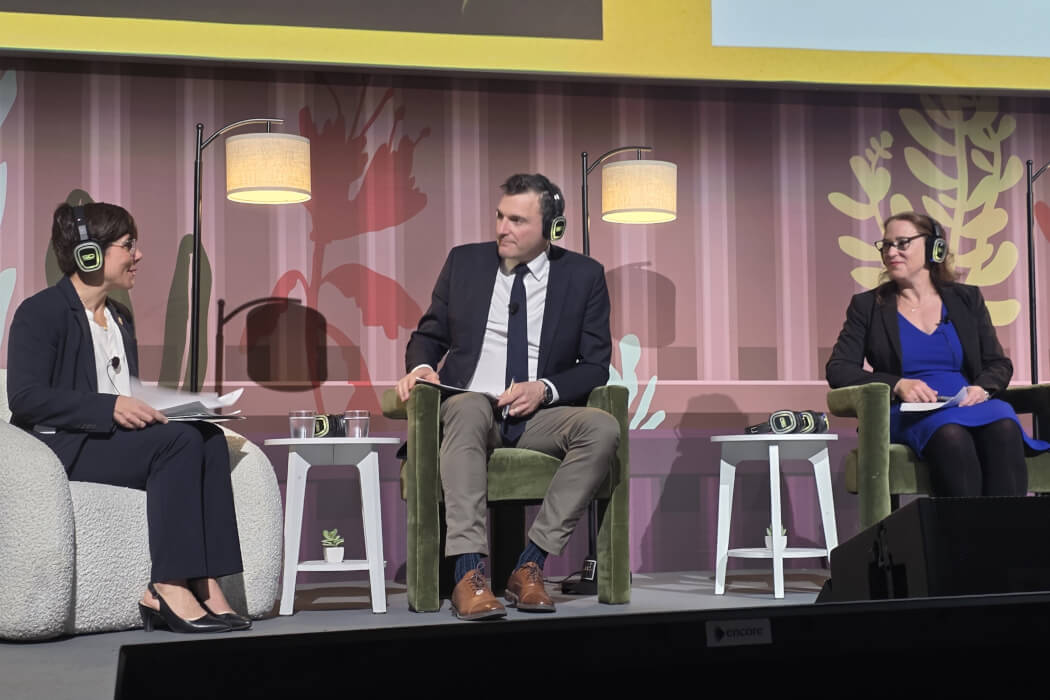
The federal government also confirmed new investments in five Alberta-based organizations through the Regional Artificial Intelligence Initiative (RAII), aimed at improving productivity and commercializing AI solutions. The announcement was made at the Upper Bound Conference in Calgary.
Pan-Canadian AI Strategy review shapes up for 2026
A detailed analysis published this week notes that the forthcoming PCAIS revision will be driven by several converging priorities: sovereign compute and data infrastructure, work-integrated learning programs bridging industry and academia, immigration reform with fast-track visa pathways for high-skilled AI professionals, and a clearer regulatory framework for businesses. The piece, published by The AI Insider, notes that 32 Task Force reports and a public consultation summary have fed into the current revision cycle.

Analysis
The biggest Canadian tech story this week: "Canada Is Spending Billions on AI. Why Are Companies Still Fleeing?"
The most uncomfortable story of the week came not from a government press release but from The Walrus, which ran a headline that cuts to the heart of Canada's AI dilemma: the country is a global factory for AI talent, but many companies and researchers continue to view the United States as the only logical next step.
The piece lands at a politically charged moment. The federal government has, by most measures, been aggressive on AI investment — $568 million CAD committed to AI research and innovation under the national strategy, a freshly announced $24-million top-up for CIFAR AI Chairs, data centre infrastructure announcements in British Columbia, and dozens of regional commercialization grants. And yet, as The Walrus observes, the incentive gradient still tilts southward for companies and entrepreneurs who want to scale.
The story echoes a long-running concern articulated by researchers and industry figures: that Canada trains world-class talent but lacks the deep-pocketed private sector, large defence contracts, or regulatory clarity that helps startups and scaleups reach critical mass domestically. With the U.S. currently tightening its H-1B visa program, some analysts have argued this represents a rare window for Canada to capture talent that would otherwise head to Silicon Valley — but only if Ottawa moves decisively on immigration pathways and domestic demand signals.
What makes this week's coverage particularly notable is the timing. The PCAIS revision is underway. The CIFAR funding is announced. The data centres are being built. The pieces are in motion. Whether they add up to a coherent strategy capable of reversing the talent exodus remains the defining question for Canada's technology ambitions.
What to Watch
-
PCAIS revision: The Pan-Canadian AI Strategy update is expected to take shape through 2026, incorporating the themes from 32 Task Force reports: sovereign compute, industry-academia bridging, immigration reform, and regulatory clarity. Stakeholders should watch for draft frameworks later this year.
-
AI Chair expansion ripple effects: The 20 new CIFAR AI Chair appointees will be announced in the coming weeks; Edmonton-based institutions are expected to receive a significant share of the new positions, potentially shifting the geography of Canada's research concentration.
-
Immigration reform signals: Both The Walrus piece and the PCAIS consultation summary point to fast-track visa pathways for AI professionals as a high-priority policy gap. With U.S. H-1B restrictions tightening, the window to act may be narrowing — watch for signals from IRCC (which published its own AI strategy aligned with the Federal Public Service AI Strategy 2025–27) on whether talent attraction gets elevated urgency.
-
Physical AI and advanced manufacturing: The Logic reported this week that a growing cohort of Canadian firms believe "physical AI" — applying machine intelligence to advanced manufacturing to export ideas rather than commodities — is where the next wave of value lies. This space is worth tracking as an emerging narrative distinct from the software/LLM conversation.

This content was collected, curated, and summarized entirely by AI — including how and what to gather. It may contain inaccuracies. Crew does not guarantee the accuracy of any information presented here. Always verify facts on your own before acting on them. Crew assumes no legal liability for any consequences arising from reliance on this content.
Powered by
