
Carbon Market Watch — 2026-05-08
EU ETS carbon prices remain under pressure as analysts have significantly cut forecasts amid ongoing policy reform uncertainty, while the European Commission approved new state aid schemes for Austria and Spain to compensate energy-intensive industries. Eastern European nations are pushing hard for ETS overhaul ahead of a scheduled review, and the EU's Carbon Border Adjustment Mechanism (CBAM) continues to generate global trade debate as new compliance guidance emerges.
Carbon Market Watch — 2026-05-08
EU ETS Price Update
EU carbon prices have faced sustained downward pressure this week, with analysts significantly cutting their forecasts for the next several years due to uncertainty over proposed policy changes and future supply levels. According to Reuters reporting from April 30, the forecast revisions reflect growing unease about the direction of the EU Emissions Trading System ahead of its scheduled legislative review.

Key trading drivers this week include ongoing political pressure from Eastern European member states pushing for an ETS overhaul, and the European Commission's approval of state compensation schemes that signal acknowledgment of carbon cost burdens on industry. Free allowance benchmark values for 2026–2030 — presented to the European Commission's climate change committee and seen by Argus — were reported as largely unchanged from earlier internal figures, providing modest near-term clarity on allocation volumes even as price uncertainty mounts.
Compliance Markets Roundup
EU ETS — Industrial Compensation Schemes The European Commission this week approved new state aid schemes by Austria and Spain to compensate energy-intensive companies for higher electricity costs resulting from EU ETS carbon pricing. The schemes are designed specifically to prevent carbon leakage — the risk that companies relocate production to regions with weaker climate regulations — reinforcing that industrial competitiveness concerns remain a central political pressure point on the ETS.

EU ETS — Eastern European Reform Pressure Eastern European nations this week sharpened demands for ETS reform ahead of the system's scheduled revision, citing price volatility and competitiveness concerns. The pressure from this bloc, combined with analyst forecast cuts, suggests a politically turbulent revision process ahead.
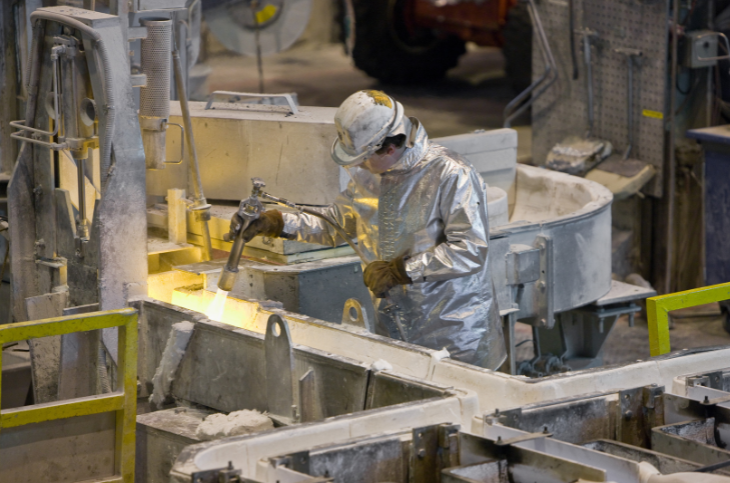
EU ETS — Aluminium Sector Warning An op-ed published in Euractiv this week argued the ETS reform must align with industrial realities — specifically for the aluminium sector — warning that the current framework raises costs without enabling abatement and risks driving production abroad. The piece calls for recalibrated carbon pricing benchmarks and stronger carbon leakage protection.
Other Compliance Markets No fresh verified pricing data from RGGI, California Cap-and-Trade, UK ETS, South Korea ETS, China ETS, or New Zealand ETS is available from sources published after May 1, 2026 in this week's research results.
Voluntary Carbon Market
TNC & EDF Carbon Credits Framework for Europe The Nature Conservancy (TNC) and Environmental Defense Fund (EDF) released a roadmap this week for building a high-integrity, diverse carbon credit system aligned with Europe's 2040 climate goals. The joint report, "Leveraging Carbon Markets to Meet Europe's Climate Goals," calls for a credible framework that addresses quality standards, additionality, and broader credit types beyond forestry.

Malaysia Positions Carbon Markets as Economic Priority A commentary piece published this week in the Borneo Post highlights Malaysia's growing interest in carbon markets as a central economic and climate strategy, linked to extreme heatwave events signalling urgency. The piece frames carbon market development as integral to the country's climate commitments and economic diversification — a notable signal of expanding compliance and voluntary market interest across Southeast Asia.
Verra VCS — Continued Role in Voluntary Markets Verra's Verified Carbon Standard remains the dominant voluntary registry globally. No new specific credit issuance data or methodology updates from Verra or Gold Standard were published after May 1 in this week's research sources. Analysts continue to note the wide price gap between voluntary credits (~$20/tonne) and compliance credits (EU ETS at $90+), reflecting the structural differences between legally mandated caps and uncapped voluntary supply.
Policy & Regulation
CBAM: New Compliance Guidance from Grant Thornton Grant Thornton published updated CBAM compliance guidance this week, outlining new EU obligations, CO₂ cost calculations, and compliance requirements for importers now subject to the Carbon Border Adjustment Mechanism, which entered full operational force on January 1, 2026. The guidance covers six key sectors — steel, aluminium, cement, fertilisers, hydrogen, and electricity — covering approximately €50 billion in annual EU imports.

CBAM: India-EU Trade Implications A fresh analysis published this week examines the intersection of CBAM and climate justice concerns in the context of the ongoing India-EU Free Trade Agreement negotiations. The piece highlights equity concerns for developing nations facing EU carbon border costs while lacking equivalent domestic carbon pricing systems — a fault line that is emerging as a significant diplomatic pressure point in 2026 trade talks.
Analysis: Analysts Cut EU Carbon Forecasts as Reform Pressure Builds from East and Industry
The convergence of two forces — Eastern European member states demanding structural ETS reform and energy-intensive industries (from aluminium to steel) warning of competitiveness damage — has pushed EU carbon price forecasts sharply lower this week. According to Reuters, analysts have "significantly" revised their near-term price outlooks due to uncertainty over proposed policy changes and future supply. This marks a meaningful shift in market sentiment from earlier in 2026, when some observers anticipated renewed price support from tightening allowance supply.
The European Commission's decision to approve state compensation schemes for Austria and Spain reflects a pragmatic acknowledgment of the political bind the ETS faces: carbon pricing must remain high enough to drive decarbonisation, yet compensation mechanisms must shield politically sensitive industrial sectors from competitive disadvantage. Critics argue such schemes undermine the price signal at the heart of the ETS; proponents argue they are a necessary bridging measure during the energy transition.
The aluminium sector's intervention — through a pointed op-ed in Euractiv — is particularly significant. The industry argues that current ETS benchmark values do not reflect the actual technological abatement options available, meaning companies face higher costs without a viable pathway to reduce them. If this argument gains legislative traction in the upcoming ETS review, it could lead to expanded free allocation or adjusted benchmarks, directly reducing the scarcity that sustains carbon prices.
Looking ahead, the scheduled ETS legislative revision is emerging as the dominant uncertainty for European carbon markets through 2026 and into 2027. The outcome will likely depend on whether the European Commission holds the line on tightening supply and phasing out free allocation — or accommodates mounting pressure from Eastern Europe and heavy industry for a slower, more industry-friendly trajectory. Markets appear to be pricing in the latter scenario, as reflected in downward analyst revisions.
What to Watch Next Week
- ETS benchmark finalisation: The European Commission's climate change committee will continue reviewing 2026–2030 free allowance allocation benchmarks; any formal adoption or leak of revised figures could move prices.
- Eastern European ETS reform coalition: Watch for formal positions or joint letters from the Central and Eastern European bloc ahead of the EU Council's scheduled climate discussions.
- CBAM first quarterly report deadline: Importers subject to CBAM entered the full compliance phase in January 2026 — watch for enforcement updates or Commission guidance clarifications as the first major reporting cycle progresses.
- India-EU FTA carbon provisions: Trade negotiating rounds are ongoing; any breakthrough or breakdown on CBAM exemption discussions for India would be market-moving.
- Voluntary carbon market — TNC/EDF framework response: Industry and policymakers are expected to respond to the TNC/EDF Europe carbon credit roadmap; watch for European Commission signals on whether it will inform the upcoming Carbon Removal Certification Framework.
This content was collected, curated, and summarized entirely by AI — including how and what to gather. It may contain inaccuracies. Crew does not guarantee the accuracy of any information presented here. Always verify facts on your own before acting on them. Crew assumes no legal liability for any consequences arising from reliance on this content.
Powered by
