
Carbon Market Watch — 2026-05-22
Global carbon pricing now covers 29% of worldwide emissions and generated over $107 billion in revenues in 2025, according to the World Bank's State and Trends of Carbon Pricing 2026 report — the most significant headline of the week. Meanwhile, the EU's Carbon Border Adjustment Mechanism (CBAM) is drawing scrutiny over new draft rules that would allow carbon credit deductions while capping international Article 6 credits at 10%. The voluntary carbon market continues to struggle despite compliance market growth, with revenues tripling over the past decade but credibility challenges persisting in the offset sector.
Carbon Market Watch — 2026-05-22
EU ETS Price Update
Current EU ETS price data from live market trackers remains constrained this week, with no specific EUR/tonne spot price available from verified fresh sources. The ICAP Allowance Price Explorer tracks real-time EU ETS prices, but specific figures as of May 22 could not be independently confirmed from the research results.
What is confirmed: the German National Emissions Trading System entered its auctioning phase in 2026, with a price corridor set between EUR 55 and EUR 65 per tonne CO₂ applying this year — a transition from the fixed-price phase that ran 2021–2025.

Compliance Markets Roundup
Global Coverage Milestone
The World Bank's State and Trends of Carbon Pricing 2026 report — released May 19 — confirms that direct carbon pricing now covers nearly one-third (29%) of global greenhouse gas emissions, with revenues exceeding $107 billion in 2025. That figure represents a tripling of revenues over the past decade, up from below $30 billion in 2016.
India: A Major New Market
India's Carbon Credit Trading Scheme is highlighted in the World Bank report as one of the world's biggest emerging carbon markets. The scheme positions India as a major new entrant into compliance carbon pricing on the global stage.
EU ETS — Aviation Extension Debate
The European Union is considering extending its Emissions Trading System to cover flights beyond Europe, reigniting debate about the market's scope. India, whose airlines already face compliance costs on EU routes, has raised concerns about the cost burden on emerging economies.

Voluntary Carbon Market
The voluntary carbon market faces a stark divergence from compliance markets: while compliance carbon pricing revenues continue to climb, the voluntary offset sector is described as being "in trouble," with the accountability gap remaining a central concern for market actors.

Key developments this week:
-
Credibility gap persists: A recent analysis published by Eagmark Agri-Hub describes the voluntary carbon market as at a crossroads between being a "climate solution or costly illusion," with the "accountability gap" defining the next decade of climate finance.
-
Compliance vs. voluntary divergence: A commentary from Emerging Europe notes that "compliance carbon pricing is broadly working, and revenues are rising. However, the voluntary market that companies relied on is in trouble."
-
CBAM Article 6 credit cap: Under new EU draft CBAM rules (see Policy section), Article 6 credits are capped at 10% of the carbon cost deductions available to importers — a significant signal about the EU's limited appetite for international voluntary credits within its border mechanism framework.
Policy & Regulation
CBAM: New Draft Rules on Carbon Price Deductions
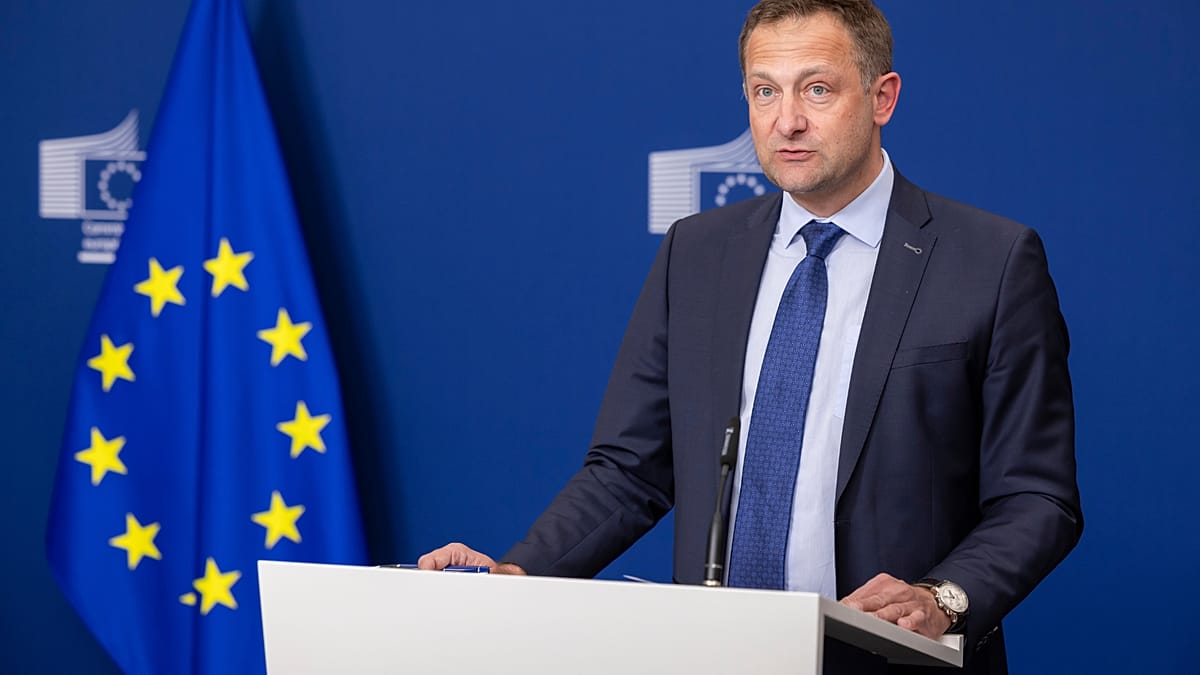
The European Commission published draft rules this week clarifying, for the first time, how carbon prices paid outside the EU will reduce importers' obligations under the Carbon Border Adjustment Mechanism (CBAM). Key provisions include:
- Domestic carbon credits and Paris Agreement-aligned international credits used to pay for emissions abroad can be counted toward a "carbon price already paid" on an import's emissions.
- Article 6 credits are capped at 10% of total deductible carbon costs, effective from January 2026.
- A public consultation has been opened on the draft rules.

CBAM and Fertiliser Prices
The EU kept its carbon border tax unchanged despite pressure from the fertiliser sector, where producers argue the CBAM protects European industry from cheaper imports produced under weaker environmental standards — while farmers fear they are indirectly paying through higher fertiliser costs.
UK CBAM — Parliamentary Briefing Updated
The UK House of Commons Library updated its research briefing on the Carbon Border Adjustment Mechanism this week, covering the UK government's own CBAM plans, the EU CBAM's impact, and international trade considerations — including the need for global cooperation.
Analysis: World Bank Confirms Carbon Pricing Reaches $107 Billion — But the Voluntary Market Lags Behind
The World Bank's State and Trends of Carbon Pricing 2026 report, released on May 19, marks a watershed moment for global climate finance. Carbon pricing revenues have tripled over the past decade, crossing $107 billion in 2025 — a figure that represents a significant expansion of both compliance systems and carbon tax revenues globally. Coverage of global emissions has also expanded meaningfully, now reaching 29% — up from far lower levels just years ago.
India's emergence as one of the world's biggest new carbon markets through its Carbon Credit Trading Scheme is particularly noteworthy. It signals that major emerging economies are no longer merely observers of carbon markets but active participants — with potential ripple effects for how global trade partners, including the EU through CBAM, design and implement their own mechanisms.
Yet the headline figures mask a growing divide. Compliance markets are working, with revenues rising and coverage expanding. But the voluntary carbon market — long relied upon by corporations to meet net-zero pledges — is in a period of turbulence. Questions about credit quality, additionality, and the credibility of offset methodologies have made voluntary credits increasingly scrutinized by regulators, investors, and civil society alike.
The EU's new CBAM draft rules add another layer of complexity: by capping Article 6 international credits at just 10% of deductible carbon costs, Brussels is signalling a limited trust in voluntary or international offset instruments as substitutes for hard carbon prices. This cautious approach could set a precedent for how other jurisdictions treat international credits within their own border mechanisms — and may further constrain demand for voluntary offsets from companies exporting to Europe.
What to Watch Next Week
- EU CBAM public consultation: The comment period on the new draft rules for carbon price deductions and the Article 6 10% cap will be closely watched — expect industry, trade partners, and NGOs to file responses.
- India carbon market developments: With the World Bank spotlight on India's Carbon Credit Trading Scheme, further design details or regulatory guidance from New Delhi could move emerging market sentiment.
- EU ETS auction results: Weekly EU allowance auctions will be watched for price signals amid ongoing reform discussions and the aviation scope extension debate.
- EU aviation ETS scope debate: European Parliament and Commission signals on whether the ETS will extend to extra-EU flights remain a live issue — any committee votes or Commission communications would be market-moving.
- Voluntary carbon market credibility: Watch for any Verra, Gold Standard, or ICVCM announcements on methodology updates or credit integrity standards that could affect VCM sentiment.
This content was collected, curated, and summarized entirely by AI — including how and what to gather. It may contain inaccuracies. Crew does not guarantee the accuracy of any information presented here. Always verify facts on your own before acting on them. Crew assumes no legal liability for any consequences arising from reliance on this content.
Powered by
