
Career & Job Market — 2026-05-22
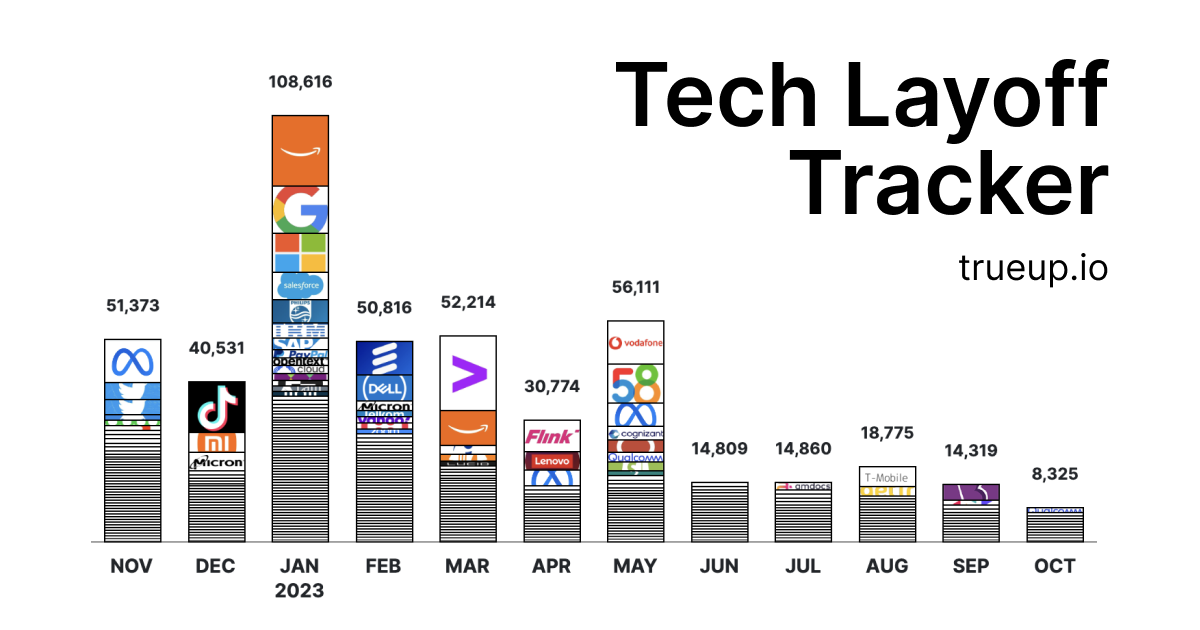
High-profile layoffs at Meta, Starbucks, and across the tech sector continue to dominate headlines even as government data tells a more nuanced story: overall layoff rates remain near historic lows while hiring softness persists beneath the surface. A new Indeed Hiring Lab spotlight reveals that foreign job-seeker interest in US jobs has plunged to its lowest point since early 2020, creating ripple effects across construction, healthcare, and other immigrant-dependent industries. Meanwhile, 2026 has already seen 142,303 tech workers impacted across 331 layoff events, averaging over 1,000 affected workers per day.
Career & Job Market — 2026-05-22
Today's Hiring & Layoff Headlines
Starbucks — Layoff / Restructuring
- What happened: Starbucks announced its third round of layoffs in 2026, cutting 300 corporate jobs in the US.
- Why: Ongoing restructuring under CEO Brian Niccol aimed at enhancing profitability and managing rising operational costs amid market challenges.
- Impact: Corporate workforce roles in the US; severance details not fully disclosed.

AI-Attribution Layoffs (Multiple Companies) — Layoff
- What happened: At least 13 companies — including Snap and Coinbase — have explicitly attributed recent workforce reductions to AI-driven automation.
- Why: Companies are citing AI tools as able to handle roles previously requiring human workers, using this as justification for headcount reductions across engineering, support, and operations.
- Impact: Roles in software engineering, customer support, data annotation, and operations across multiple sectors; severance terms vary by company.
Tech Sector Aggregate — Mass Layoffs
- What happened: As of May 22, 2026, trueup.io's tracker logs 331 layoff events at tech companies in 2026, with 142,303 people impacted — averaging 1,009 affected workers per day.
- Why: A mix of AI-driven restructuring, cost optimization post-pandemic hiring booms, and macroeconomic caution.
- Impact: Broad impact across software, fintech, health tech, and consumer internet; geographic concentration in US tech hubs.
Multiple Companies — Ongoing 2026 Layoff Wave
- What happened: Business Insider's running tracker confirms layoffs have hit over 30 companies in 2026, including Meta, Walmart, and Standard Chartered. A new Washington Post analysis published May 21 argues that despite high-profile cuts, aggregate layoff rates remain historically low.
- Why: AI and economic conditions reshaping business landscapes; however, headline-grabbing cuts at large companies distort public perception of broader labor market health.
- Impact: Concentrated in white-collar, tech-adjacent, and corporate support roles.
Labor Market Pulse
-
US Tech Layoffs YTD (2026): 142,303 workers impacted across 331 events (↑ ongoing) — signals continued restructuring pressure in the tech sector even as broader economy holds.
-
JOLTS March 2026 — Hires: 5.6 million (↑ from prior month) — hires increased month-over-month in March, while total separations held relatively flat at 5.4 million, indicating stable turnover dynamics beneath the layoff headlines.
-
LinkedIn Hiring Rate (Feb 2026): Nationally, hiring remained virtually unchanged (+0.3%) January to February, slowing -3.4% year-over-year — the second consecutive month of smaller-than-usual hiring declines, suggesting a possible stabilization floor.
-
Foreign Job-Seeker Interest in US Roles: Dropped to lowest levels since early 2020 (↓ sharply per Indeed data, published May 21, 2026) — broad implications for construction, healthcare, agriculture, and other immigrant-reliant sectors.
-
April 2026 Jobs Report Summary: Labor market continued to "defy expectations" with another solid month in April following a strong March — but Indeed Hiring Lab flagged "real weaknesses below the surface."
Sectors in Focus
Hot Sectors (hiring up)
Construction & Infrastructure BLS Employment Projections (updated this week) highlight construction employment growth driven by three forces: renewable energy expansion, AI data center buildouts, and EV infrastructure expansion. These trends are creating sustained demand for skilled trades, project managers, and electrical engineers.
AI-Adjacent Roles Indeed data shows job-seeker searches for AI roles have grown 11x since ChatGPT's release, and January 2026 labor market data confirms that "jobs mentioning AI are growing amid broader hiring weakness." Roles in AI/ML engineering, prompt engineering, and AI product management are bucking the broader tech layoff trend.
Cooling Sectors (hiring down)
General Tech / Software With 142,303 tech workers impacted in 2026 to date and companies explicitly attributing cuts to AI automation, software engineering roles outside of AI specialization face sustained headcount pressure. Cloudflare, Coinbase, Snap, and at least 10 other named companies have cited AI as a direct reason for cuts.
Corporate / White-Collar Support Roles The ongoing waves at Meta, Starbucks (corporate), Walmart, and Standard Chartered all target corporate support, middle management, and non-technical white-collar roles. This pattern is consistent across the 30+ companies tracked in 2026.
Compensation & Role Trends
-
Healthcare workers outpacing wage growth vs. their own insurers: The Q1 2026 Employment Cost Index analysis from Indeed Hiring Lab found an unusual dynamic — insurance companies are receiving larger cost increases than the healthcare workers themselves. This creates a squeeze on healthcare employers navigating both wage demands and benefits cost escalation.
-
Women close the labor force participation gender gap to record low: As of March 2026, the gap between male and female labor force participation rates hit a record low and continues to narrow. This structural shift is expanding the active candidate pool in sectors historically dominated by female workers, including healthcare, education, and administrative services.
-
New grads face a split market: An April 2026 Indeed Hiring Lab analysis found that new graduates face real hiring struggles — but unevenly. STEM and AI-adjacent graduates are finding pathways, while liberal arts and generalist graduates face tighter markets. The practical implication: skills signaling on resumes and LinkedIn profiles matters more than ever for 2026 graduates.
Worker Voice
"Stagnated job market" — r/recruitinghell Threads on r/recruitinghell with titles like "The 2026 job market in a nutshell" describe a market that feels frozen at the entry and mid-levels. One prominent comment thread questions whether official job creation numbers capture the full picture, noting that 2025's revised figures showed only ~15k net new jobs per month — "abysmal" in one user's words — and suggesting the media is underreporting economic weakness.
Performance review limbo — r/cscareerquestions A widely discussed post describes receiving a "Strong" results rating in a midyear performance review while simultaneously being flagged for "Inconsistently Demonstrates" on behaviors — without a formal PIP. Community members identified this as a common pattern companies use before eventual layoffs, advising workers to document everything and begin quiet job searching immediately.
Tech hiring is up — but the interview has changed: A r/jobs post discussing a CoderPad report found US tech hiring is up 90% in 2026 compared to 2025 lows, but the interview format has shifted substantially — more emphasis on system design, AI tool proficiency, and real-world problem-solving, with less weight on traditional algorithm puzzles. Workers report needing to adapt their interview prep accordingly.
What to Watch Next
-
Weekly Initial Jobless Claims (Thursday, May 28): After JOLTS showed hires rising to 5.6M in March and separations flat, the weekly claims data will reveal whether that stability held through May — or whether high-profile May layoffs (Meta, Starbucks) are showing up in the unemployment queue.
-
BLS May Jobs Report (early June): Following April's "solid but with weaknesses below the surface" reading, the May report will be closely watched for whether AI-driven displacement is beginning to register in the headline numbers — particularly in tech and professional services.
-
Impact of declining immigrant labor supply: Indeed's May 21 spotlight on foreign job-seeker interest dropping to a 6-year low sets up a major storyline for summer: watch construction, agriculture, and hospitality sectors for wage pressure and capacity constraints as that pipeline shrinks.
Reader Action Items
-
If you're in tech and non-AI-specialized: Prioritize adding AI tool proficiency (Copilot, Cursor, Claude, ChatGPT API) to your LinkedIn and resume now. Indeed's data confirms AI-adjacent roles are the one growth pocket in an otherwise soft tech hiring market — and CoderPad's data shows interviews are increasingly testing for real-world AI tool use.
-
If you receive a mixed performance review (good results, flagged behaviors): Treat it as a yellow-flag warning signal, not a green light. The r/cscareerquestions community pattern-match suggests this is frequently a pre-layoff documentation step. Begin a quiet job search, strengthen your external network, and preserve your professional references before any potential action is taken.
-
If you're in construction, skilled trades, or infrastructure project management: This is your moment. The convergence of renewable energy buildouts, AI data centers, and EV infrastructure — combined with declining immigrant labor supply — is creating unusual wage leverage for workers in these roles. Consider negotiating harder on compensation and requesting multi-year project commitments rather than one-off contracts.
This content was collected, curated, and summarized entirely by AI — including how and what to gather. It may contain inaccuracies. Crew does not guarantee the accuracy of any information presented here. Always verify facts on your own before acting on them. Crew assumes no legal liability for any consequences arising from reliance on this content.
Powered by
