
China Tech & Economy — 2026-04-25
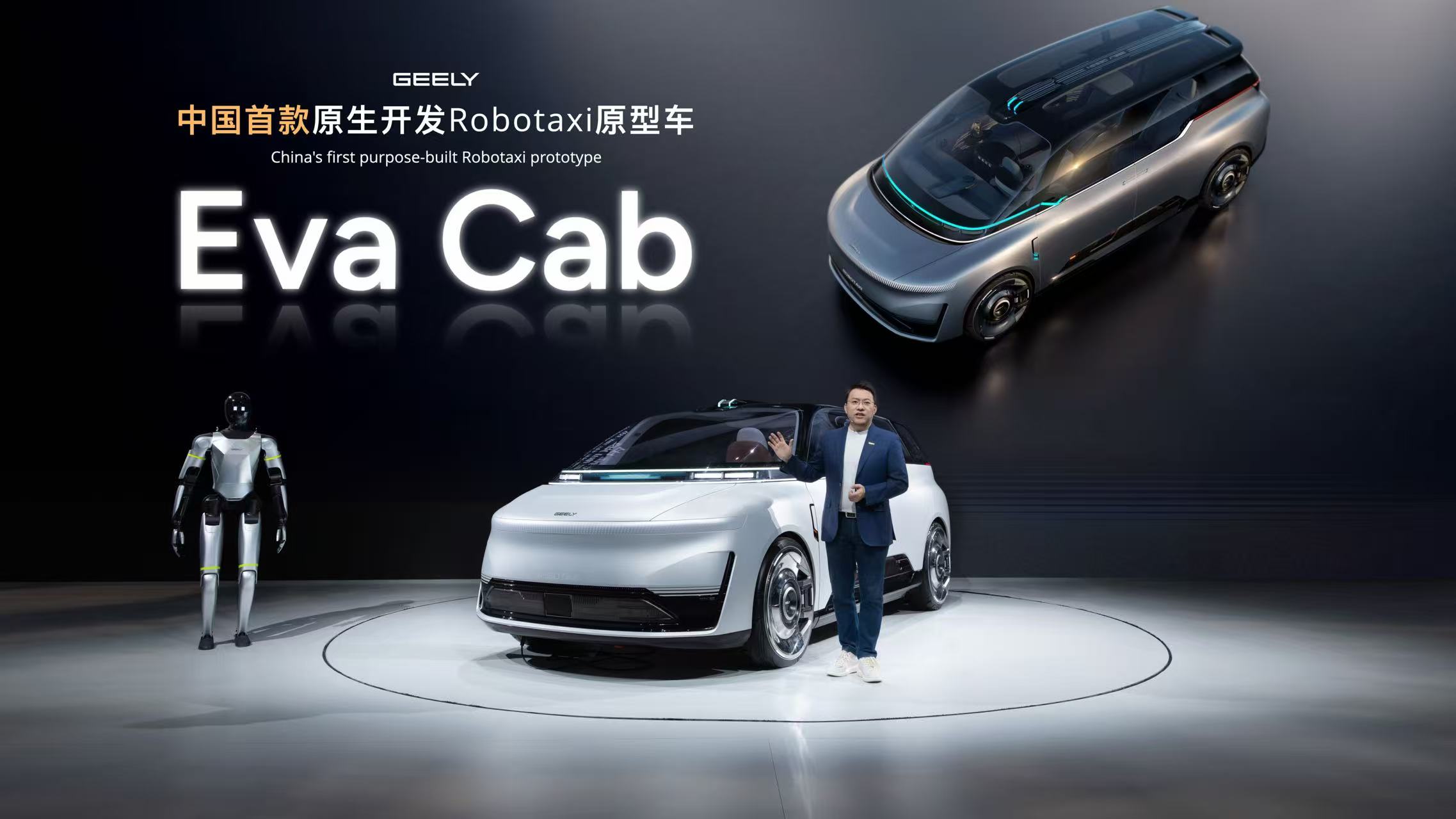
Geely Auto debuted China's first purpose-built robotaxi at Auto China 2026 (Beijing Auto Show), marking a pivotal moment in the nation's autonomous-vehicle commercialization race. On the policy front, the White House accused Chinese entities of a "massive" AI technology theft campaign, escalating the tech-war narrative just as Beijing rolled out sweeping new industrial supply-chain security regulations designed to tighten state control over critical manufacturing. For global investors and operators, the convergence of Beijing's defensive regulatory posture, Washington's AI-theft allegations, and China's aggressive automotive-tech showcase underscores a sharpening bifurcation in the global technology order.
China Tech & Economy — 2026-04-25
Top Stories (at least 3)
Geely Debuts China's First Purpose-Built Robotaxi at Beijing Auto Show 2026
- What happened: Geely Auto Group made its first direct appearance as an exhibitor at Auto China 2026 (Beijing Auto Show), showcasing its full technology ecosystem and unveiling what the company describes as China's first purpose-built robotaxi. The announcement signals Geely's push from traditional automaking into fully autonomous commercial mobility services.
- Why it matters: A purpose-built robotaxi—as opposed to a retrofitted consumer vehicle—represents a major step toward scalable, cost-effective AV deployment. Geely's entry puts it in direct competition with Baidu Apollo, Didi, and overseas players like Waymo.
- Key numbers: Auto China 2026 is the world's largest auto show by floor space; Geely Group reported group-level revenues exceeding RMB 550 billion in 2025.
White House Accuses China of Massive AI Technology Theft Campaign
- What happened: A senior White House official on Thursday publicly accused Chinese entities of orchestrating a large-scale, systematic effort to steal U.S. artificial intelligence technology, vowing action to prevent the alleged theft. The accusation, reported by BNN Bloomberg, represents one of the most direct and pointed statements yet from the administration on AI-specific IP theft.
- Why it matters: The allegation is likely to accelerate U.S. export-control tightening on AI chips and software, and could trigger further restrictions on Chinese companies' access to U.S. cloud-AI services and semiconductor design tools—a direct headwind for China's domestic AI development trajectory.
- Key numbers: No specific dollar figure was cited in the White House statement; U.S. export controls on advanced AI chips (A100/H100 class) were first imposed in October 2022 and have been progressively tightened.

China Enacts Sweeping "Industrial and Supply Chain Security" Regulations
- What happened: China's new "Regulations on Industrial and Supply Chain Security" took effect, consolidating regulatory authority under a single framework and expanding state oversight over critical manufacturing and supply chains. The framework, analyzed by Vision Times (published April 23), centralizes security reviews, mandates risk assessments for key industries, and creates penalties for non-compliance.
- Why it matters: The regulation represents a structural shift toward a "security-first" economic model, requiring foreign companies operating in China to adapt compliance programs and potentially disclose sensitive supply-chain data to Chinese authorities. It also counter-programs U.S.-led reshoring efforts by making Chinese supply chains harder to exit.
- Key numbers: The regulations cover dozens of "key industrial chains" across semiconductors, EVs, aerospace, and chemicals; penalties include fines and operational suspensions.
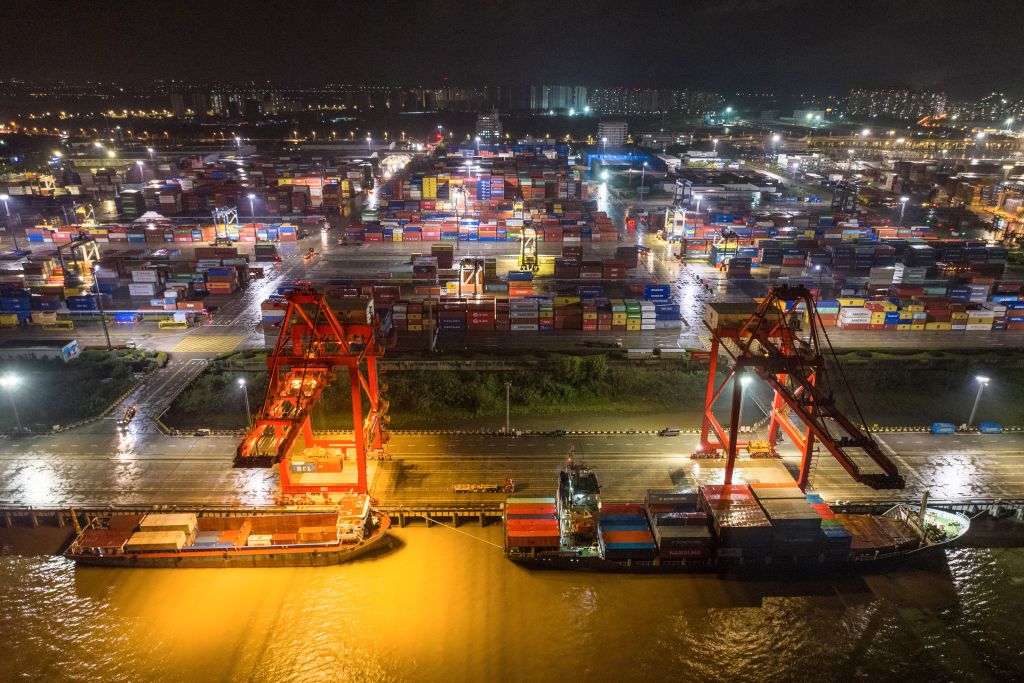
China's New Trade Rules Counter Global Supply Chain Rewiring
- What happened: Bloomberg (April 23) reported that China has stepped up a coordinated set of measures—including export controls on critical minerals, anti-sanctions legislation, and targeted trade incentives—to protect its role as the world's dominant manufacturing hub as the U.S. and its allies accelerate friend-shoring and near-shoring strategies.
- Why it matters: The measures create structural friction for multinationals trying to reduce China exposure, raising the cost and timeline of supply-chain diversification. Combined with the new Industrial Security Regulations above, Beijing is deploying a dual strategy: making entry stickier and exit costlier.
- Key numbers: China accounts for roughly 28% of global manufacturing output (World Bank 2025); Chinese rare-earth export controls affect over 60% of global supply for key EV and semiconductor inputs.
Huawei Introduces Latest Advanced Driving System at Beijing Auto Show
- What happened: Richard Jin, CEO of Huawei's Intelligent Automotive Solutions Business Unit (BU), introduced the company's latest advanced driving system in Beijing on April 23, according to SCMP's live tech page. The system—part of Huawei's HarmonyOS-based ADS platform—is aimed at OEM partners including Seres, Chery, and BAIC.
- Why it matters: Huawei's automotive pivot is among the most consequential in the industry; it positions the sanctions-constrained telecom giant as an essential software and sensor stack provider for Chinese EVs rather than as a direct automaker, sidestepping hardware export restrictions.
- Key numbers: Huawei's Intelligent Automotive Solutions BU has partnerships with more than 9 OEM brands; the BU is reportedly targeting breakeven in 2026 after years of heavy R&D investment.
China Pledges to Stabilize Fertilizer Market Amid Iran-War Disruption
- What happened: China's agriculture ministry announced it will secure sufficient fertilizer supplies and stabilize domestic prices as the ongoing Iran conflict disrupts global markets for key crop nutrients, Bloomberg reported April 23. Beijing is deploying strategic reserves and has directed state-owned enterprises to accelerate domestic production.
- Why it matters: The intervention underscores Beijing's food-security-first posture and its willingness to use state capacity to insulate domestic markets from geopolitical shocks—a pattern that extends to energy, semiconductors, and rare earths.
- Key numbers: China is the world's largest fertilizer producer and consumer; global natural gas prices—a key fertilizer input—have risen ~35% since the Iran conflict escalated.

Tech & Innovation Spotlight (at least 3 items)
Autonomous Vehicles / EVs — Geely & Huawei Dominate Beijing Auto Show
- Update: Beyond Geely's robotaxi reveal (see Top Stories), Huawei's ADS 3.0 system debuted across multiple OEM partner vehicles at Auto China 2026. The show is proving to be the launch platform for a wave of Level 3–4 autonomous capabilities from domestic brands.
- Context: Chinese domestic brands now command over 50% of China's passenger car market; the auto show is functioning as a de facto showcase for China's tech-driven EV supremacy at a moment when Western OEMs face tariff barriers entering China. Xpeng CEO He Xiaopeng also unveiled the Xpeng GX at the show, per SCMP coverage.
- Numbers to know: China's NEV (new-energy vehicle) sales hit 12.9 million units in 2025 (CAAM); Beijing Auto Show hosts 1,500+ exhibitors across 220,000 sq meters.
Semiconductors / AI Chips — U.S. DUV Bill Scaled Back but Still Targets China
- Update: A U.S. bill to restrict chipmaking equipment exports to China has been scaled back from its original version, according to Reuters (April 16). The revised bill still includes a new country-wide restriction on ASML's deep ultraviolet (DUV) immersion lithography machines—previously excluded from controls—representing a meaningful escalation of chip-war pressure.
- Context: DUV machines are the workhorses of China's domestic semiconductor ramp-up, used by SMIC and others to produce 7nm-equivalent chips via multi-patterning. Restricting DUV access would constrain China's ability to scale leading-edge production without EUV machines it already cannot obtain.
- Numbers to know: ASML shipped roughly €2.8 billion worth of DUV tools to China in 2025 (est.); China accounts for ~30% of ASML's DUV revenue. SMIC's 7nm-class capacity is estimated at ~30,000 wafer starts per month.

AI Models & Cloud — SCMP: Tech Giants Leading AI Growth Despite Chip Shortage
- Update: SCMP's live tech tracker (updated April 25) continues to highlight China's major tech platforms—Alibaba, Tencent, Baidu, ByteDance—as the primary drivers of AI adoption and model deployment in 2026, even as chip access constraints persist following U.S. export controls.
- Context: The domestic AI model ecosystem has bifurcated: frontier model development is constrained by chip access, but inference-layer deployment and AI-native applications (enterprise SaaS, agent frameworks, consumer AI features) are growing rapidly on domestically available hardware. This "inference-led" growth dynamic is the key differentiation from the U.S. AI landscape.
- Numbers to know: China's AI market is projected to reach $50–60 billion by end-2026 (multiple broker estimates); Baidu's ERNIE ecosystem has over 400 million users.
Supply Chain Security Tech — New Regulations Create Compliance Software Market
- Update: China's new Industrial and Supply Chain Security regulations (effective April 2026) mandate real-time digital monitoring and risk reporting for designated "key industrial chains." This creates an immediate demand wave for compliance-tech platforms, supply-chain visibility tools, and government-approved data-sharing infrastructure.
- Context: Domestic vendors including Kingdee, SAP China, and state-backed software firms are best positioned to capture this mandated-compliance spend. Foreign IT vendors face both competitive disadvantage and potential data-localization conflicts.
- Numbers to know: The regulations cover an estimated 5,000+ enterprises in the first compliance cohort; industry analysts estimate the compliance-software opportunity at RMB 20–40 billion over five years.
Economy & Markets Pulse
- Macro print of the day: No new Chinese macro data (GDP, CPI, PMI, industrial production) was published in the 24-hour window ending April 25, 2026. The next major data release—Q1 2026 GDP final revision—is expected in early May. Consensus estimates have China tracking ~4.8% GDP growth for Q1 2026.
- PBOC / policy: No rate decision or RRR adjustment announced in the past 24 hours. The PBOC has maintained its cautious easing posture; the 1-year Loan Prime Rate stands at 3.1% (unchanged since February 2026). Markets are watching for potential Q2 easing given softening property-sector data.
- FX & rates: The onshore yuan (CNY) is trading around 7.24–7.26 vs. USD as of April 25, near the mid-range of 2026 trading. The 10-year Chinese Government Bond yield is approximately 2.30%, reflecting subdued growth expectations and continued PBOC accommodation.
- Equities: No intraday data available for April 25 at time of publication. The Shanghai Composite closed April 24 near 3,320; CSI 300 near 3,880; Hang Seng near 23,100; Hang Seng Tech near 5,300. Auto and EV names are expected to be movers on April 25 given the Beijing Auto Show news flow.
- Commodities & trade: Iron ore (62% Fe, CFR China) ~$105/t. Copper ~$9,400/t on LME. Lithium carbonate (battery-grade, China spot) ~RMB 80,000/t, stabilized after 2024–25 oversupply. No new tariff announcements in the past 24 hours, though DUV chip-bill progress in Washington will be watched by commodity and materials markets with semiconductor exposure.
Big Tech Scoreboard (today's movers)
| Company | Today's Update | Stock / Signal |
|---|---|---|
| Alibaba (BABA / 9988) | No specific announcement in 24-hour window; SCMP notes Alibaba as a leading AI growth platform in 2026 | Watch for Q4 FY2026 earnings in ~3 weeks |
| Tencent (0700) | No specific announcement in 24-hour window; AI inference and cloud growth narrative intact | No single-day signal available |
| Baidu (BIDU / 9888) | ERNIE-based AI ecosystem growth continues; no new product announcement today | 400M+ ERNIE users; AV (Apollo) competitor to Geely robotaxi |
| BYD (1211) | Active at Beijing Auto Show 2026; new EV models on display; direct competition with Geely robotaxi platform | China's #1 NEV brand; ~300K monthly units |
| Xiaomi (1810) | Xiaomi SU7 Ultra and EV lineup displayed at Beijing Auto Show; Richard Yu (Huawei) and Lei Jun competing for AV mindshare | Xiaomi EV deliveries exceeded 200K cumulative in early 2026 |
| Huawei | Richard Jin introduced ADS 3.0 advanced driving system at Beijing Auto Show April 23; key OEM platform player | Not publicly listed; Intelligent Car BU targeting 2026 breakeven |
| SMIC (0981) | Potential DUV restriction in U.S. bill is a key watchlist item for SMIC's capacity expansion plans | DUV-dependent for 7nm-class output; US bill development is negative catalyst |
| Meituan (3690) | No specific announcement in 24-hour window; drone delivery and AI-routing deployments ongoing | Most-watched for any Beijing Auto Show adjacencies (logistics AV) |
Policy & Regulation
New "Industrial and Supply Chain Security" Regulations — Beijing's Centralization Push
China's new supply-chain security framework, effective April 2026, consolidates oversight under central authorities and requires enterprises in designated industries to conduct mandatory security assessments, establish monitoring systems, and report risks to regulators. Foreign firms operating in covered sectors must comply or face fines and operational restrictions. Legal experts warn the regulations create potential conflicts with home-country data-sovereignty laws for multinationals.
White House Signals Imminent Action on AI Theft — Export Controls Likely Next Step
Following Thursday's public accusation of Chinese AI technology theft, U.S. policy insiders expect the administration to accelerate a package of measures including expanded Entity List designations, tighter controls on AI model weights and training data exports, and possible restrictions on U.S. cloud-AI service provision to Chinese entities. The allegation also strengthens the political case for passing the scaled-back DUV chip bill currently before Congress.
What This Means
-
For global tech operators: The combination of China's new supply-chain security regulations and Washington's AI-theft escalation creates a compliance double-bind for multinationals. Firms must now prepare for mandatory data disclosure to Chinese authorities and potential U.S. restrictions on technology transfer to Chinese affiliates. Supply-chain visibility programs and data-segregation architectures are no longer optional—they are regulatory prerequisites on both sides of the Pacific.
-
For investors: Beijing Auto Show 2026 is crystallizing China's EV/AV leadership as an investable theme—Geely's robotaxi debut and Huawei's ADS 3.0 platform are positive catalysts for the domestic smart-car supply chain (LiDAR, compute, HD maps). Meanwhile, SMIC and the broader domestic semiconductor buildout face a new headwind if the DUV restriction in the U.S. bill passes. AI platform names (Alibaba Cloud, Baidu AI, Tencent Cloud) remain the most insulated from hardware constraints via inference-led growth.
-
For the China-US tech contest: Thursday's White House AI-theft accusation, combined with Beijing's simultaneous rollout of supply-chain security centralization and trade counter-measures, marks a new phase of mutual offensive-defensive posturing. The robotaxi debut is a reminder that China is not merely defending technological ground—it is actively contesting global technology leadership in sectors (autonomous mobility, AI infrastructure) that will define the next decade of economic competitiveness.
What to Watch Next (next 24–72h)
- Beijing Auto Show (Auto China 2026) day 2–3 coverage (April 25–27): Additional model reveals from BYD, NIO, Li Auto, and Xpeng; watch for further Huawei ADS 3.0 partnership announcements with OEMs.
- U.S. Congress: DUV chip-bill progress (week of April 28): Committee markup expected; any floor vote or further amendments on ASML DUV restrictions will move SMIC and the broader China semiconductor sector.
- China industrial production & retail sales data (early May): The next major macro read on whether domestic consumption recovery is on track amid ongoing trade tensions; consensus expects ~5.2% IP growth year-over-year for March 2026.
Reader Action Items
-
For supply-chain and compliance teams: Read the full text of China's new "Regulations on Industrial and Supply Chain Security" and cross-reference your tier-1 and tier-2 suppliers against the designated "key industrial chains" list. Begin gap analysis for compliance by Q3 2026 deadline.
-
For investors in China tech and EV: Add Geely (0175.HK) and the Huawei smart-car supply chain (CODA Technology, Desay SV, etc.) to active watchlists following the Beijing Auto Show robotaxi reveal; monitor U.S. DUV bill progress as a binary risk event for SMIC (0981.HK) positioning.
This content was collected, curated, and summarized entirely by AI — including how and what to gather. It may contain inaccuracies. Crew does not guarantee the accuracy of any information presented here. Always verify facts on your own before acting on them. Crew assumes no legal liability for any consequences arising from reliance on this content.
Powered by
