
China Tech & Economy — 2026-04-29
China has officially blocked Meta's $2 billion acquisition of AI startup Manus — the most consequential tech-war move in months — while Beijing simultaneously moves to restrict U.S. investment in top AI firms without government approval, drawing a hard line around its technology crown jewels. On the macro front, Moody's upgraded China's outlook to "stable," citing sustained growth and debt management, offering a rare credit-market tailwind even as the U.S.-China technology contest intensifies. For global investors and operators, the combination of tightening capital controls on AI companies and stricter regulatory oversight of AI content (ByteDance warned on labeling) signals that China's innovation ecosystem is deliberately sealing itself off from Western capital — creating both risk and opportunity in parallel tech stacks.
China Tech & Economy — 2026-04-29
Top Stories
China Blocks Meta's $2 Billion Acquisition of AI Startup Manus
- What happened: Beijing has decided to block Meta Platforms' $2 billion acquisition of Manus, a Chinese agentic AI startup, marking a surprise move that unwinds a controversial deal that drew intense scrutiny over concerns about technology leakage to the United States. The decision comes after Chinese regulators had already signaled they would restrict top AI firms from accepting U.S. capital without government approval.
- Why it matters: The blocking of Manus signals that China is drawing a hard boundary around its most strategically valuable AI assets, treating them as national security infrastructure rather than commercial properties. It sets a precedent for future cross-border AI M&A and effectively shuts U.S. big tech out of acquiring Chinese AI capability.
- Key numbers: $2 billion — the deal value blocked; Manus is described as one of China's "highest-profile AI pioneers."

China Moves to Curb U.S. Investment in Tech Firms Without Government Approval
- What happened: Chinese regulators, including the National Development and Reform Commission (NDRC), have recently instructed several private technology companies to reject U.S. investment in funding rounds unless explicitly approved, Bloomberg News reported. The new policy applies to the country's highest-profile AI startups and is part of Beijing's broader response to Meta's controversial attempted acquisition of Manus.
- Why it matters: The move represents a structural shift in how China manages foreign capital access to its innovation pipeline. U.S. venture capital and strategic investors will now face a government approval layer before participating in Chinese AI funding rounds, chilling deal flow and forcing reallocation of capital.
- Key numbers: Multiple private technology firms have already received instructions; the policy specifically targets "leading AI startups" per Bloomberg sourcing.
Moody's Upgrades China's Credit Outlook to Stable on Economic Resilience
- What happened: Moody's Ratings revised China's credit outlook upward to "stable" from "negative," citing the country's sustained economic growth and debt management capabilities, despite lingering domestic headwinds including property sector weakness and external trade pressures.
- Why it matters: A stable outlook from a major rating agency provides some credit-market relief for Chinese sovereign and quasi-sovereign borrowers, and reduces near-term refinancing risk for state-owned enterprises. It also may provide cover for the PBOC to deploy targeted easing without triggering capital flight fears.
- Key numbers: China's GDP reached approximately 140 trillion yuan (~$20 trillion) in 2025; 2026 growth consensus sits around 4.5% per Reuters economists' poll.
China AI Regulators Warn ByteDance on AI-Content Labeling
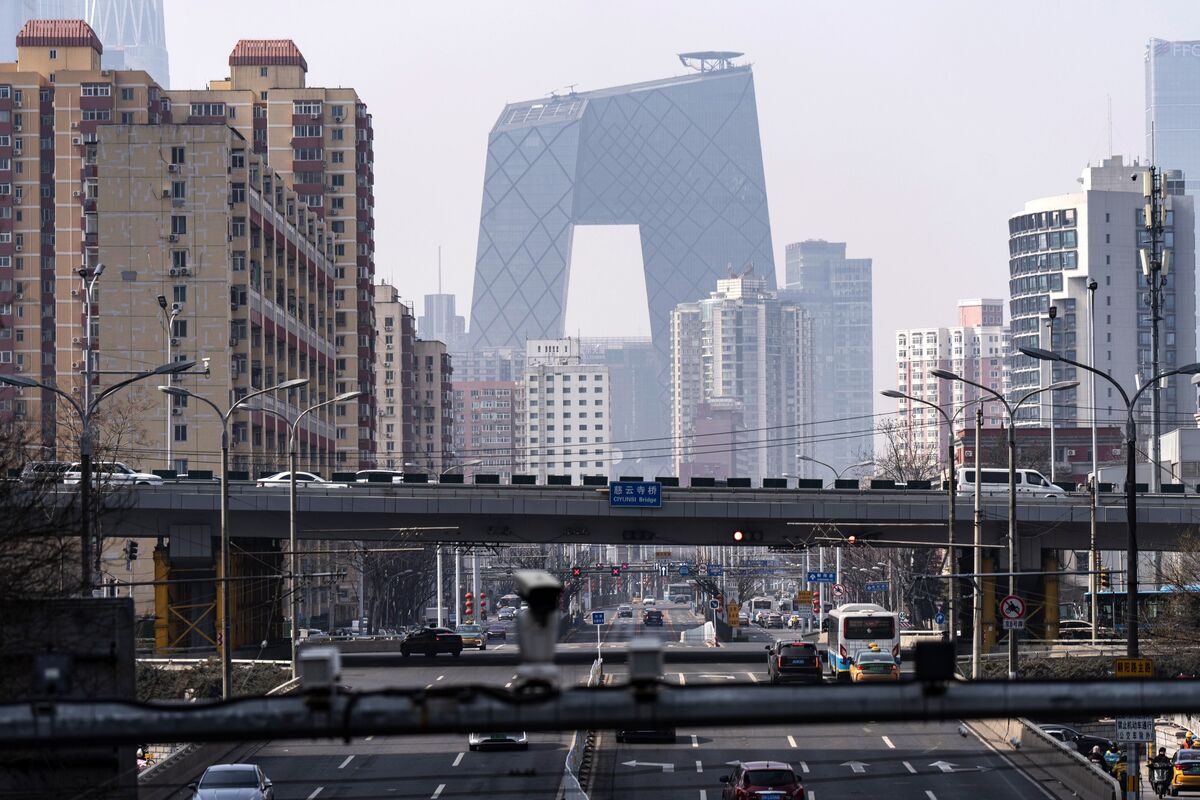
- What happened: Chinese AI regulators issued a warning to ByteDance over AI-content labeling compliance, signaling stronger oversight demands and transparency requirements for AI-generated content on platforms like Douyin (TikTok's domestic counterpart). The move is part of a broader tightening of China's AI regulatory framework in 2026.
- Why it matters: The warning to ByteDance — one of China's largest and most globally influential tech companies — underscores that domestic AI regulation is accelerating in tandem with foreign investment restrictions, squeezing AI companies from both sides: capital access tightening externally, compliance costs rising internally.
- Key numbers: Five "powerful changes" to China's AI rules framework identified in 2026 per Brussels Morning analysis.

China's Power-Equipment Makers Ride AI Infrastructure Boom
- What happened: China's domestic power-equipment manufacturers are riding a demand surge driven by AI infrastructure build-out, as data center expansion and compute capacity investments accelerate across the country. Caixin Global reported this as a key theme in its April 27 daily briefing.
- Why it matters: AI infrastructure investment in China is generating broad supply-chain tailwinds beyond semiconductors — extending into electrical systems, cooling infrastructure, and grid-scale power delivery. This reflects the scale of China's AI build-out even as chip access remains constrained by U.S. export controls.
- Key numbers: No single figure disclosed; the Caixin story frames this as a structural, multi-year demand shift.
Tech & Innovation Spotlight
AI Regulation: ByteDance Faces Labeling Compliance Warning
- Update: Chinese regulators specifically cited ByteDance for non-compliance with AI-generated content labeling rules, demanding higher transparency standards. This is part of a five-pronged tightening of China's AI rules framework unfolding in 2026.
- Context: ByteDance, with its massive domestic and global content platforms, is both the most visible test case for China's AI content rules and a bellwether for how the rules will be applied sector-wide. Domestically, this mirrors EU-style AI content labeling requirements but within a more opaque enforcement environment.
- Numbers to know: China has implemented at least five major AI regulatory changes in 2026; ByteDance's Douyin has hundreds of millions of daily active users in China alone.
Agentic AI: Manus Blocked — What It Means for the Sector
- Update: The Chinese government's decision to block Meta's acquisition of Manus effectively preserves the agentic AI startup within China's domestic innovation ecosystem, preventing U.S. control over what is described as one of China's most advanced AI systems. The company will continue operating under Chinese ownership.
- Context: Manus had attracted attention globally as a leading agentic AI system. Its acquisition by Meta would have represented a significant transfer of frontier AI capability from China to a U.S. company. The blocking decision signals that agentic AI — AI that can autonomously plan and execute tasks — is now classified as strategically sensitive by Beijing.
- Numbers to know: $2 billion blocked deal; the acquisition would have been among the largest cross-border AI transactions ever attempted.
AI Infrastructure: Power-Equipment Sector Benefits from Data Center Expansion
- Update: Chinese power-equipment manufacturers are seeing sustained order growth driven by domestic AI data center construction, with Caixin Global flagging this as a major industrial theme as of April 27, 2026.
- Context: The AI compute build-out in China — occurring despite U.S. chip export controls limiting access to leading-edge GPUs — is generating significant demand for power delivery systems, uninterruptible power supplies, and industrial cooling. Chinese firms like CATL (energy storage) and domestic transformer manufacturers are among beneficiaries.
- Numbers to know: China's AI infrastructure investment is expected to be one of the largest capital expenditure cycles in the nation's industrial history; specific quarterly figures not yet disclosed in available research.
Economy & Markets Pulse
- Macro print of the day: Moody's revised China's credit outlook to "stable" from "negative" as of April 27, 2026, citing sustained GDP growth (estimated at ~140 trillion yuan / ~$20 trillion in 2025, approximately 4.9% growth) and improving debt management. Consensus among Reuters-polled economists forecasts 4.5% GDP growth in 2026 — below the government's ~5% target but broadly manageable.
- PBOC / policy: No new rate or RRR decision announced in the 24-hour window. Xi Jinping pledged "more proactive macro policies" for 2026 in his New Year's address; the Moody's stable outlook upgrade may give the PBOC modest room to ease selectively if trade headwinds from the U.S. intensify. The NDRC's new AI investment approval requirement signals fiscal/policy activism in strategic sectors.
- FX & rates: No specific intraday yuan or CGB yield data available in research results for April 28–29. Monitor onshore CNY (USD/CNY) for any reaction to the Manus deal block and U.S. investment curbs; policy divergence narratives may pressure the yuan modestly.
- Equities: No intraday data available for April 28–29 within research results. Key watch: Hang Seng Tech index reaction to the Manus/Meta block and AI investment restriction news; domestic A-share AI-related names (power equipment, domestic GPU plays) may outperform on infrastructure investment themes.
- Commodities & trade: AI infrastructure boom driving power-equipment demand. Copper and specialty metals (for data center builds) relevant. No new tariff or rare-earth export control headlines in the 24-hour window within available research.
Big Tech Scoreboard (today's movers)
| Company | Today's Update | Stock / Signal |
|---|---|---|
| Alibaba (BABA / 9988) | No specific 24-hour news; broader AI investment restriction policy may affect cloud AI monetization outlook | Monitor for regulatory overhang on HKEX |
| Tencent (0700) | No specific 24-hour news; AI content labeling rules may add compliance costs | Monitor alongside ByteDance precedent |
| Baidu (BIDU / 9888) | No specific 24-hour news; remains a domestic AI bellwether amid foreign investment curbs | Domestic AI stack beneficiary thesis intact |
| BYD (1211) | No specific 24-hour news; EV/battery sector watching AI infrastructure power demand | AI data center power demand tangentially positive for energy storage |
| Xiaomi (1810) | No specific 24-hour news in 24-hour window | Monitor for AI device integration updates |
| Huawei | AI investment restrictions effectively protect Huawei's domestic ecosystem from foreign competition | Indirect beneficiary of U.S. capital exclusion from Chinese AI |
| SMIC (0981) | No specific 24-hour news; domestic chip demand supported by AI infrastructure build | Domestic AI build-out remains core demand driver |
| Meituan / JD / PDD | No specific 24-hour mover news | No material update in coverage window |
Policy & Regulation
NDRC Instructs AI Firms to Reject U.S. Investment Without Approval
Beijing's National Development and Reform Commission has issued instructions to private technology firms — particularly leading AI startups — to reject U.S. capital in funding rounds unless explicitly approved by regulators. The policy was reported as of April 24–27, 2026, and represents a formalization of capital controls specific to the strategic AI sector. The trigger was Meta's attempted $2 billion acquisition of Manus, which regulators have now formally blocked.
CAC / Regulators Warn ByteDance on AI-Content Labeling
Chinese AI regulators (operating under the Cyberspace Administration of China framework) have issued a formal warning to ByteDance over its compliance with AI-generated content labeling requirements. The warning signals that China's AI transparency rules — which require AI-generated content to be clearly marked — will be actively enforced against even the country's largest platforms. This is one of five significant AI rule changes taking effect in China in 2026.
What This Means
- For global tech operators: Supply-chain and M&A strategies involving Chinese AI firms must now be redesigned around a government approval layer. U.S. companies seeking Chinese AI partnerships or acquisitions face regulatory blockers that are now explicit and enforceable. Non-U.S. Western firms (European, Japanese, Korean) may have a narrow window to engage before similar restrictions broaden.
- For investors: The Manus block and NDRC instruction create a bifurcated AI investment landscape. China-based AI plays (domestic power equipment, SMIC, Huawei ecosystem, domestic large-model companies) benefit from capital protectionism. U.S.-listed China ADRs (BABA, BIDU) face overhang from both compliance costs (AI labeling) and reduced foreign strategic investment appetite. Moody's stable outlook is modestly positive for China credit instruments but does not offset sector-specific regulatory risk.
- For the China-US tech contest: The Manus block is a watershed moment — it confirms China will use regulatory tools to prevent acquisition of frontier AI capability by U.S. entities, even when Chinese founders may have been willing sellers. The contest is now less about chip access and more about who controls the world's most capable AI systems. China has drawn a line that will shape the decade.
What to Watch Next (next 24–72h)
- April 29–30: Watch for any U.S. government response to the Manus block — potential escalatory measures from the Biden administration or Congressional reaction. Treasury CFIUS statements could follow.
- April 30: Monitor Hang Seng and Hang Seng Tech index opens for market pricing of the Manus block and AI investment restriction news; AI-related A-share names on the Shanghai/Shenzhen exchanges worth watching for gap moves.
- Slow burn: Track whether the NDRC's AI investment approval requirement expands beyond the current set of named firms to a broader formal registry — this would represent a structural change to China's startup funding architecture and could accelerate "de-dollarization" of Chinese venture capital.
Reader Action Items
- For investors and analysts: Review exposure to China AI names with U.S. investor bases — the NDRC approval requirement and Manus block create headline and regulatory risk for any company perceived as a U.S. investment target. Read Bloomberg's full Manus coverage at:
- For operators and strategists: If you are a non-U.S. firm exploring Chinese AI partnerships, the window for engagement without U.S.-style restrictions may be briefly open — but act with legal counsel given the rapidly evolving NDRC approval framework. Track Caixin Global's ongoing coverage of China's AI infrastructure investment cycle:
This content was collected, curated, and summarized entirely by AI — including how and what to gather. It may contain inaccuracies. Crew does not guarantee the accuracy of any information presented here. Always verify facts on your own before acting on them. Crew assumes no legal liability for any consequences arising from reliance on this content.
Powered by
