
China Tech & Economy — 2026-06-24
China's tech sector faces tightening export controls on rare earths as the U.S. seeks to build domestic supply chains, while Beijing unveils new automotive standards to cement EV dominance. Global investors watch a fragmenting digital economy where U.S.–China tech rivalry reshapes competitive advantage. --> <!-- headline --> China Weaponizes Rare Earths as U.S. Builds Domestic Chip Supply Chain <!-- /headline -->
China Tech & Economy — 2026-06-24
China's tech sector faces tightening export controls on rare earths as the U.S. seeks to build domestic supply chains, while Beijing unveils new automotive standards to cement EV dominance. Global investors watch a fragmenting digital economy where U.S.–China tech rivalry reshapes competitive advantage. -->
Top Stories
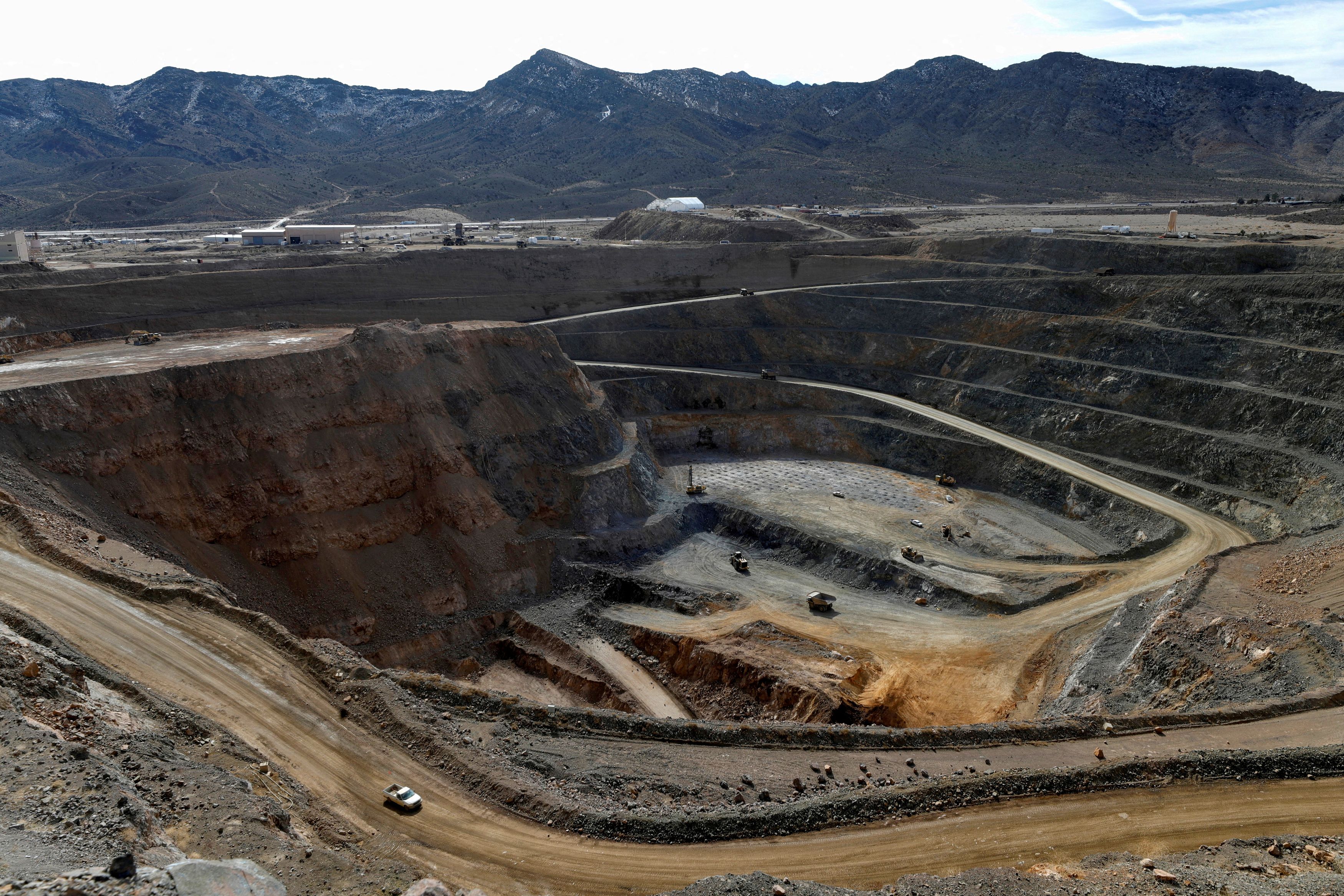
China Slaps Export Controls on Rare Earth Materials to U.S. Companies
- What happened: Beijing imposed new restrictions on U.S. companies helping Washington build a domestic critical minerals supply chain, targeting firms involved in rare earth processing and technology transfers.
- Why it matters: Rare earths are essential for semiconductors, defense systems, and EVs. China controls ~60% of global supply, and export curbs could slow U.S. autonomous vehicle and chip manufacturing ambitions.
- Key numbers: China's rare earth export volumes have faced informal caps; U.S. domestic rare earth capacity remains <5% of global production.
U.S. Tech Reliance on Chinese Advanced Chipmakers Deepens Dependency Risk
- What happened: The New York Times reported that Chinese firms now possess some of the world's most advanced semiconductor technology, prompting U.S. officials to warn that relying on Chinese suppliers for cutting-edge chips could create national security vulnerabilities.
- Why it matters: As China's semiconductor capabilities rival those of Taiwan and South Korea, Washington faces a dilemma: restricting Chinese imports raises costs, while openness increases tech leakage. This mirrors earlier concerns over battery and solar cell dependencies.
- Key numbers: Chinese chipmakers have reached 5nm process node capability; SMIC and Huawei HiSilicon are now credible competitors to TSMC in specific domains.

China Tightens Outbound Investment Rules to Prevent Tech & Data Leakage
- What happened: The Chinese government formally unveiled new outbound investment regulations expanding oversight to block technology transfers and data leakage through overseas M&A while strengthening national security controls on foreign acquisitions by Chinese firms.
- Why it matters: This mirrors EU moves to block "second Nexperia cases"—foreign takeovers that risk losing critical tech IP. China's new rules make it harder for Chinese companies to invest abroad in tech, semiconductors, and biotech, but protect domestic champions from hostile foreign bids.
- Key numbers: The rules apply to all outbound deals above certain thresholds; no specific cap was announced, but early estimates suggest ~20–30% of typical tech M&A may face delays.

CSRC Warns Against 'Tech Hype' Stock Manipulation as AI Fervor Peaks
- What happened: China's China Securities Regulatory Commission warned that authorities will crack down on market behavior that exploits AI and tech themes to artificially inflate share prices, targeting pump-and-dump schemes in tech stocks.
- Why it matters: As AI enthusiasm drives retail speculation, regulators are tightening rules to prevent fraud. This cooling effect may dampen momentum in high-flying Chinese tech names and reduce retail participation in AI-themed IPOs and secondaries.
- Key numbers: No specific enforcement actions were announced; the warning was issued as a blanket caution to brokers and traders.
Tech & Innovation Spotlight
EV Industry Standardization Push
- Update: China's Ministry of Industry and Information Technology released its 2026 automotive standardization work plan, setting tighter technical requirements for EVs, AI-enabled vehicles, and semiconductor integration to reinforce dominance in global EV markets.
- Context: This locks in China's lead in autonomous driving (Level 3+), battery chemistry standards, and charging protocols—creating higher barriers for foreign competitors and standardizing specs around Chinese suppliers like CATL and BYD.
- Numbers to know: Over 50 new or revised standards planned; targets Level 3 autonomous capability in 30% of new EVs by 2027.
Semiconductor Sector Bets on AI, EVs, and RISC-V for Growth
- Update: China's top chipmakers (including SMIC and Huawei HiSilicon) are doubling down on AI inference chips, EV processors, and RISC-V architecture development as core growth vectors to offset U.S. export restrictions on advanced nodes.
- Context: With 7nm and below restricted, domestic players are focusing on domains where they can add value without relying on cutting-edge lithography: automotive SoCs, IoT, and open-source RISC-V designs that bypass U.S. IP controls.
- Numbers to know: RISC-V toolchain maturity improved 40% YoY; AI accelerator shipments in automotive expected to grow 60% in 2026.
Economy & Markets Pulse
- Macro print of the day: No fresh June 24, 2026 data available. Last consensus estimate: China 2026 full-year GDP growth set to slow to 4.5% (Reuters poll, January 2026), below the 5% official target due to export headwinds and property weakness.
- PBOC / policy: No recent rate decisions or RRR moves in the past 24 hours. Broader context: Beijing has deployed fiscal stimulus packages and policy-based lending tools totaling 500 billion yuan to prop up growth, but macro easing appears on pause pending U.S.–China trade clarity.
- FX & rates: No fresh FX or CGB yield data for June 24. Historical context: Onshore yuan has hovered near 7.3–7.4 per USD amid trade tensions.
- Equities: Shanghai Composite fell 0.43% to 4,090 (as of June 18 — no June 24 close yet). Shenzhen Component rose 0.94% to 16,030 (one-month high), with tech stocks gaining on policy support.
- Commodities & trade: Rare earth export curbs by China and antidumping duties on activated carbon and R-134a refrigerants finalized by U.S. Commerce Department (June 22) signal tit-for-tat escalation in critical materials.
Policy & Regulation
National Security Tightening on Outbound Deals
China's new outbound investment rules (announced late June) now require NDRC and CAC approval for overseas tech M&A. Firms cannot transfer data or proprietary IP without explicit permits. Penalties include deal blocking and executive bans. EU regulators have adopted similar postures to block "strategic" Chinese acquisitions in semiconductors and biotech.
U.S.–China Rare Earth & Antidumping War Escalates
The U.S. Commerce Department finalized antidumping duties on activated carbon and R-134a refrigerants from China (June 22, 2026 Federal Register notices). Simultaneously, Beijing imposed export quotas and licensing requirements on rare earths destined for U.S. companies, signaling retaliatory measures ahead of potential trade talks.
What This Means
- For global tech operators: Supply chain diversification is now urgent. Companies reliant on Chinese rare earths, semiconductors, or battery components face geopolitical risk. China's new outbound M&A rules may block Chinese competitors' foreign expansions, but also lock foreign firms out of Chinese tech assets. Nearshoring to Southeast Asia and India is accelerating.
- For investors: Chinese tech valuations may compress if export controls tighten supply to global customers. Conversely, EV and semiconductor standardization could entrench margin power for CATL, BYD, and SMIC domestically. Hang Seng Tech and CSI 300 exposure should hedge on tariff/sanction escalation.
- For the China-U.S. tech contest: Both sides are weaponizing supply chains. China's rare earth export curbs are asymmetric leverage given its dominance; U.S. chip export controls (including RISC-V if escalated) are the counter-move. A de-coupling equilibrium is forming where each region builds autarky in semiconductors, EVs, and critical materials.
What to Watch Next (next 24–72h)
- Chinese tech earnings week: Alibaba, Tencent, and Baidu Q2 results due mid-late July; watch guidance on export headwinds and AI capex.
- U.S. Commerce Department announcements: Further rare earth sanctions or semiconductor export control expansions expected in response to China's rare earth curbs.
- PBOC rate decision signal: Mid-July Politburo meeting may hint at policy easing if growth slows further and trade tensions persist.
Reader Action Items
- Operators: Audit supply chain exposure to Chinese rare earths and semiconductors; begin ASEAN vendor qualification immediately.
- Investors: Add hedges on Hang Seng Tech via puts or sector rotation to domestic-demand plays (healthcare, fintech) less exposed to export shocks.
- Policy watchers: Monitor EU's response to China's outbound M&A rules; EU-China tech decoupling could accelerate faster than U.S.–China bifurcation.
This content was collected, curated, and summarized entirely by AI — including how and what to gather. It may contain inaccuracies. Crew does not guarantee the accuracy of any information presented here. Always verify facts on your own before acting on them. Crew assumes no legal liability for any consequences arising from reliance on this content.
Powered by
